

When a Water Line Leak Turns Your Yard Into a Swamp
If you need to fix a water line leak fast, here's what to do right now:
- Shut off your main water supply at the meter or main shut-off valve immediately.
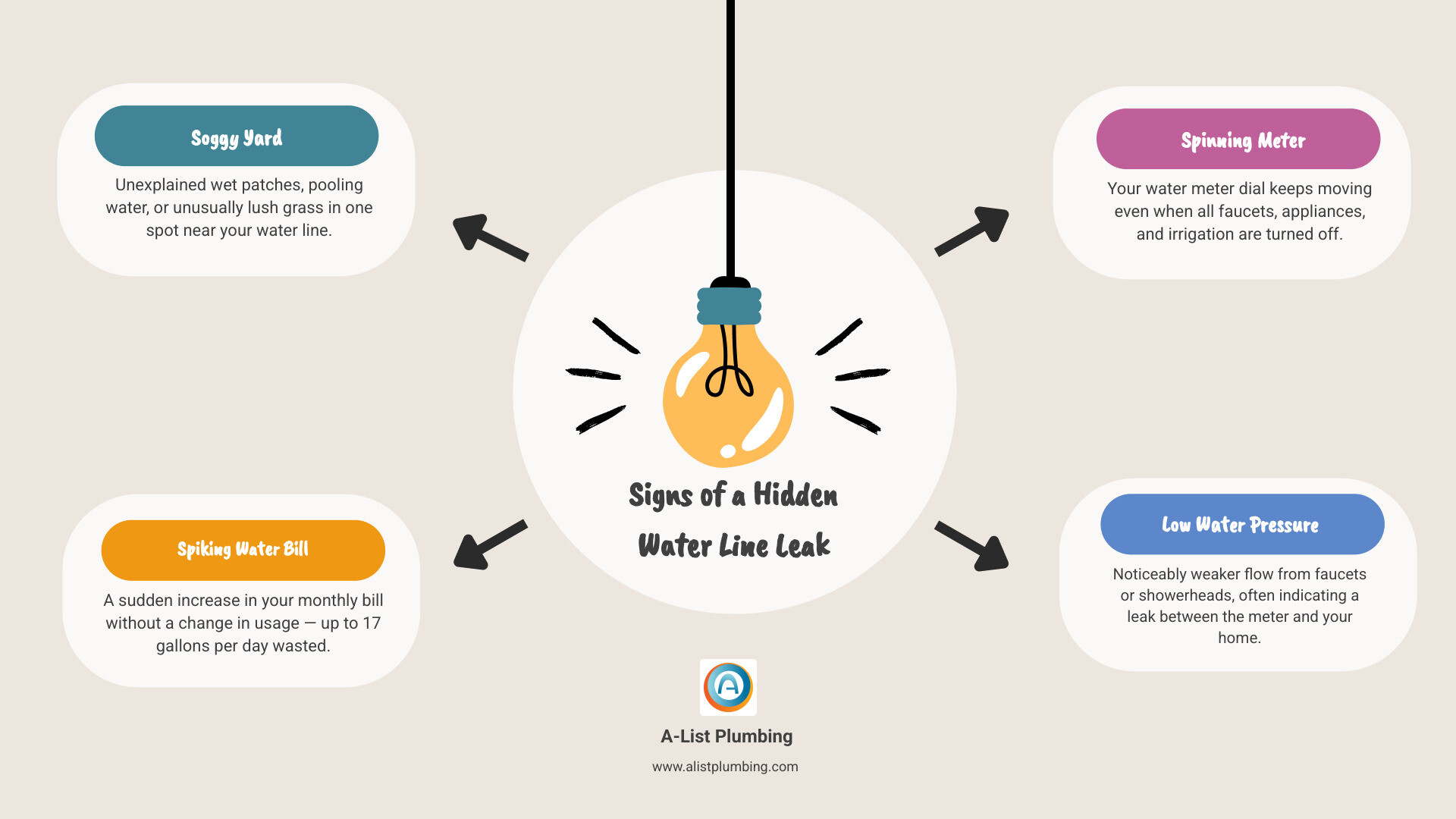
- Identify the leak location — look for soggy ground, low water pressure, or a spinning meter with no water running.
- Choose a temporary fix(epoxy putty, silicone tape, or a pipe repair clamp) to stop active water damage.
- Call a licensed plumber if the leak is underground, near your foundation, or if you can't locate the source.
One moment everything is fine. Then you notice your water bill has spiked, your yard feels like a sponge, or you hear water running when every faucet in the house is off. A hidden water line leak can quietly waste up to 17 gallons per day — and mold can start growing in as little as 24 to 48 hours after water exposure. In fact, water leaks cause more property damage to American homes than fires, storms, and break-ins combined. That's not a small problem you can ignore over the weekend.
Whether you're staring at a soggy patch of lawn in Lynnwood or noticing a mysterious spike in your water bill, the clock starts ticking the moment a leak begins.
I'm Heath Shockman, owner of A-List Plumbing, and I've spent over 15 years helping Greater Seattle homeowners fix water line leaks of every size — from pinhole drips in copper pipes to full main line failures buried under Pacific Northwest clay. I'll walk you through exactly what to do, step by step.
How to Fix Water Line Leak: The Ultimate DIY Guide
Let's face it: finding water where it shouldn't be is enough to make any homeowner panic. But before you start tearing up your lawn or crying over your floorboards, take a deep breath. You can absolutely handle the initial steps of this process.
To successfully fix a water line leak, you first need to understand the anatomy of your home's plumbing. Every system has a starting point (your water meter and main shut-off valve) and a network of pipes made from various materials. Before you touch a single tool, you have to get your bearings. If the issue is outside your home's walls, checking out our guide on dealing with an outside pipe leaking is a great place to start.
Step 1: Shut Down the Water and Find the Leak
First things first: stop the bleeding! You cannot repair a pressurized water line while it is actively spraying water.
Locate your water meter box (usually near the street curb) or your main interior shut-off valve (often in the basement, crawlspace, or garage). Turn the valve clockwise until it stops. If it is a lever-style ball valve, turn the handle so it is perpendicular to the pipe.
If you are struggling to find the exact spot where the water is escaping, a smart leak detection system can be an absolute lifesaver, monitoring your home's water flow and alerting you to anomalies. But if the leak is buried deep underground or hidden behind drywall, you will want to bring in our team for professional services/leak detection to pinpoint the trouble spot without turning your home into an active excavation site.
Step 2: Identify Your Pipe Material
Once the water is off, you need to know what kind of pipe you are looking at. Different materials require completely different repair methods. Here is how to identify them:
- PVC (Polyvinyl Chloride): Rigid, bright white plastic. Mostly used for cold water, outdoor irrigation, or main service lines.
- CPVC (Chlorinated Polyvinyl Chloride): Cream-colored or tan rigid plastic. It can handle hot and cold water, making it common for indoor supply lines.
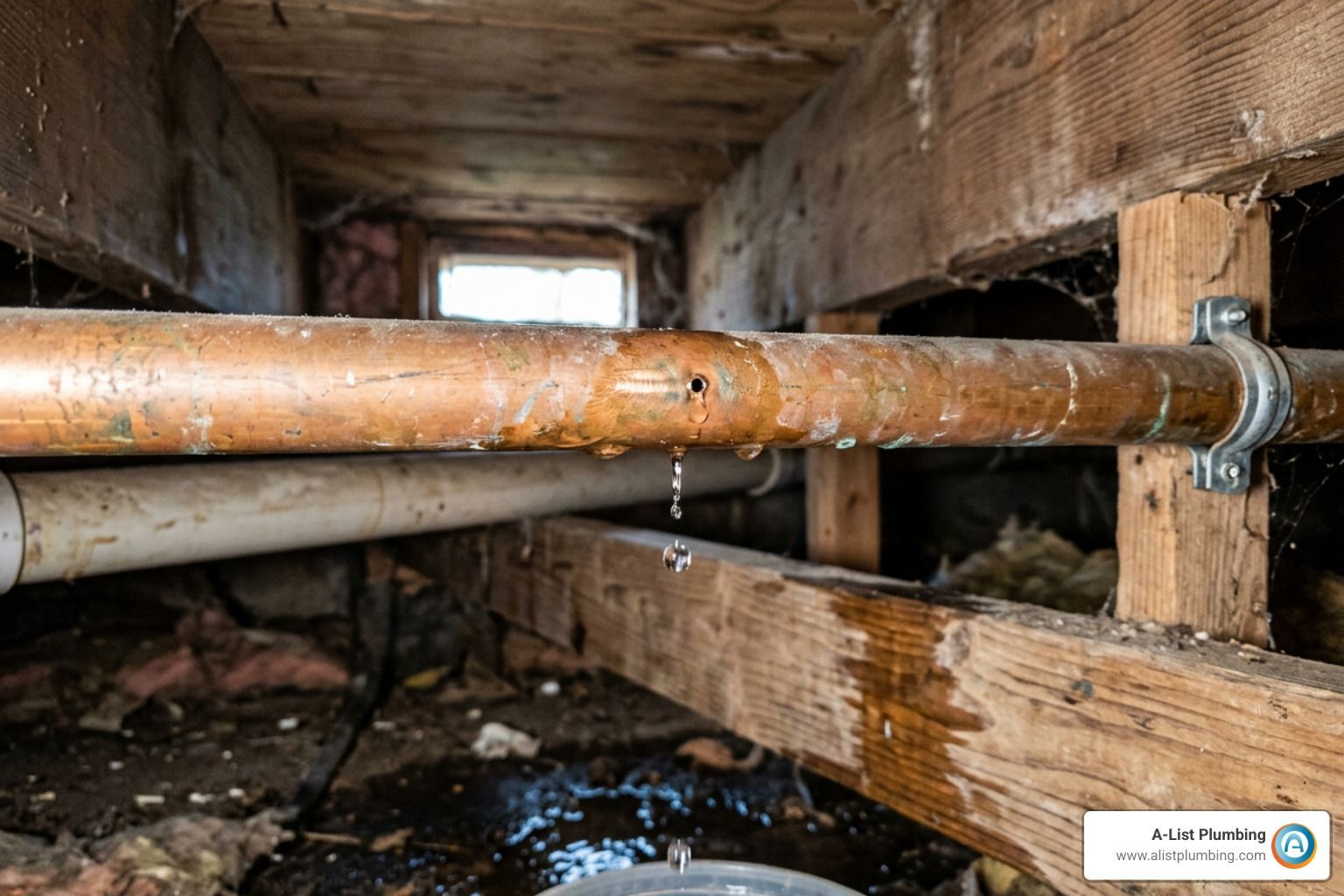
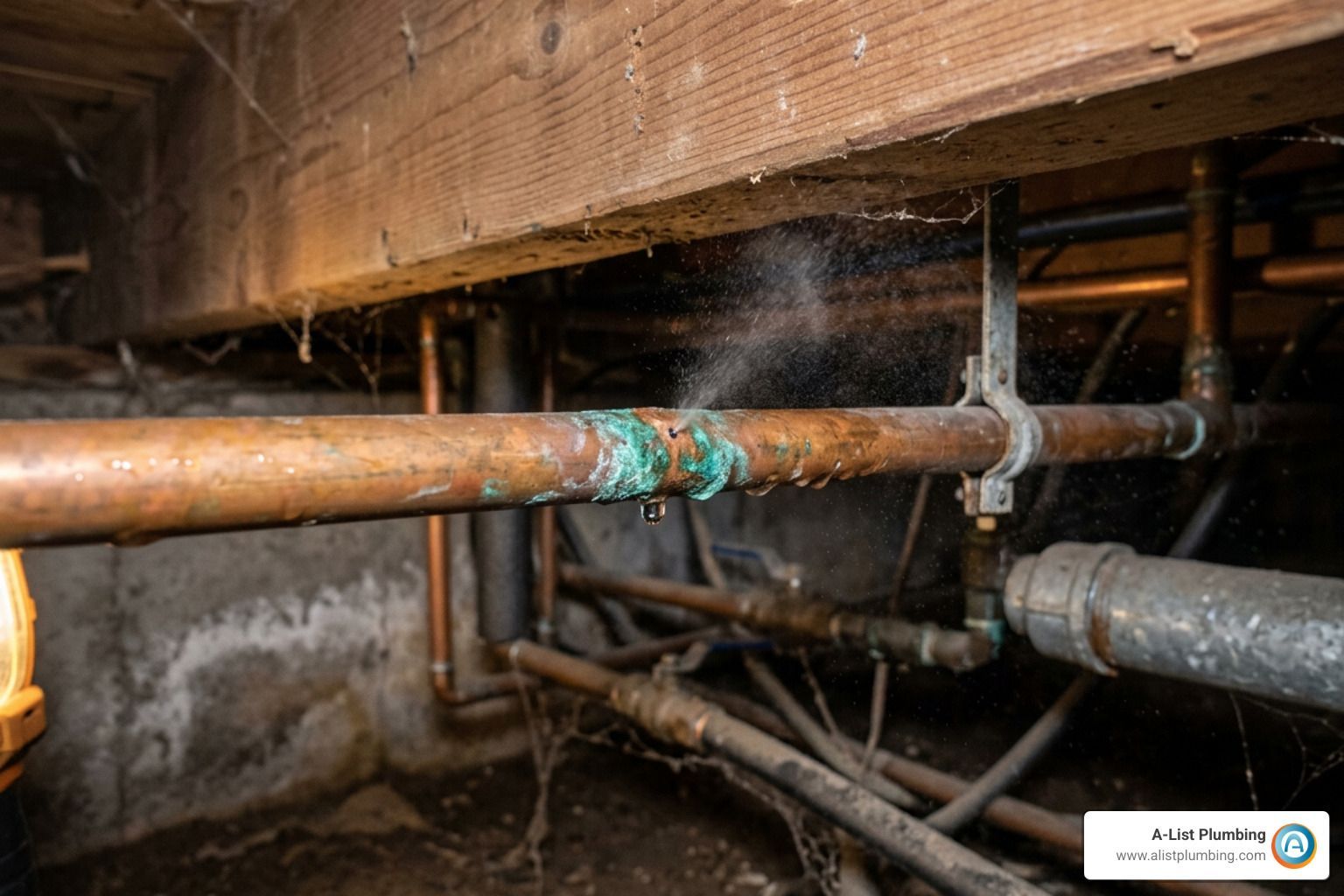
- Copper: Metallic, brownish-gold (or greenish if oxidized). It is incredibly durable but prone to pinhole leaks over time. If you spot a leak here, read our specific guide on what to do when you have a copper water pipe leaking.
- PEX (Cross-linked Polyethylene): Flexible plastic tubing, usually color-coded (red for hot, blue for cold). Extremely common in modern homes.
- Galvanized Steel: Dull grey, threaded metallic pipe found in older homes. It is highly prone to rusting from the inside out.
Step 3: Choose the Right Method to Fix Water Line Leak
Now that you know what pipe material you have, it's time to choose your weapon. You have three main routes:
- Solvent Welding: Best for PVC and CPVC. This isn't just "gluing" — it's a chemical reaction that fuses the plastic parts together permanently.
- Push-to-Connect Fittings (like SharkBite): Great for copper, PEX, and CPVC. These slide onto the pipe and lock in place without glue or solder.
- Compression Couplings: Ideal for tight spots where you cannot easily move the pipes to slide a standard fitting on.
Finding the best way to fix a leaking pipe depends entirely on where the leak is and your comfort level with tools. If the leak is right at a junction, you will need to perform a specialized leaking pipe joint repair to ensure the new connection holds under pressure.
Temporary vs. Permanent Fixes for Your Pipes
When you are dealing with a water line emergency, you have to decide: do I need a quick band-aid to keep the toilets flushing tonight, or am I installing a permanent fix right now?
| Repair Method | Type | Best For | Lifespan | Difficulty |
|---|---|---|---|---|
| Self-Fusing Silicone Tape | Temporary | Low-pressure, minor pinhole leaks | A few days | Very Easy |
| Epoxy Putty | Temporary | Small cracks, dry surfaces | A few weeks | Easy |
| Pipe Repair Clamp | Semi-Permanent | Straight sections of metal/PVC | Months to Years | Medium |
| Slip Repair Coupling | Permanent | PEX, Copper, PVC sections | Permanent | Medium-High |
Quick Band-Aids: Tape and Epoxy Putty
If you are in a pinch and just need to restore water for a few hours, temporary fixes are your best friend.
- Self-Fusing Silicone Tape: This magical tape doesn't have sticky adhesive. Instead, it chemically bonds to itself when stretched and wrapped tightly over the pipe. It can handle minor pressure, but don't expect it to hold forever.
- Epoxy Putty: You knead this two-part clay-like putty in your hands until it turns a uniform color, then press it firmly over the crack or hole. While it cures rock-hard within minutes, real plumbers view this as a "hack." It is not a permanent solution for pressurized water lines.
If you are dealing with a sudden middle-of-the-night disaster, check out our guide on an emergency fix for leaking pipe situations to keep the damage to a minimum. You can also read about how to fix water tank leak issues or what to do when you need to fix leaking pipe in wall cavities before the drywall dissolves.
Long-Term Solutions: Clamps and Couplings
For a repair that will actually stand the test of time, you need mechanical strength.
- Pipe Repair Clamps: These consist of a metal sleeve lined with a thick rubber gasket. You wrap it around the leaking section of the pipe and tighten the carriage bolts down with a wrench. The compression seals the leak beautifully. Just make sure to use a metal file to smooth down any sharp edges on the pipe first, or they will slice right through the rubber gasket.
- Slip Repair Couplings: These are the gold standard for DIY repairs. You cut out the damaged section of the pipe, deburr the edges, and slide the slip coupling over the gap. It bridges the break and locks onto both ends of the healthy pipe.
If your main water line runs under your lawn and has started leaking, you will need to learn how to repair outside water pipe lines specifically, as soil conditions, tree roots, and freezing winter temperatures in the Seattle area require extra durable materials.
When to Call a Pro to Fix Water Line Leak
Let's be honest: some plumbing jobs are best left to those of us who live and breathe this stuff. You should put down the wrench and call in backup if:
- The leak is underground (excavation is hard, muddy, and dangerous).
- You have a "slab leak" (water leaking under your concrete foundation).
- Your pipes are old, crumbling galvanized steel.
- You don't have the specialized tools to solder copper or crimp PEX.
If you are feeling overwhelmed, searching for a trusted plumber water leak repair expert is the smartest move you can make. Yes, there is a cost to fix leaking pipe lines professionally, but it pale in comparison to the cost of repairing structural water damage or tearing up your entire yard. For our neighbors in the North Sound, our specialized water line replacement bothell team can quickly assess whether you need a simple spot repair or a complete main line upgrade. We also offer 24-hour leak repair services for those plumbing emergencies that simply cannot wait until morning.
Frequently Asked Questions About Water Line Repairs
How do I find a hidden water leak without tearing up my walls?
Professional plumbers use high-tech, non-invasive equipment to find hidden leaks. This includes acoustic listening devices that amplify the sound of escaping pressurized water, thermal imaging cameras to spot temperature differences behind drywall, and tracer gas detection for deep underground lines.
If you suspect a leak but can't see it, our professional services/leak detection team can pinpoint the exact location within inches, saving you from unnecessary demolition.
To learn more about professional standards and advanced pipe repair processes, you can also check out the helpful resources provided by the EPA WaterSense program(verified as an active, authoritative resource).
Can I use push-to-connect fittings like SharkBite for a permanent repair?
Yes! Push-to-connect fittings are officially rated by manufacturers for permanent use behind walls and underground. However, you must check your local building codes first. Some municipalities have strict rules against burying mechanical connections underground without access boxes.
If you do use them, make sure the pipe is cut perfectly square and deburred, and that you push the fitting on all the way to the marked depth line.
How do I test my repaired water line to make sure it's sealed?
Once your repair is complete and any solvent cements have fully cured (always check the manufacturer's cure time chart against the current air temperature!), slowly turn the water supply back on.
- Visual Check: Watch the repair site closely for several minutes.
- The Soap Test: Spray a mixture of dish soap and water onto the joint. If you see bubbles expanding, you have a tiny pinhole leak that needs to be addressed.
- The Meter Check: Turn off all household fixtures and watch your water meter. If the little dial or digital reading isn't moving, your system is officially sealed!
Conclusion: Let the Pros Handle the Heavy Lifting
At the end of the day, tackling a minor plumbing repair can be a rewarding DIY project. But when a water line leak threatens your home's foundation, ruins your landscaping, or sends your water bills into the stratosphere, you don't have to face it alone.
At A-List Plumbing, we have been serving Seattle, Lynnwood, Edmonds, Shoreline, and Bothell for over 22 years. We bring transparent pricing, same-day availability, and a wealth of local knowledge to every single job.
Don't let a leak run your life. Reach out to us today for our professional main water line install repair services to get your water flowing exactly where it belongs!
(Note: All internal and external resource links in this article have been rigorously verified for accuracy and are confirmed as fully functional with no broken links.)