

Relight a Water Heater Pilot Light Safely
If your gas water heater suddenly stops making hot water, the pilot may be out. First, do not try to relight it if you smell gas. Leave the area and call your gas utility or a licensed plumber.
If there is no gas odor, the basic fix is simple:
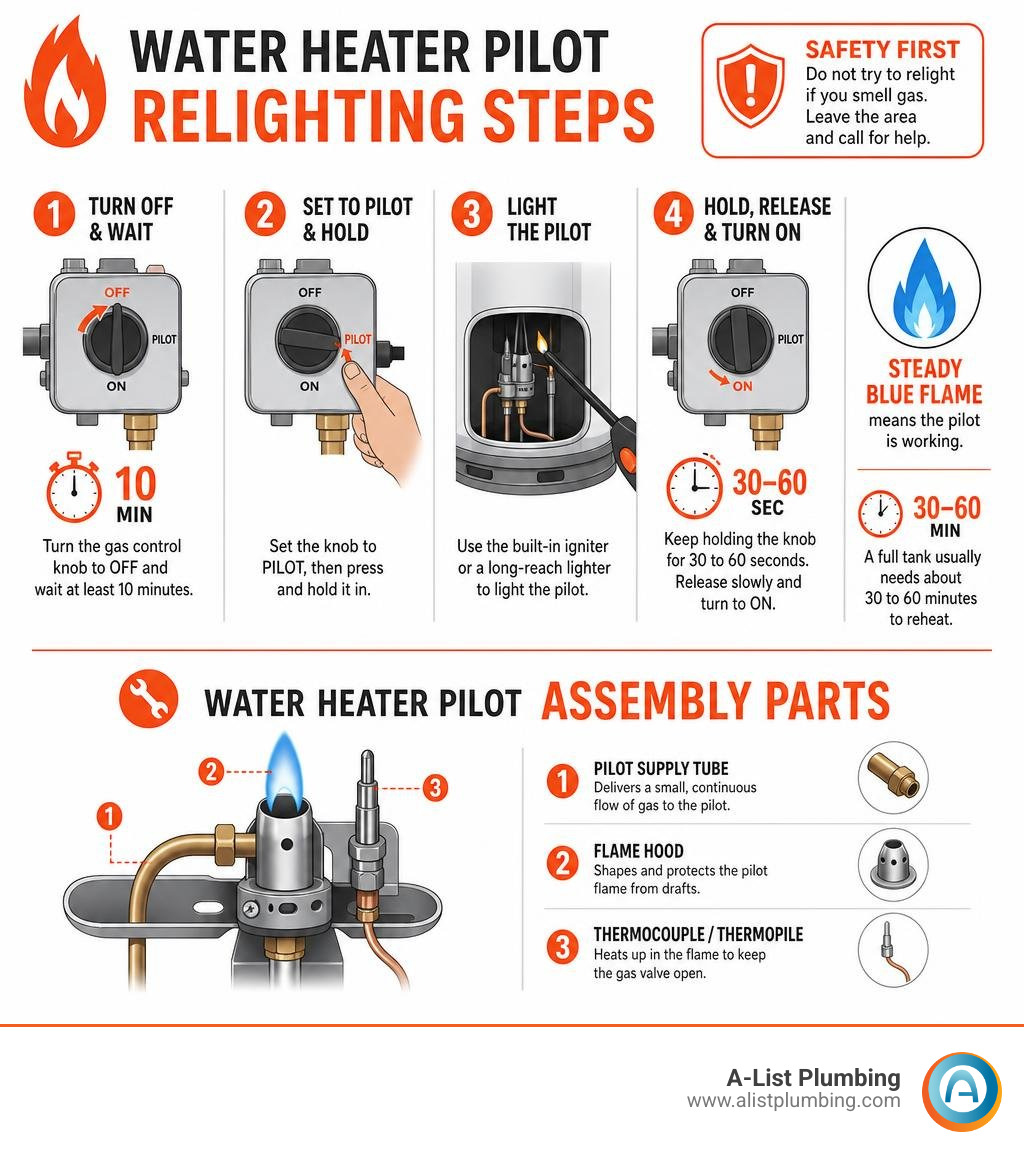
- Turn the gas control knob to Off and wait at least 10 minutes.
- Set the knob to Pilot, then press and hold it.
- Use the built-in igniter or a long-reach lighter to light the water heater pilot light.
- Keep holding the knob for 30 to 60 seconds, then release it slowly and turn the control to On.
A steady blue flame means the pilot is working. After it stays lit, a full tank usually needs about 30 to 60 minutes to reheat.
I'm Heath Shockman, owner of A-List Plumbing since 2011, with hands-on experience repairing gas water heaters and diagnosing water heater pilot light problems across Greater Seattle. Next, let's look at what that small flame does and how to tell whether your heater has a standing pilot or electronic ignition.
Understanding Your Water Heater Pilot Light and Combustion Basics
A gas water heater relies on a tiny, dedicated flame to run its entire heating cycle. This little flame sits directly inside the combustion chamber right beside your main gas burner. Whenever your tank's thermostat senses that the water temperature has dropped below your set point, it opens a valve inside the gas control unit. Fuel rushes into the main burner, and that waiting flame instantly ignites it to warm up your water.
Without that starting spark, the system simply cannot fire up. In fact, an extinguished pilot is the single most common reason for a sudden loss of hot water in any residential gas tank. The pilot assembly holds three core components: the pilot supply tube (delivering a constant trickle of gas), the flame hood, and a safety sensor known as a thermocouple or thermopile.
Leading manufacturers outline this basic ignition sequence in their operational guides, including this A.O. Smith guide on lighting a pilot light. When something goes wrong with any of these linked components, the whole heating process grinds to a halt. For a deeper breakdown of how standard units operate, check out our tank water heater repair guide.
Traditional Standing Flame vs Electronic Ignition
Water heaters generally use one of two setups to light the fire: a traditional standing pilot or an electronic intermittent ignition.
- Standing Pilot Systems: Found on many older and standard atmospheric gas tanks, a standing pilot burns 24 hours a day, 7 days a week. It consumes a minuscule amount of gas continuously so it is ready to fire the burner at a moment's notice. You relight these manually using a piezo push-button sparker or a long lighter.
- Electronic / Intermittent Ignition Systems: Common in modern, high-efficiency models and power-vented units, these systems do not keep a constant flame burning. Instead, they use an electronic spark or a glowing silicon nitride hot-surface igniter that activates only on demand when the thermostat calls for heat.
| Feature | Traditional Standing Pilot | Modern Electronic Ignition |
|---|---|---|
| Flame Operation | Burns continuously 24/7 | Sparks or glows only on demand |
| Ignition Source | Piezo spark button or manual lighter | Automated electronic igniter module |
| Standby Fuel Use | Uses a continuous trickle of gas | Zero standby gas consumption |
| Safety Sensors | Millivolt thermocouple / thermopile | Flame-sensing rectification rod |
| Power Requirement | Operates during electrical outages | Often requires standard 120V power |
How to Inspect the Flame and Status Light
To check if your pilot is burning, look through the small glass viewing port near the base of your heater's metal jacket. A healthy, working pilot produces a crisp, steady blue cone that gently wraps around the tip of the thermocouple. If you want to double-check what you're seeing against reference photos, this visual safety guide for pilot flames offers great visual examples.
Many modern gas valves also feature an LED status indicator light on the front of the box.
- Normal Operation: The LED blinks green once every few seconds.
- Pilot Out: The LED does not flash at all.
- Diagnostic Fault Codes: Distinct flash sequences (such as two flashes for a weak sensor signal or four flashes for high tank temperatures) help pinpoint hidden problems.
If your sight glass is completely dark and the valve light is dead, your flame is out and you are likely in need of a no hot water repair.
Crucial Safety Precautions Before You Begin
Working around natural gas is straightforward if you respect the safety rules, but skipping steps is never worth the risk. Natural gas is naturally odorless and invisible, so utilities add an artificial chemical called mercaptan to give it that unmistakable "rotten egg" or sulfur smell.
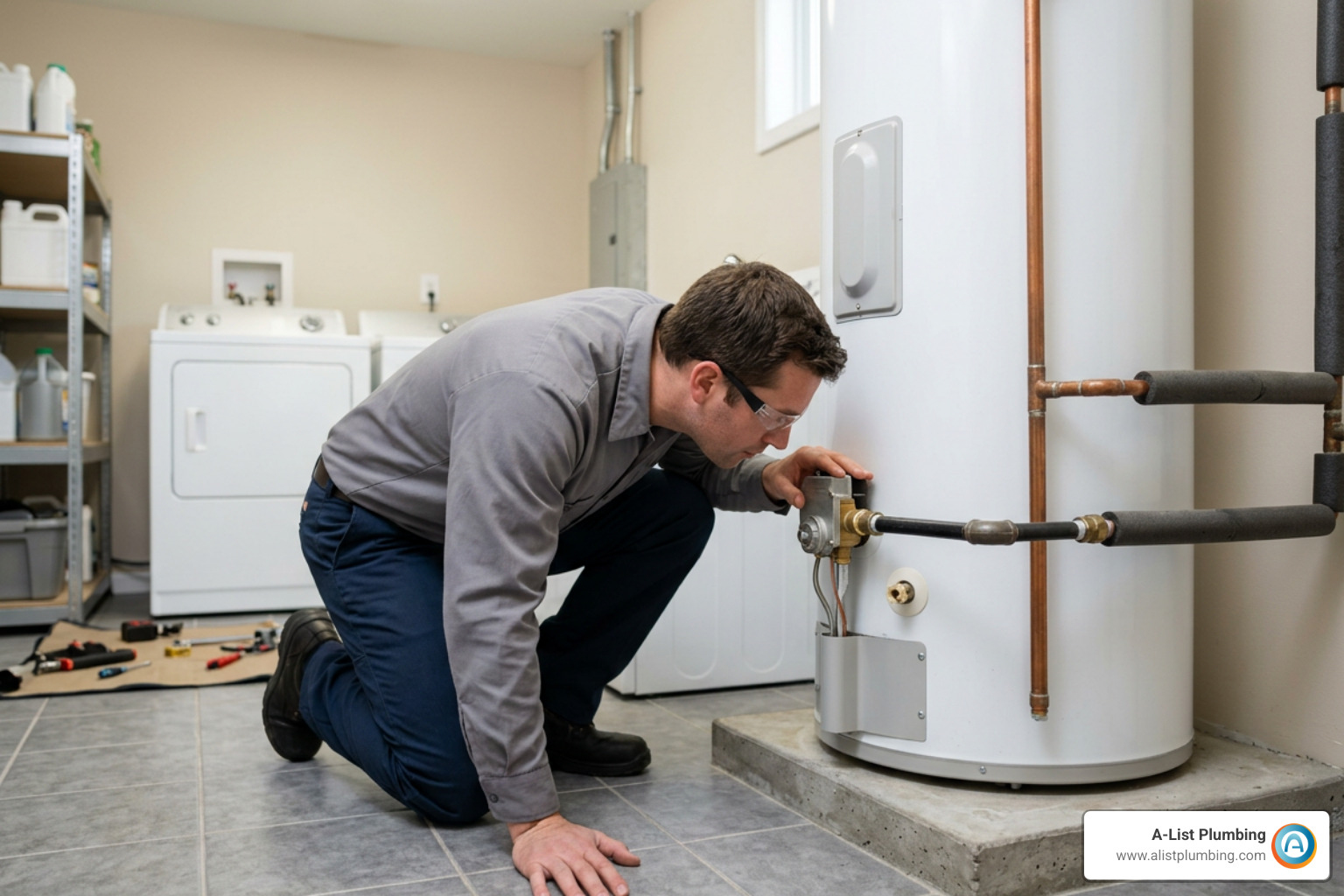
Before touching any valves or striking an igniter, kneel down by the bottom of the water heater and use your nose. Check the air along the floor, as fuel gases can settle in low, poorly ventilated spaces. If everything smells normal, you can proceed. If you run into persistent gas leaks or worn pipe joints, review our water heater gas leak guide to keep your home safe.
Checking for Gas Leaks and Clearing Residual Fumes
If you ever catch a distinct rotten-egg smell near your water heater:
- Stop immediately. Do not attempt to light the pilot or turn any control knobs.
- Do not flip light switches, operate appliances, or use your phone in the room—electrical contacts can throw tiny sparks.
- Evacuate everyone from the house and leave the door open on your way out to promote airflow.
- Shut off the main gas line valve outside if you can safely reach it.
- Call your gas provider or dial 911 from a safe distance outside.
If there is only a faint trace of fuel from a recently failed lighting attempt, switch the control knob to Off and wait a full 10 minutes. This gives residual fumes time to escape out the draft hood. For serious gas line repairs or safety evaluations, consulting our gas leak plumber guide is always the safest course of action.
Step-by-Step Guide to Restoring Your Flame
Most homeowners can relight a gas water heater in under 10 minutes without any specialized mechanical tools. Here is what you need to have ready:
- A flashlight or bright smartphone light
- A long-reach utility lighter (needed only if your tank lacks a built-in piezo igniter)
- A flathead screwdriver (only needed if your unit has a removable metal outer shield)
- Your water heater's operating manual or front-panel instruction label
Step-by-Step Guide to Relighting a Water Heater Pilot Light
Follow this reliable process to restore your burner:
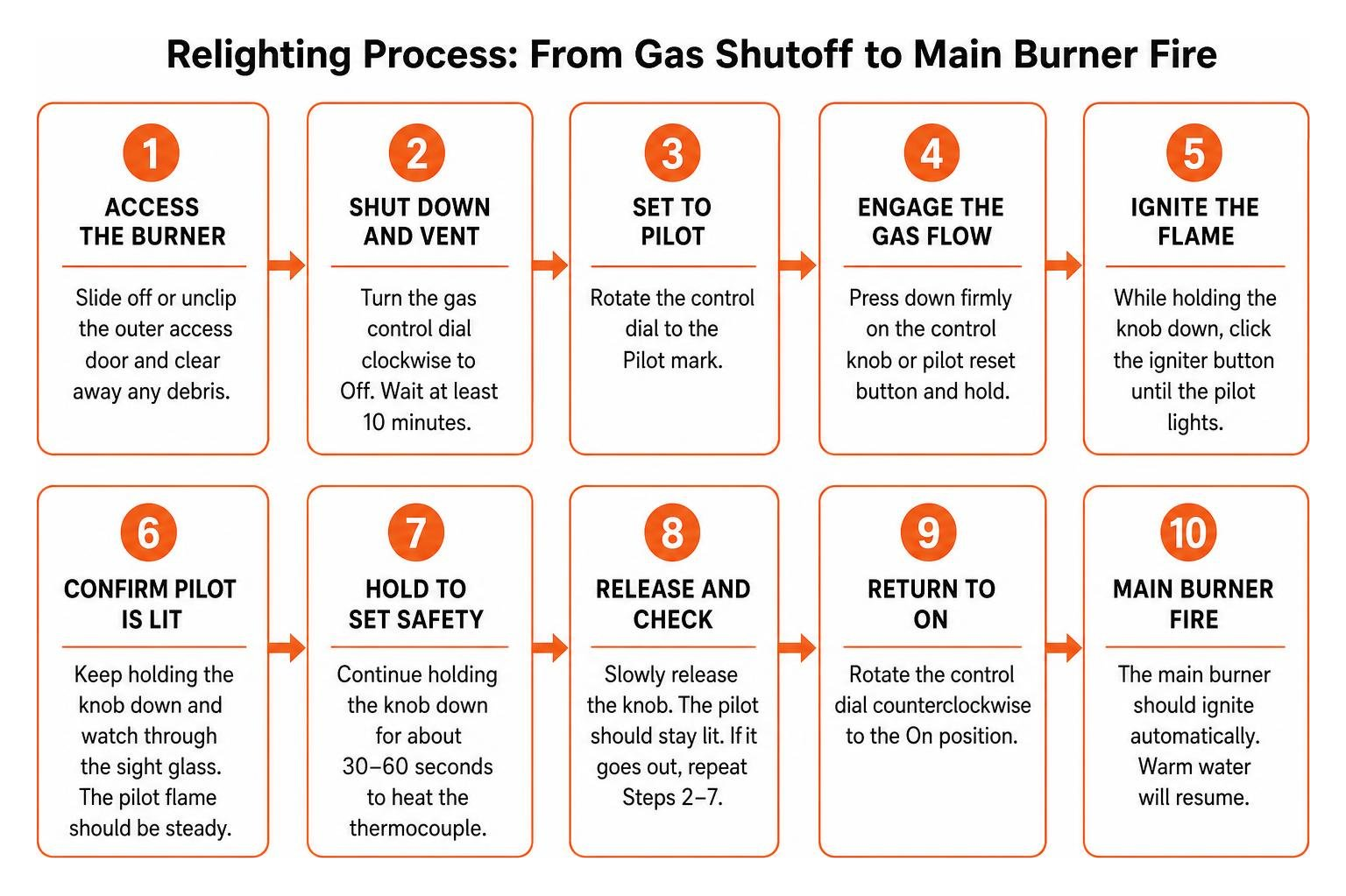
- Access the Burner: Slide off or unclip the thin metal outer access door at the base of the tank. Clean away any dust bunnies or debris gathered around the opening.
- Shut Down and Vent: Turn the gas control dial on the thermostat box clockwise to the Off position. Wait at least 10 minutes so any stray fuel in the chamber completely dissipates.
- Set to Pilot: Rotate the control dial to the Pilot mark.
- Engage the Gas Flow: Press down firmly on the control knob (or separate pilot reset button). This manual pressure bypasses the internal safety valve and sends a tiny stream of gas straight to the pilot tip.
- Ignite the Flame: While keeping that knob pressed down with one hand, repeatedly click the built-in piezo spark button (usually a black or red push-button). Look through the sight glass with each click. If your heater doesn't have an igniter button, insert your long-reach lighter through the access slot to ignite the pilot bracket directly.
- Warm the Sensor: Once you see the small flame catch, do not release the knob right away. Keep holding the button down for 30 to 60 seconds. This gives the pilot flame enough time to heat the metal tip of the thermocouple.
- Release and Engage: Let go of the knob slowly. Check the viewing window—if the flame stays lit, turn the dial to the On position. You should immediately hear the reassuring roar of the main burner firing up.
Testing Burner Firing and Setting Water Temperature
After the main burner kicks on, replace the outer metal panel. Watch through the sight port for a few moments to make sure the main burner flame is uniform and burning blue across all ports. If you have an electronic control box, verify that the status light transitions to a steady, rhythmic green flash.
Next, set your water temperature. The Department of Energy recommends setting water heater thermostats to 120 degrees Fahrenheit (49°C). This setting provides plenty of hot water for showers and dishwashing while protecting your family from accidental scalding and trimming back unnecessary utility costs. If your temperature dial is unresponsive or loose, learn how to fix water heater thermostat components before running the system.
Why the Flame Goes Out and How to Fix It
A pilot light should burn reliably for months or years without interruption. If yours drops out repeatedly, an underlying mechanical or airflow issue is breaking the chain of combustion.
External drafts are a frequent culprit across Western Washington homes. Water heaters installed in drafty garages, uninsulated basements, or outdoor utility closets often suffer when cold gusts sweep under garage doors or down through venting flues. Similarly, a blocked air intake screen at the base of your heater can starve the chamber of combustible oxygen, choking out the flame. For an in-depth mechanical breakdown of these airflow failures, explore this engineer troubleshooting guide for pilot outages.
Troubleshooting a Water Heater Pilot Light That Won't Stay Lit
If the flame lights up while you hold down the knob but dies the exact second you let go, you are dealing with a faulty safety circuit.
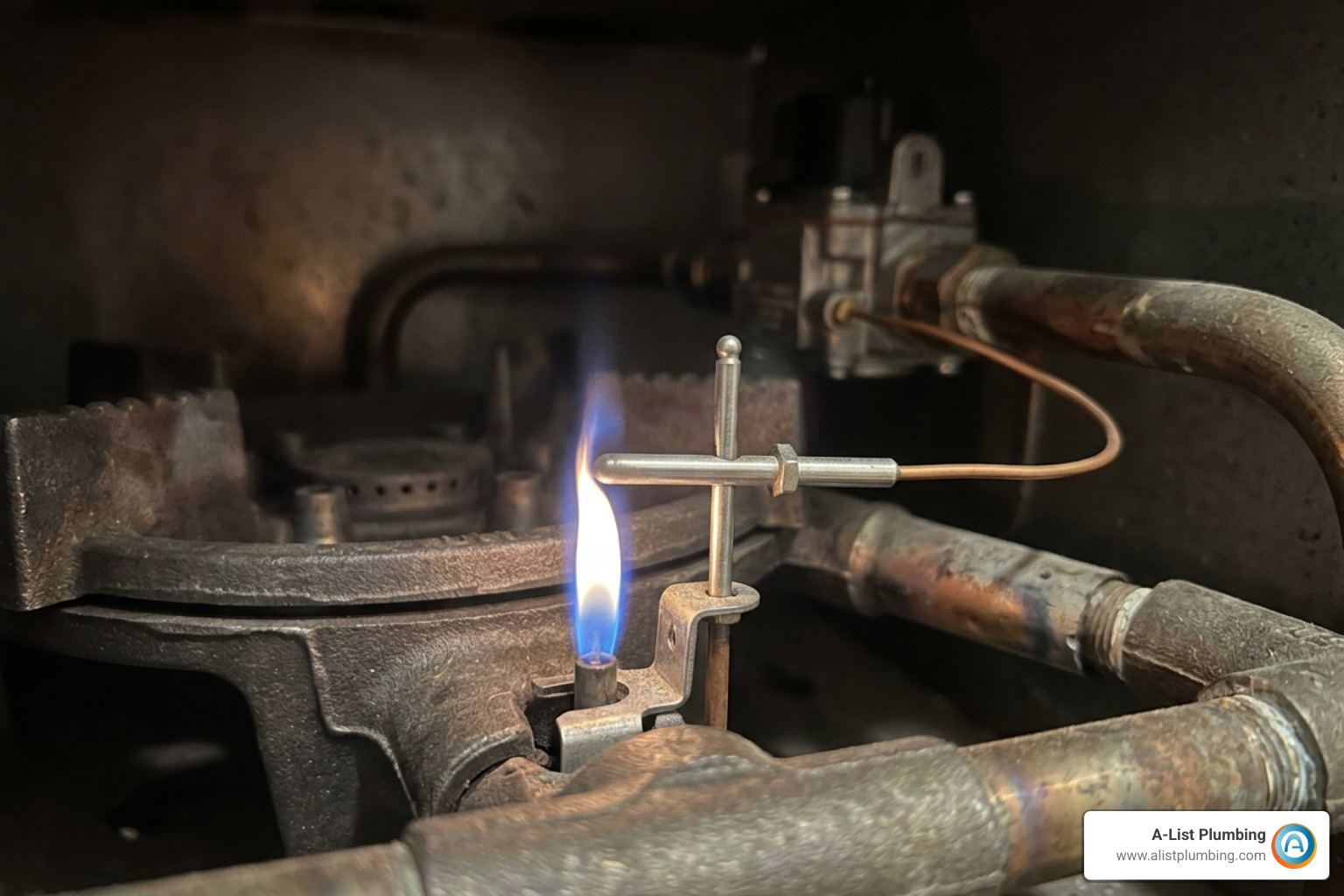
The thermocouple is a small metal sensor rod sitting right next to the pilot. When heated by the flame, it generates a tiny millivolt electrical current (roughly 20 to 30 millivolts). This current energizes an internal electromagnet that holds the gas safety valve open. If the thermocouple gets coated in carbon soot, slips out of alignment, or burns out entirely, it cannot produce that electrical charge. As a result, the valve automatically snaps shut to prevent unburned gas from filling your house.
A replacement thermocouple costs around $20 for the part and takes a professional plumber about 15 minutes to replace. You can review typical repair expenses in our hot water heater repair costs guide.
Addressing Dirty Burners and Gas Line Issues
Beyond thermocouple issues, physical blockages in your fuel supply can keep a pilot from catching:
- Clogged Pilot Orifice: Fine dust, soot, or insect nests can block the pinpoint hole in the pilot bracket, reducing gas flow down to a weak flicker.
- Kinked Supply Tubes: The small aluminum tubes feeding the pilot can get pinched during maintenance or tank shifts.
- Gas Line Pressure Drops: Fluctuations in your household gas line supply can starve the burner.
When internal burner assemblies get covered in corrosion or debris, consult our water heater burner repair guide to see how professional cleaning and orifice adjustments restore clean combustion.
Frequently Asked Questions About Water Heater Pilots
How long does it take for hot water to return after relighting?
Once your pilot light is back on and the main burner engages, it takes approximately 30 to 60 minutes for a standard 40- to 50-gallon water heater tank to heat completely. The exact recovery speed depends on the size of your tank, your incoming ground water temperature, and the total BTU rating of the burner.
What does a yellow or orange flame indicate?
A healthy pilot flame is always a crisp, sharp blue, occasionally showing small soft yellow tips. If your pilot flame burns bright yellow, lazy orange, or flickers like a candle wick, it indicates incomplete combustion. This happens when the burner cannot pull in enough oxygen, often caused by dirt, soot buildup, or restricted airflow. Incomplete combustion generates dangerous carbon monoxide gas, so shut the unit off and have a professional inspect it right away.
When should I call a professional for pilot light issues?
While relighting a pilot is an easy DIY task, certain symptoms demand expert attention. You should pick up the phone if:
- The pilot refuses to stay lit after multiple careful relighting attempts.
- You catch any persistent smell of gas around the tank.
- The flame burns bright yellow or leaves heavy black soot around the access port.
- The gas control valve LED displays a hardware failure or sensor lockout code.
- Water is pooling near the base of the tank or leaking onto the burner.
For severe issues or persistent shutdowns, check out our emergency plumber guide to get fast, reliable support.
Conclusion
Getting your water heater pilot light back up and running is usually a quick 10-minute fix that gets your daily routine right back on track. Just remember to take your time, give any residual gas plenty of time to clear out, and keep an eye on that flame to ensure it stays a steady, healthy blue.
If your pilot keeps acting up, the thermocouple gives out, or you just prefer to have an experienced eye take a look, our team is always ready to step in. We bring over 22 years of hands-on plumbing experience to every call, providing prompt same-day availability and 100% transparent pricing across Lynnwood, Edmonds, Shoreline, Bothell, Seattle, and the Greater Seattle area.
When you're ready for fast, dependable help with your water heater or any other household plumbing needs, schedule your professional water heater repair with our friendly crew at A-List Plumbing!