

How to Identify a Main Sewer Line Clog vs. a Local Fixture Issue
To unclog main drain lines effectively, safely open your exterior sewer cleanout and clear the obstruction using a motorized drum snake for solid paper and root clogs, a sewer jetter kit for thick grease, or a thermal-enzymatic flush for organic buildup. Before choosing a method, determine whether your drainage issue is localized to a single fixture or systemic across your whole house.
A localized clog happens when hair gets caught inside a bathroom P-trap or food scraps jam up a kitchen drain. A systemic blockage in your main sewer lateral is an entirely different beast. When the main lateral backs up, wastewater reverses direction and forces its way up through your ground-floor or basement drains.
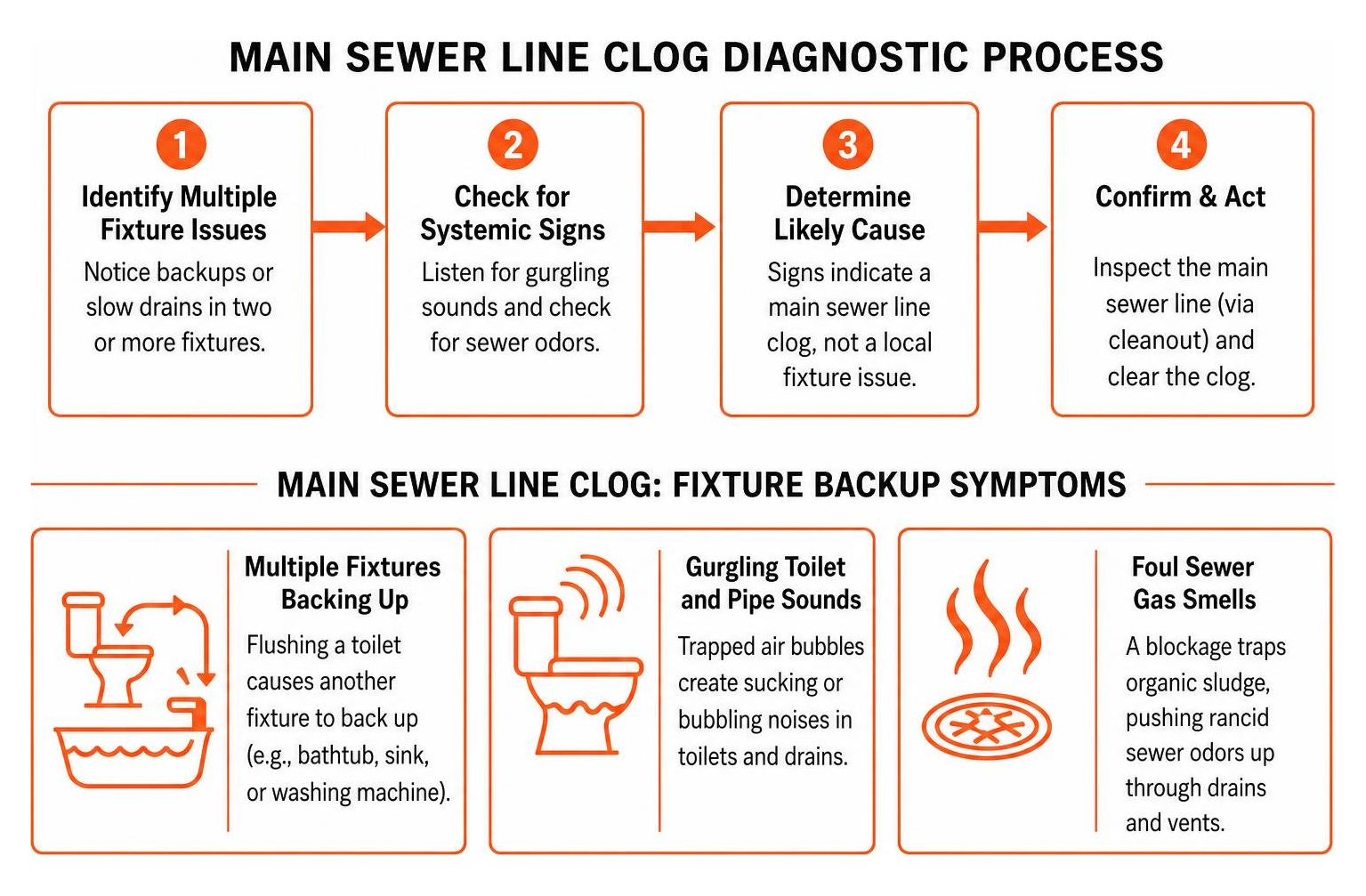
Here are the dead giveaways that your main drain is clogged:
- Multiple fixtures backing up at once: If flushing a toilet makes dirty water bubble up inside your bathtub, or if running the washing machine causes your kitchen sink to overflow, the problem is in the main line.
- Gurgling toilet and pipe sounds: Trapped air bubbles trying to squeeze past a large blockage create distinct sucking or bubbling noises in nearby toilets and floor drains.
- Foul sewer gas smells: A severe blockage traps organic sludge, pushing rancid sewer odors up through your fixture drains and vents.
- Standing sewage in basement or floor drains: Water pooling around low-lying basement floor drains means your lateral pipe is completely full of trapped wastewater.
These systemic issues usually come from years of buildup. Things like "flushable" wipes (which do not break down in pipes), solidified cooking grease, thick organic sludge, or rust scale clinging like velcro inside older cast iron lines all narrow your pipe's inner diameter until it shuts down entirely. If you're dealing with recurring backups across multiple rooms, getting professional clog drain repair will protect your home from sudden flooding.
Locating and Safely Opening Your Main Sewer Cleanout
To clear a main drain, you need direct access to the sewer lateral pipe. That access point is your sewer cleanout.
In most Pacific Northwest homes across Seattle, Lynnwood, and Edmonds, the cleanout is a 3- to 4-inch white or black pipe sticking out of the ground near your foundation, out in the yard, or mounted low on a basement or crawlspace wall. It is sealed with a threaded square or recessed plug. If you don't have one installed yet, learning about the sewer cleanout cost can help you plan a direct access upgrade for easier plumbing maintenance down the road.
Opening a pressurized cleanout requires caution. If gallons of sewage are backed up behind that cap, unscrewing it too quickly will cause an unpleasant, pressurized geyser.
- Put on protective gear: Put on heavy waterproof rubber gloves, safety goggles, and sturdy boots. Raw sewage carries nasty bacteria and biohazards.
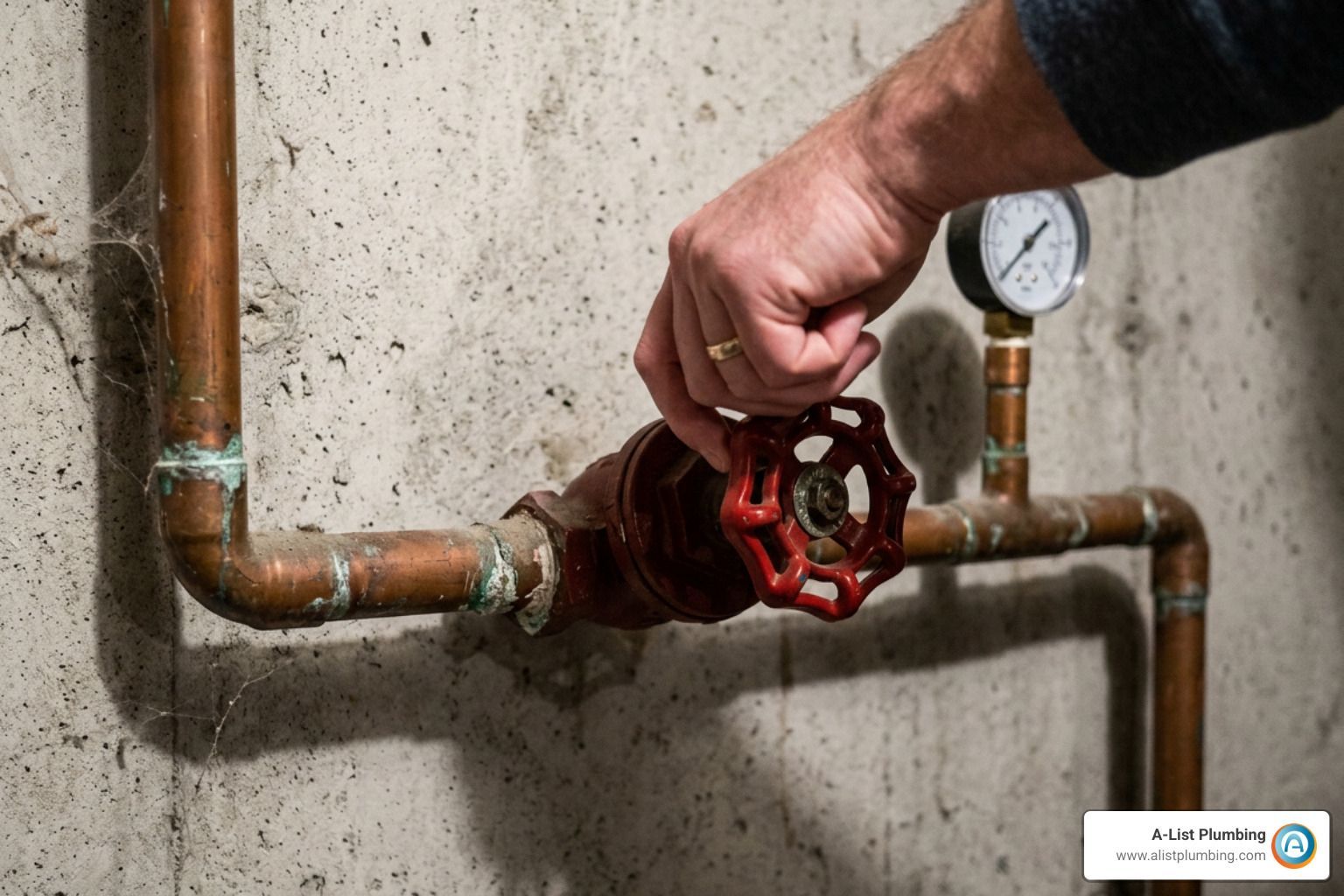
- Turn off the main water valve: Make sure no one runs a faucet or flushes a toilet while you're working.
- Place a catch bucket: Set a shallow tub or buckets right under the cleanout plug to catch standing wastewater.
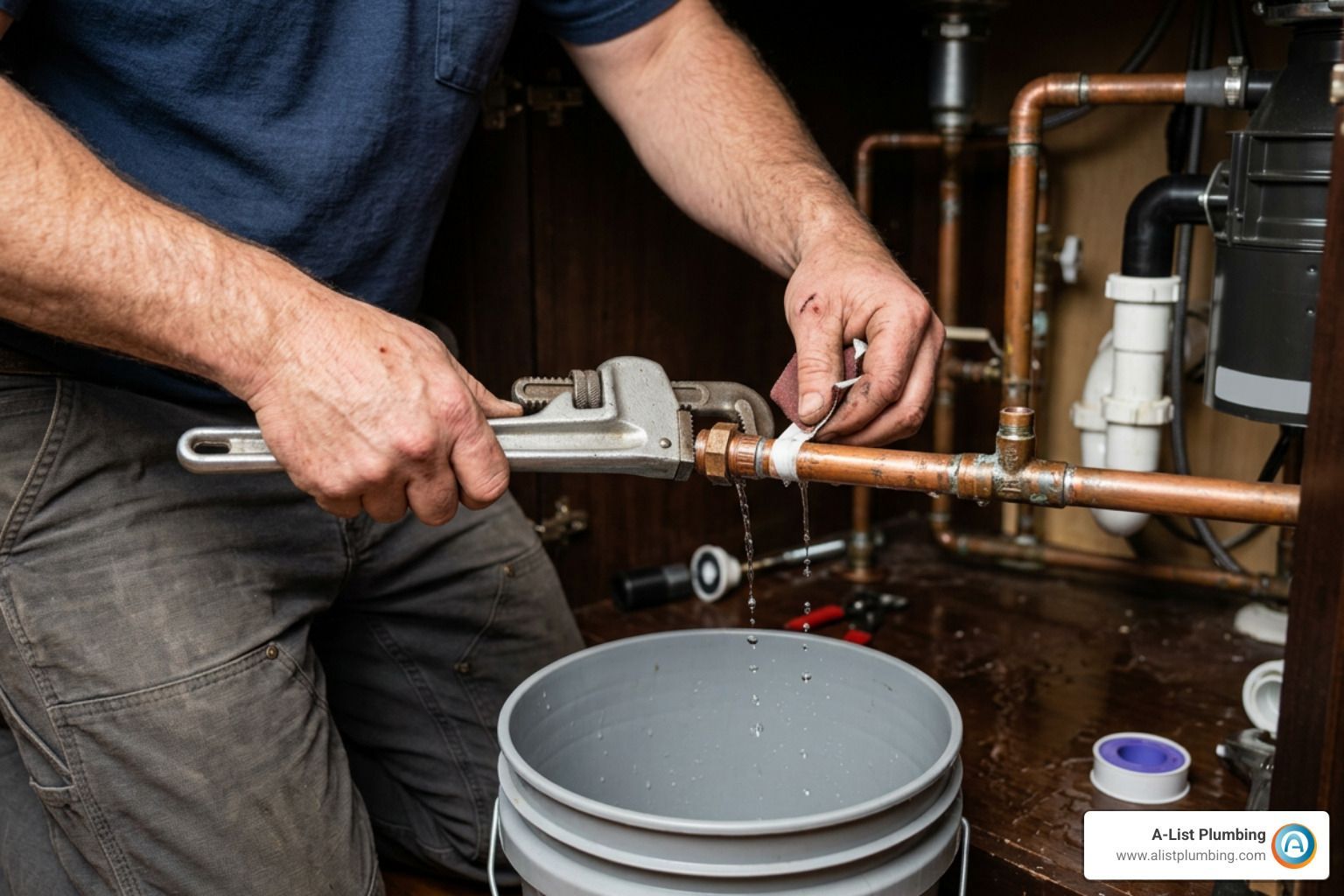
- Loosen the cap slowly: Use a pipe wrench or an adjustable wrench on the raised square nut. Turn it counterclockwise very slowly. If wastewater starts trickling out around the threads, stop turning! Let the trapped liquid drain slowly into your bucket until the hydraulic pressure drops completely before taking the cap off all the way.
4 Proven Methods to Unclog Main Drain Lines
Different blockages require different tools. Use the comparison table below to pick the best approach for your specific drain issue.
| Method | Best For | Tool Needed | DIY Risk Level | Estimated Cost |
|---|---|---|---|---|
| Motorized Drum Auger | Heavy paper clogs, solid sludge, light root snags | Commercial power snake (1/2" to 5/8" cable) | Moderate | $100 – $250 (rental) |
| Power Washer Sewer Jetter | Thick grease walls, soft sludge, fatbergs | Pressure washer + sewer jetter hose kit | Moderate | $50 – $150 (attachment kit) |
| Thermal-Enzymatic Flush | Partial paper blockages, organic slime build-up | 140°F hot tap water + cellulase enzymes | Very Low | $20 – $40 |
| Chemical Openers & Copper Sulfate | Dissolving slow sludge & killing intrusive tree roots | High-density main line formula / copper sulfate crystals | Low | $25 – $50 |
Method 1: Using a Motorized Snake to Unclog Main Drain Blockages
When dealing with dense toilet paper, personal hygiene products, or stubborn sludge, a motorized drum snake is the gold standard for mechanical clearing. A small hand snake or closet auger will not work here. You need a dedicated machine with a 50- to 100-foot cable that is at least 1/2-inch to 5/8-inch thick so the cable doesn't double back and knot inside a wide 4-inch sewer pipe.
To tackle the obstruction thoroughly, use the bi-directional snaking method outlined in this pro guide to snaking cleanout drains:
- Attach the right cutting head: Fit the cable tip with a standard spade bit or a C-cutter head to chop through dense masses.
- Feed the cable downstream: Insert the cable into the cleanout opening pointed towards the street (or septic tank). Turn on the power drum using the forward foot pedal while holding the cable firmly with heavy leather gloves.
- Work through the obstruction: When you feel the cable bog down or push back, do not force it! Ease up on the feed and let the spinning cutter chew through the blockage using a smooth back-and-forth sawing motion. You will know you hit tree roots if the cable pushes back with springy tension, while grease will feel mushy and slow the motor down.
- Clear upstream: Once the downstream line drains, pull the cable back and feed it in the opposite direction—up toward your home's main vertical stack—to clear any secondary waste that settled higher up.
- Flush and test: Run a garden hose or flush your toilets for 5 to 10 minutes to wash debris out to the municipal connection.
If you don't feel comfortable handling high-torque motorized machinery, you can easily book our professional drain snake service seattle to take care of it for you.
Method 2: Power Jetting with a Consumer Pressure Washer Attachment
If your main drain is choked with years of congealed cooking fats, body soaps, and oily sludge, snaking will often only poke a small hole through the middle. A great DIY way to scrub the entire pipe wall is by pairing a residential pressure washer with a specialized sewer jetting hose.
As detailed in this guide on unclogging a main sewer line without a snake, this setup uses high-pressure water to pull itself down the line and blast away buildup:
- Connect the jetter kit: Connect a 50- to 100-foot flexible sewer jetter hose to your pressure washer trigger gun. Make sure the nozzle has both forward-firing and rear-facing propulsion jets.
- Feed before spraying: Push the nozzle at least 1 to 2 feet inside the sewer cleanout before pulling the pressure washer trigger. Never turn the pressure on while the nozzle is outside the pipe!
- Advance the line: Let the rear jets pull the hose forward down the drain. Gently wiggle or pulse the hose to guide it around tight 90-degree elbows.
- Scour the pipe walls: Slowly draw the hose back toward you while it sprays to peel grease sheets off the pipe walls, then let it slide forward again until you hear the standing water suddenly rush away.
- Shut down safely: Turn off the pressure washer completely before pulling the nozzle back out of the cleanout opening.
If you want a safe way to completely clear drain pipe lines without risking pipe damage from mismatched PSI, commercial water jetting is always a reliable route.
Method 3: Thermal-Enzymatic Flushing to Unclog Main Drain Buildup
For minor main line slowdowns caused by excessive toilet paper or organic slime, you can break down the blockage using warm water and natural enzymes instead of mechanical tools.
As explained in this resource on clearing toilet paper main drain blockages, cellulase-based enzymes work like microscopic biological scissors to digest cellulose fibers and organic biofilm:
- Warm the water: Heat tap water to around 130°F–140°F. Never pour boiling water (over 170°F) down your drains, as extreme heat can warp PVC joints and melt toilet wax rings.
- Mix the enzymes: Blend a concentrated dose of liquid cellulase enzyme cleaner or a 1:1 mixture of baking soda and white vinegar with the warm water.
- Pour directly into the cleanout or lowest toilet: Pour the mixture into your cleanout access or down your ground-floor toilet to get it as close to the clog as possible.
- Let it sit: Give the enzymes at least 1 to 2 hours (or let it sit overnight) with all household plumbing turned off.
- Flush the line: Run hot tap water down the line for 5 to 10 minutes to flush away the softened residue.
Method 4: Chemical Main Line Openers and Targeted Root Treatments
When physical tools aren't handy, specialized liquid main line openers and root treatments can help dissolve stubborn clogs.
- High-density non-caustic cleaners: Standard sink cleaners dilute too quickly to clear a lateral line 40 feet away. Main line formulations use dense ingredients that sink through standing water to target grease and organic matter. Pour one gallon down your lowest toilet, flush once to push it into the lateral, and let it rest undisturbed for 8 to 12 hours.
- Copper sulfate for tree roots: If roots have invaded your pipe joints, pour 1/2 pound to 1 pound of copper sulfate crystals down your toilet and flush immediately. Copper sulfate absorbs into tree root structures, killing off the root intrusion over the span of a week without harming the tree above ground.
Warning: Never mix different chemical drain cleaners together, and never pour harsh lye or acid cleaners into pipes if you plan to snake the line later. Splattering chemicals can cause severe skin and eye burns.
When to Call a Professional for Main Line Repair
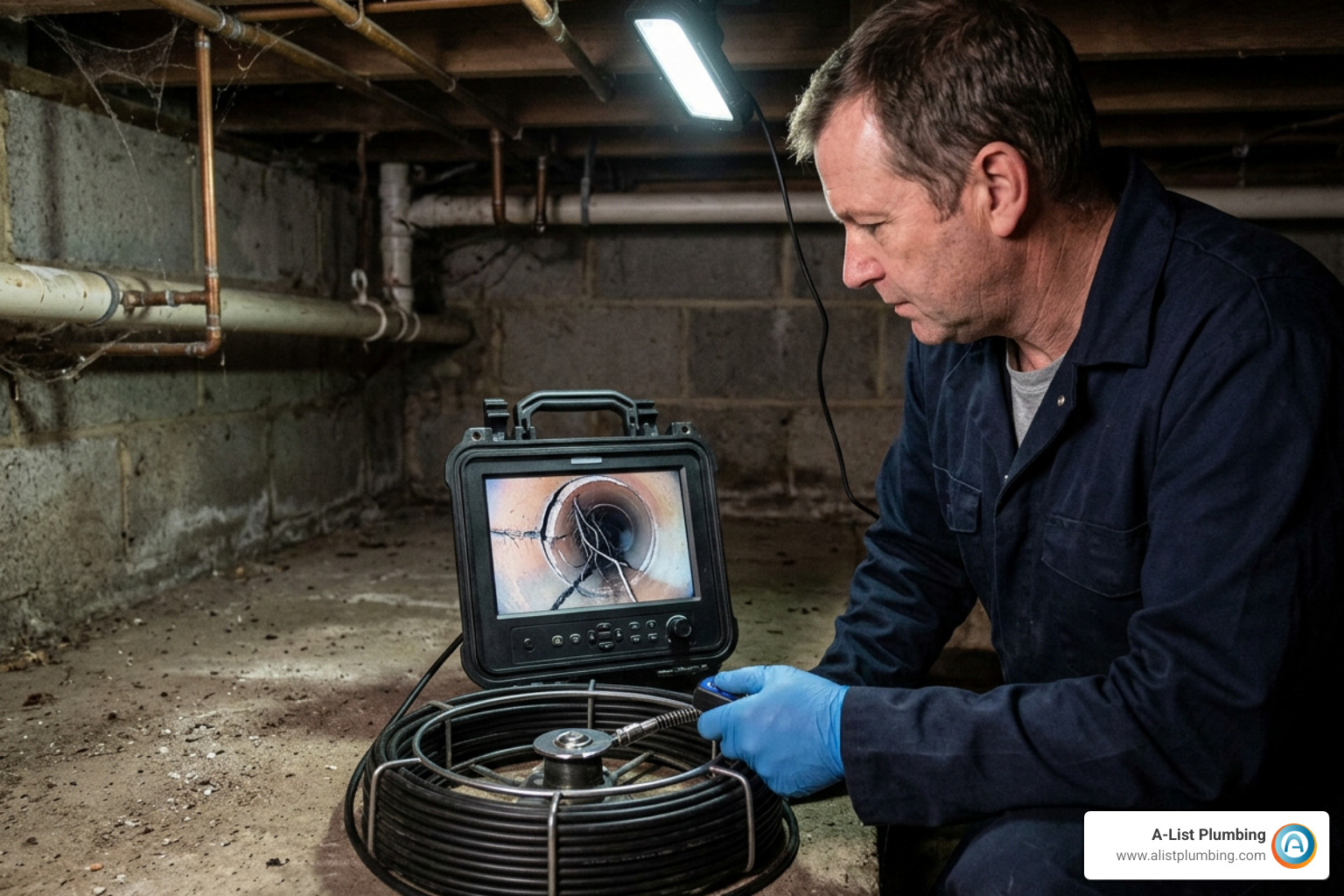
DIY solutions work wonders on ordinary paper clogs and soft grease, but they cannot fix broken underground pipes. If your main line keeps backing up every few weeks or refuses to drain after snaking, you need a professional diagnosis.
Call a licensed sewer specialist right away if you notice:
- Recurring backups: A main drain that clogs multiple times a year usually has a belly (a sagging pipe section), misaligned joints, or heavy root growth.
- Persistent yard sinkholes or foul puddles: Wet patches or sunken grass directly above your sewer path point to a cracked or completely collapsed underground pipe.
- Roots pulling back on your snake: If your auger head comes out wrapped in wood fibers, cutting them out is only a short-term fix; the pipe joint is already broken and letting groundwater in.
Our team at A-List Plumbing uses high-resolution video pipe inspection lynnwood cameras to look deep inside your lateral line and pinpoint the exact source of trouble without tearing up your lawn. For deep grease and heavy roots, our industrial hydro jetting services blast away scale and debris up to 4,000 PSI. If roots have broken through the line, our targeted services/de-rooting plumbing repair clears them out fast. If you are dealing with a severe collapsed sewer line, we can restore your system using modern trenchless pipe lining to replace the damaged lateral without digging long, messy trenches across your property.
Frequently Asked Questions About Main Drain Clearing
How much does it cost to clear or repair a main sewer line?
Nationwide, standard main sewer line clearing costs about $378 on average, with most typical snaking jobs running between $350 and $600. Minor drain snaking starts around $100 to $250, while advanced sewer camera inspections combined with high-pressure hydro jetting range from $350 to $1,600.
If tree roots have caused pipe damage, root removal and localized repairs cost $50 to $250 per linear foot, while a full sewer line replacement ranges between $3,000 and $25,000 depending on pipe depth, material, and excavation requirements. Plumbers typically charge hourly rates between $45 and $200 per hour for sewer line work.
Will a toilet paper clog in the main drain dissolve on its own?
A minor paper clog might soften over several days if water can still trickle past it, but a total blockage rarely dissolves on its own. Modern multi-ply toilet paper and flushable wipes bind with cooking grease and snag on rough cast iron rust scale. Once a paper mass compacts under water pressure, you need mechanical force or concentrated enzymes to break it apart.
Can tree roots in a sewer line be cleared with DIY methods?
DIY mechanical snaking can punch a small hole through root masses to restore temporary flow, and chemical treatments like copper sulfate will slowly kill off root tips over a week. However, DIY tools cannot cut roots flush against the pipe wall. Once roots break into a sewer pipe joint, they will keep growing back until the joint is structurally repaired or sealed using trenchless pipe relining.
Conclusion
Dealing with a clogged main sewer line is stressful, but acting fast prevents thousands of dollars in dirty water damage. By shutting down your water, accessing your cleanout safely, and using the right mechanical or thermal-enzymatic tools, you can clear out ordinary paper and grease clogs in no time.
For tough clogs, heavy tree roots, or older pipes that keep backing up across the Greater Seattle area—including Lynnwood, Edmonds, Shoreline, and Bothell—let our experienced team handle the dirty work. At A-List Plumbing, we bring 22 years of trusted hands-on experience, same-day service, and clear, upfront pricing to every job.
Whether you need 24/7 emergency drain cleaning service or comprehensive, long-term clog drain repair, get in touch with our team today to get your home flowing smoothly again!