

A Clogged Tub Drain Is Frustrating — Here's the Fast Fix
To unclog tub drain blockages caused by hair and soap scum, follow these steps:
- Remove the stopper and pull out any visible hair by hand or with a zip-it tool.
- Seal the overflow drain with a wet washcloth or duct tape.
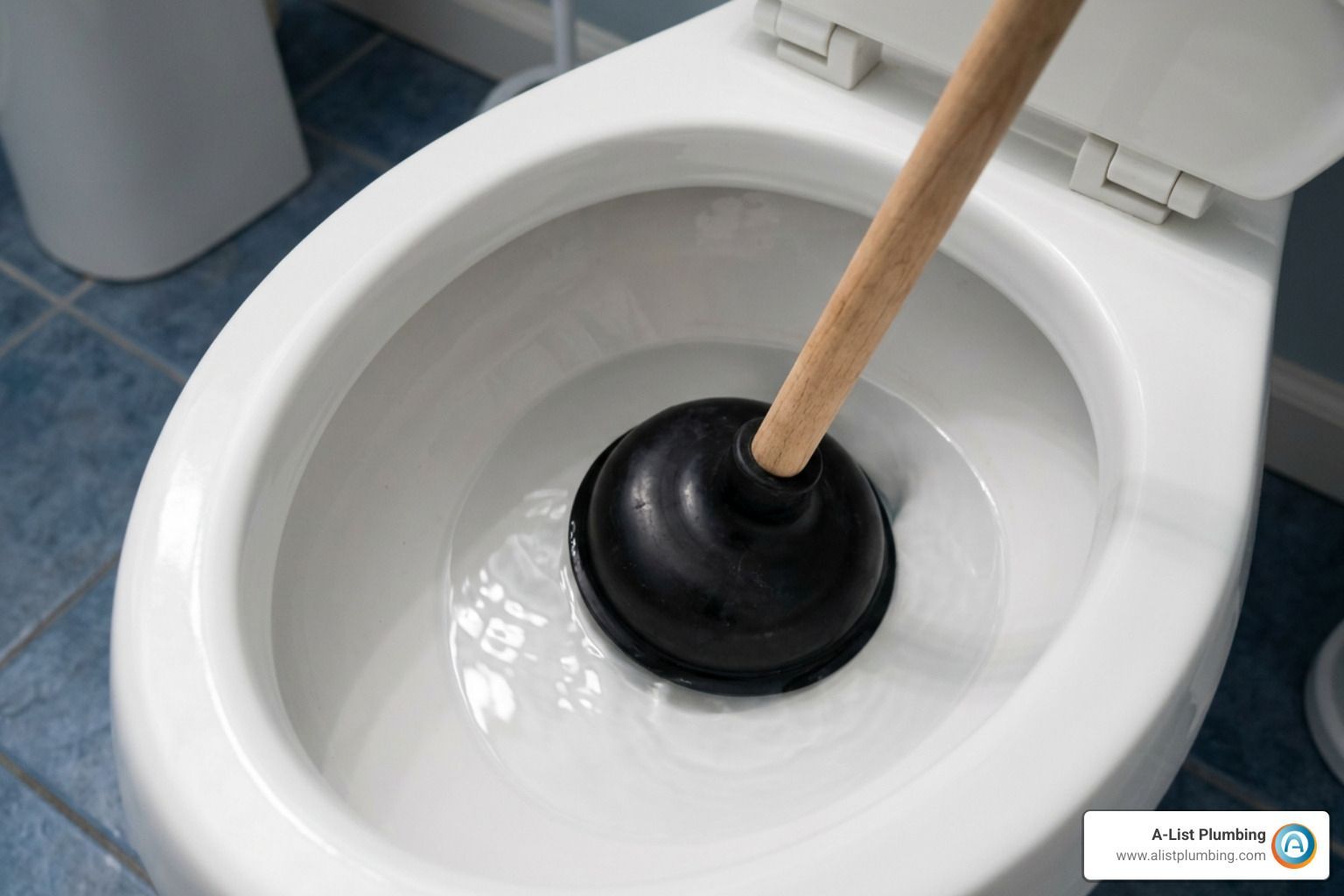
- Plunge the drain with a cup-style plunger using firm, quick strokes for 15-30 seconds.
- Flush with hot water to confirm the clog is clear.
- Repeat or snake if water still drains slowly.
Most bathtub clogs are caused by hair tangling with soap scum just a few inches below the stopper. The good news? You can usually clear them in minutes with tools you already have at home — no chemicals required.
Your bathroom has more drains than any other room in your house, which means clogs are almost inevitable at some point. Hair is the most common culprit, especially during shampooing or shaving — even without long hair in the household.
I'm Heath Shockman, owner of A-List Plumbing since 2011, and I've cleared hundreds of stubborn bathtub clogs across the Greater Seattle area. In this guide, I'll walk you through everything you need to unclog tub drain blockages quickly and safely, and I'll tell you exactly when it's time to call in a pro.
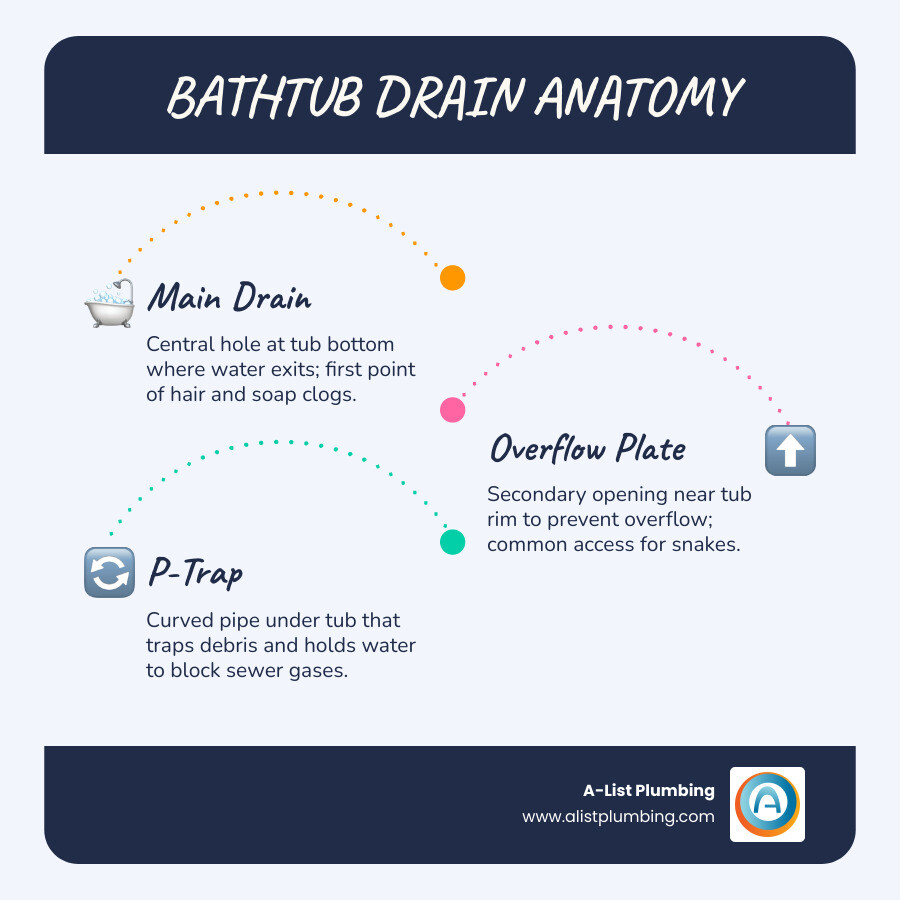
Common Causes of a Clogged Bathtub Drain
Before you grab your tools, it helps to understand what you’re fighting. In our 22 years of experience serving neighbors from Lynnwood to Seattle, we’ve found that most bathtub backups aren't caused by one single event, but a slow accumulation of daily life.

- Hair Buildup: This is the undisputed heavyweight champion of Clogged Drains. Every time you shower, strands of hair wash down. Because hair is stringy, it gets caught on the drain stopper mechanism or the crossbars of the drain. Over time, it creates a "net" that catches everything else.
- Soap Scum: As experts at This Old House point out, soap isn't just bubbles. Many bar soaps contain fats and minerals that react with the water to create a sticky film. This film coats the pipes and acts like glue for the hair.
- Mineral Deposits and Hard Water: In parts of the Greater Seattle area, hard water can lead to calcium and magnesium buildup inside your pipes. This narrows the "lumen" (the inside diameter) of the pipe, making it much easier for a small amount of hair to cause a total blockage.
- Foreign Objects: From small toy cars to jewelry, things that shouldn't be in the tub often find their way into the drain. These objects act as an anchor for clogs deeper in the system.
How to Unclog Tub Drain Using the Plunger Method
If you have standing water in your tub, the plunger is your first line of defense. However, many homeowners fail at this because they use the wrong tool or forget one crucial step: sealing the overflow.
| Tool Type | Effectiveness | Best Use Case |
|---|---|---|
| Cup Plunger | High | Flat surfaces like bathtubs and sinks |
| Flange Plunger | Low | Toilets (the "beak" prevents a flat seal in tubs) |
| Drain Snake | Very High | Deep hair clogs or mineral buildup |
| Chemical Cleaners | Low/Risky | Minor organic clogs (can damage old pipes) |
To effectively unclog tub drain issues with a plunger, you need a cup-style plunger. The flat rim allows it to form a vacuum against the bottom of the tub.
Step-by-Step Guide to Unclog Tub Drain with Suction
To get the most out of your plunger, you need to turn your plumbing into a closed system.
- Seal the Overflow: This is the most important step. The overflow drain (the silver plate higher up on the tub wall) is designed to let air in so the tub drains faster. If you don't seal it, the plunger will just push air out of the overflow instead of pushing water against the clog. Use duct tape or a very wet washcloth held firmly in place.
- Add Standing Water: You need about 1 to 2 inches of water in the tub. The water helps create the seal and provides the mass needed to "hammer" the clog loose.
- Apply Petroleum Jelly: For an even better seal, rub a little petroleum jelly around the rim of the plunger cup.
- The Technique: Place the plunger over the drain and push down slowly to get the air out. Then, use quick, forceful up-and-down strokes for about 15-30 seconds. The "pull" is just as important as the "push," as it helps wiggle the hair clog free.
If you’re in a pinch in a high-rise or older building, professional Clog Drain Repair in Seattle WA might be necessary if the blockage is shared between units.
Preparing the Drain for Maximum Plunger Force
Before you start pumping, you must remove the stopper. Depending on your tub, you might have a "pop-up," a "toe-touch," or a "lift-and-turn" stopper. Most of these can be unscrewed by hand or with a simple screwdriver. Removing the physical barrier allows the pressure from the plunger to hit the clog directly.
As of April 2026, we recommend checking your stopper assembly monthly. If the linkage is slimy or covered in hair, clean it immediately. A clean stopper prevents the "seed" of a clog from ever forming.
Manual Removal and Natural Remedies
Sometimes, the best way to unclog tub drain blockages is the old-fashioned way: fishing it out.
- Needle-Nose Pliers: If you can see the hair, reach in with pliers and pull it out. It’s gross, but it’s the most effective 30-second fix.
- The Wire Hanger Trick: Take a wire coat hanger, straighten it out, and create a tiny "U" hook at the end. Feed it into the drain, twist, and pull. You’ll be surprised (and perhaps horrified) by what comes out.
- Baking Soda and Vinegar: This is the "science fair volcano" method. Pour half a cup of baking soda down the drain, followed by half a cup of white vinegar. Cover the drain and let it fizz for 15 minutes. The chemical reaction can help break down the "glue" of the soap scum. Follow up with a gallon of boiling water.
For more persistent issues, our Drain Rooter Services can clear out what a coat hanger simply can't reach.
Using a Drain Snake to Unclog Tub Drain via the Overflow
When the plunger fails, it’s time for the "snake" (also known as a hand auger). For a bathtub, the best way to snake isn't through the main drain, but through the overflow.
- Remove the Overflow Plate: Unscrew the two screws on the overflow plate. Be careful not to drop the screws down the drain!
- Insert the Snake: Feed the cable into the overflow hole. This bypasses the tricky angles of the drain and goes straight down into the P-trap, where most clogs live.
- Crank and Rotate: Once you feel resistance, you’ve hit the clog. Crank the handle clockwise while pushing forward. This hooks the hair onto the end of the snake.
- Retrieve: Pull the cable back slowly. Have a plastic bag and some paper towels ready—you’re about to pull out a "hair monster."
Safe Chemical Alternatives and Pipe Protection
We generally advise against harsh, acidic chemical cleaners. They can generate intense heat that softens PVC pipes or eats away at the solder in older lead or copper pipes.
Instead, look for enzymatic cleaners. These contain live bacteria or enzymes that "eat" organic matter like hair and soap. They take longer (often needing to sit overnight), but they are 100% safe for your plumbing and the environment.
Natural Cleaning Ingredients List:
- Baking Soda (Sodium Bicarbonate)
- White Vinegar (Acetic Acid)
- Lemon Juice (Citric Acid)
- Borax
- Washing Soda
Prevention and Professional Solutions
The best way to unclog tub drain pipes is to never let them get clogged in the first place.
- Mesh Strainers: Buy a $5 stainless steel mesh strainer. It catches 95% of hair before it even enters the pipe.
- Brush Before You Wash: Brushing your hair before getting in the shower removes loose strands that would otherwise end up in the drain.
- Monthly Flush: Once a month, pour a kettle of boiling water down the drain to melt away fresh soap scum.
- Listen to Your Pipes: If you hear gurgling sounds or notice the water is taking longer and longer to disappear, don't wait for a total backup. Address it while it's still a "slow drain."
When to Call a Professional for a Persistent Unclog Tub Drain Issue
DIY is great, but sometimes the problem is bigger than a hand auger can handle. You should call A-List Plumbing if:
- The Overflow Screw is Stripped: If you can’t get the plate off to snake the drain, don't force it. You could crack the tub or break the internal linkage.
- Recurring Backups: If you clear the clog and it returns a week later, you likely have a deeper issue in the main line.
- Multiple Clogged Fixtures: If your tub backs up when you flush the toilet, you have a sewer line blockage. This requires professional Sewer Drain Clog Repairs for Seattle.
- Standing Water You Can't Budge: If you've plunged and snaked to no avail, the clog might be made of mineral deposits or tree roots that require a motorized industrial auger or hydro-jetting.
Frequently Asked Questions about Bathtub Drains
How do I handle a tub with standing water I can't remove?
If the tub is full and won't drain at all, you need to remove the water before you can use natural remedies like baking soda. Use a bucket to bail out the majority of the water into a nearby toilet. For the last bit, a shop vac (wet/dry vac) is incredibly effective at sucking out the standing water—and sometimes it can even suck the clog out with it!
Is boiling water safe for my PVC pipes?
Standard PVC (white plastic) is usually rated for temperatures up to 140 degrees Fahrenheit. Boiling water is 212 degrees. While a single pot of boiling water usually cools down enough as it hits the standing water in the trap, repeated use can cause PVC joints to soften and eventually leak. If you have PVC, use "hot" tap water rather than "boiling" water. Also, never pour boiling water into a cold porcelain or "china" fixture, as the thermal shock can crack it.
Why does my bathtub drain smell like rotten eggs?
That "rotten egg" smell is usually hydrogen sulfide gas. It’s caused by bacteria living in the "biofilm" (the gunk) inside your drain. As the bacteria eat the hair and soap scum, they release gas. A thorough cleaning with baking soda and vinegar, followed by a hot water flush, usually kills the odor-causing bacteria.
Conclusion
A clogged tub doesn't have to ruin your day. By understanding the common causes and mastering the plunger and snake, you can unclog tub drain blockages like a pro. However, if the "hair monster" is winning the fight, or if you're dealing with stripped screws and deep mainline issues, we are here to help.
At A-List Plumbing, we bring 22 years of experience to every job in Lynnwood, Edmonds, Shoreline, Bothell, and Seattle. We offer transparent pricing and same-day availability to get your life back to normal.
For more complex issues or to schedule a professional cleaning, view our professional plumbing services. We’ll get your drains flowing freely in no time!