

What to Do When You Have an Outside Pipe Leaking
Outside pipe leaking is one of the most damaging — and most overlooked — plumbing emergencies a homeowner can face.
Quick answer: Here's what to do right now:
- Shut off your main water valve to stop the flow
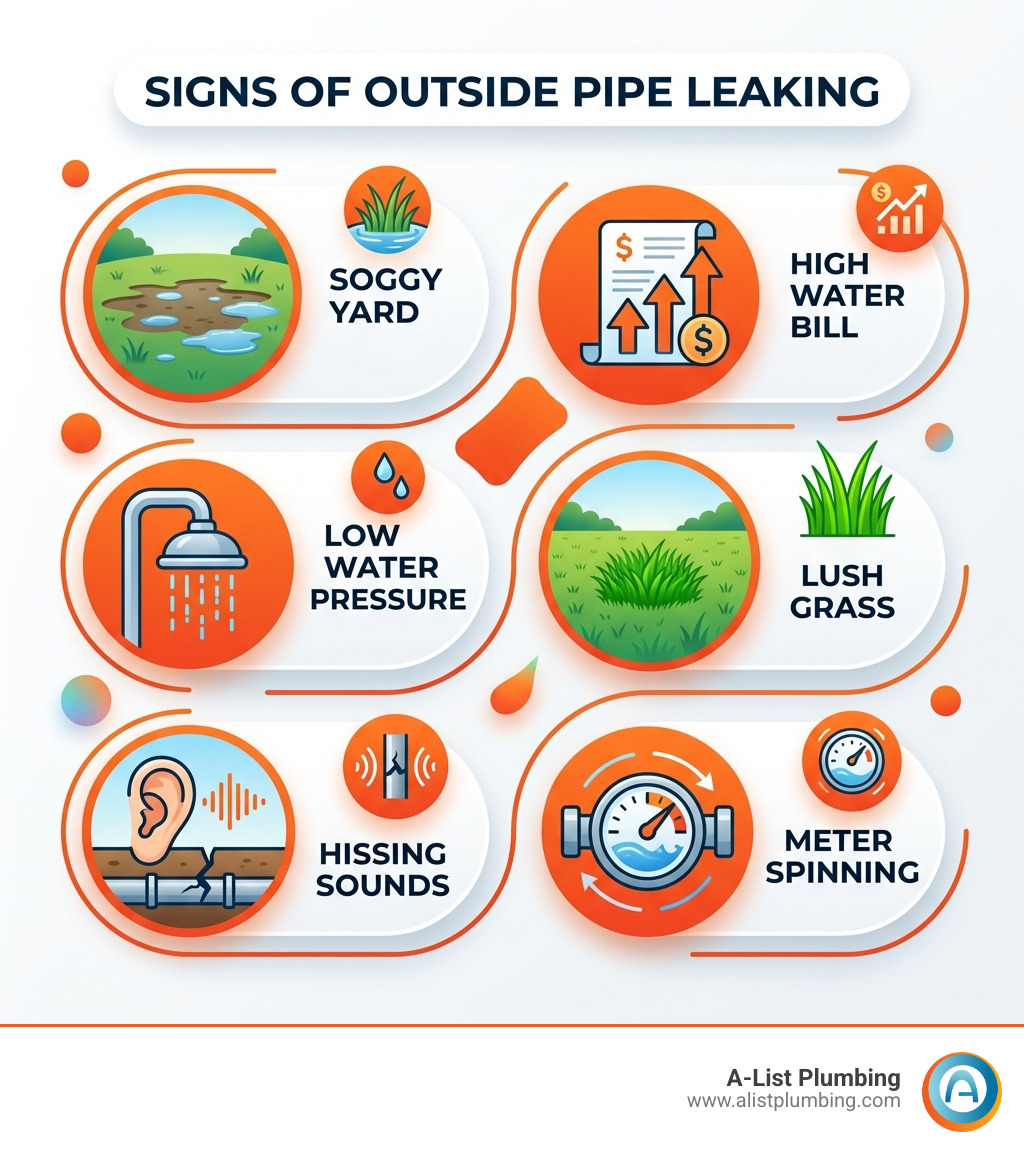
- Check your water meter — if it's spinning with all fixtures off, you have a confirmed leak
- Look for soggy patches, lush grass, or pooling water near pipes or the foundation
- Apply a temporary fix(silicone tape, epoxy putty, or a pipe clamp) if the pipe is accessible
- Call a licensed plumber if the leak is underground, near the foundation, or causing water pressure loss
Outdoor leaks are sneaky. Unlike a dripping kitchen faucet, a leaking exterior pipe can go unnoticed for weeks — quietly wasting thousands of gallons, eroding your soil, and even threatening your home's foundation. According to the EPA, a minor household leak can waste nearly 10,000 gallons of water every year. A dripping outdoor faucet alone can waste up to 20 gallons per day.
In the Greater Seattle area, the problem gets worse. Cold winters, invasive tree roots, and saturated soil all put extra stress on outdoor plumbing — and a small crack in the fall can become a burst pipe by winter.
I'm Heath Shockman, owner of A-List Plumbing since 2011, and I've spent over a decade diagnosing and repairing every type of outside pipe leaking across the Northwest — from corroded hose bibs to burst underground water lines. In this guide, I'll walk you through exactly how to find, fix, and prevent exterior pipe leaks before they become a costly disaster.
Identifying the Source of an Outside Pipe Leaking
Finding the source of an outside pipe leaking is often more difficult than spotting an indoor drip. Because these pipes are frequently buried or hidden behind siding, the water doesn't always pool right where the break is located.
The first step we always recommend to our neighbors in Lynnwood and Edmonds is the Water Meter Test. To do this, ensure every faucet, dishwasher, and washing machine inside the house is turned off. Find your water meter box (usually near the sidewalk or street) and look at the leak indicator-often a small red or silver triangle or a digital display. If that dial is spinning while your house is "silent," you have a leak.
Beyond the meter, keep an eye out for these visual cues:
- Soggy Patches: If you haven't had rain in days but a specific part of your lawn feels like a sponge, a pipe underneath is likely compromised.
- Unusually Lush Grass: Is one patch of your lawn looking like a tropical rainforest while the rest is just average? That extra nitrogen and constant hydration from a leaking pipe act like a turbo-boost for grass.
- Low Water Pressure: If your garden hose suddenly feels more like a trickle than a jet, the water is escaping somewhere else before it reaches the nozzle.
- Hissing or Gurgling: In quiet moments, you might actually hear the sound of pressurized water escaping into the soil.
If you suspect a leak but can't find the exact location, our team specializes in professional leak detection to pinpoint it without turning your yard into a series of trenches.

Signs Your Outside Pipe Leaking is Underground
Underground leaks are particularly dangerous because they can move the very earth your home sits on. When an exterior pipe breaks, the water softens the surrounding soil, washing away fine particles and creating "voids" or empty pockets.
Watch for these "red alert" signs:
- Soil Erosion and Sinkholes: Sudden dips or holes in your landscaping are a sign that the soil is being displaced by water.
- Cracked Pavement: If your driveway or walkway is heaving or cracking, water pressure underneath might be the culprit.
- Foundation Moisture: If you see water seeping into your crawlspace or basement, it may be traveling along the outside of the pipe through the foundation wall.
It is a common misconception that a simple patch is enough for an underground break. However, when soil movement caused the break, a rigid patch may fail again as the ground continues to settle. In many cases, the damaged section needs to be properly repaired or replaced so the line can handle future shifting and pressure changes.
Is the Outside Pipe Leaking from the Faucet or Spigot?
Sometimes the leak isn't deep in the ground but right at the "hose bib" (your outdoor faucet). These are high-traffic areas that take a beating from the Seattle weather.
Common faucet fail points include:
- The Packing Nut: If water leaks from the handle only when the water is turned on, the packing nut likely just needs a quick tighten with a wrench.
- The Washer: A constant drip from the spout usually means the internal rubber washer has hardened or cracked.
- The Vacuum Breaker: That little mushroom-shaped cap on top of some faucets is designed to prevent backflow. If it's spraying water, the internal seal has failed.
- Frost-Proof Sillcocks: These have a long stem that shuts off the water deep inside your warm house. However, if you leave a hose attached during a freeze, the water trapped in the pipe will expand and split the tube. You won't notice the leak until you turn the faucet on in the spring and water starts pouring out from inside your wall.
If your outdoor faucet is leaking, acting quickly can prevent siding damage, rot, and wasted water. In many cases, replacing worn internal parts solves the problem, but freeze-damaged sillcocks and hidden wall leaks often require professional repair.
Immediate Risks and Damage from Exterior Leaks
It’s tempting to think, "It’s just the yard; I’ll fix it next month." But the costs of an outside pipe leaking add up faster than you’d think.
The risks go far beyond a high utility bill:
- Foundation Instability: Constant water saturation can cause the soil around your foundation to expand and contract, leading to structural cracks that cost tens of thousands to repair.
- Mold and Rot: Water traveling along a pipe can enter your home's rim joists or siding, leading to silent wood rot and mold growth.
- Landscape Destruction: A significant leak can drown expensive trees, wash away mulch, and ruin your hardscaping.
- Electrical Hazards: If the water pools near outdoor lighting, outlets, or your home's electrical service entrance, it creates a lethal shock risk.
- Sewer Issues: Sometimes the leak isn't fresh water, but a break in your waste line. If you notice a "sewer smell" or soggy spots that seem particularly... unpleasant, you need to check your sewer lines immediately.
DIY Temporary Fixes for a Leaking Pipe
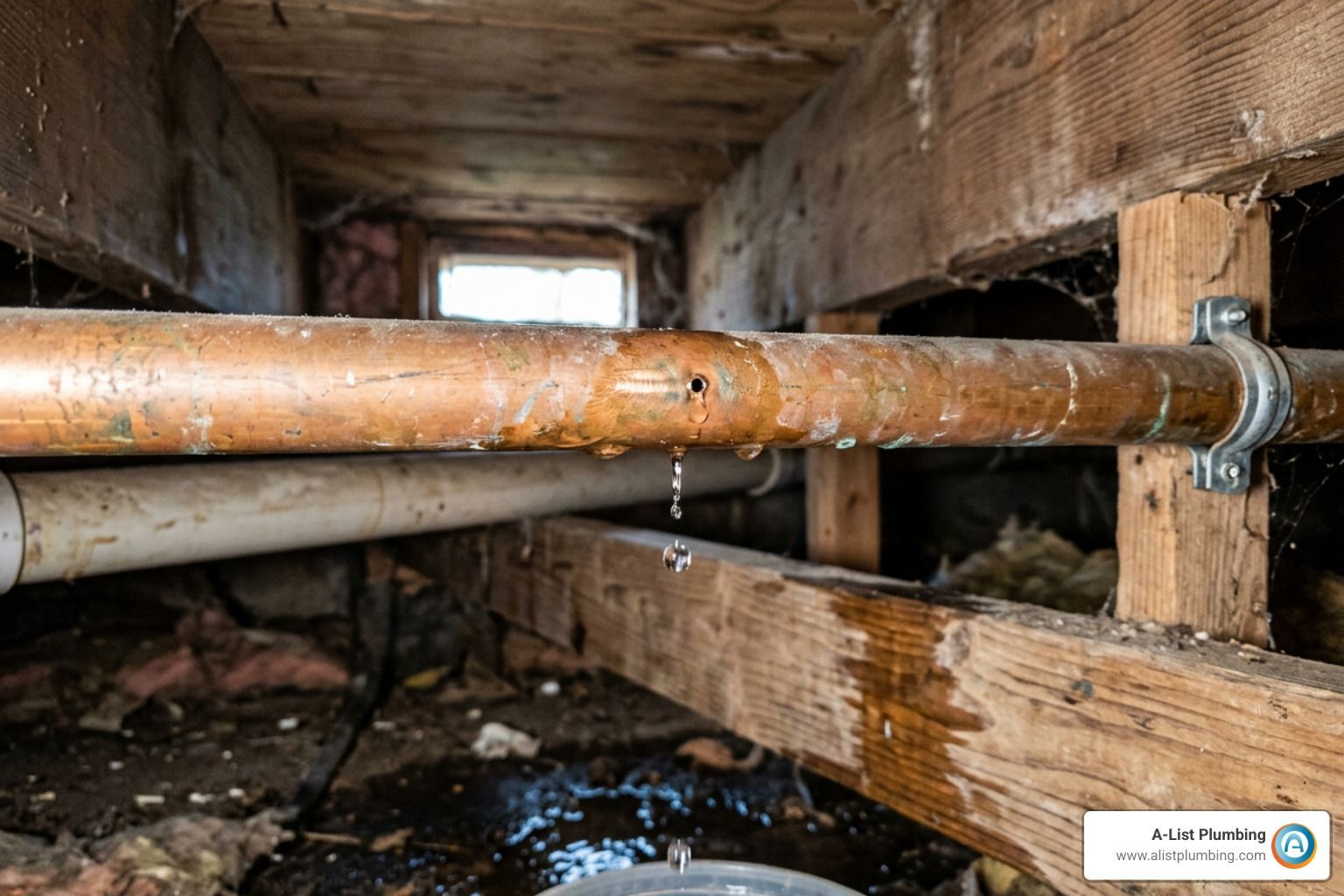
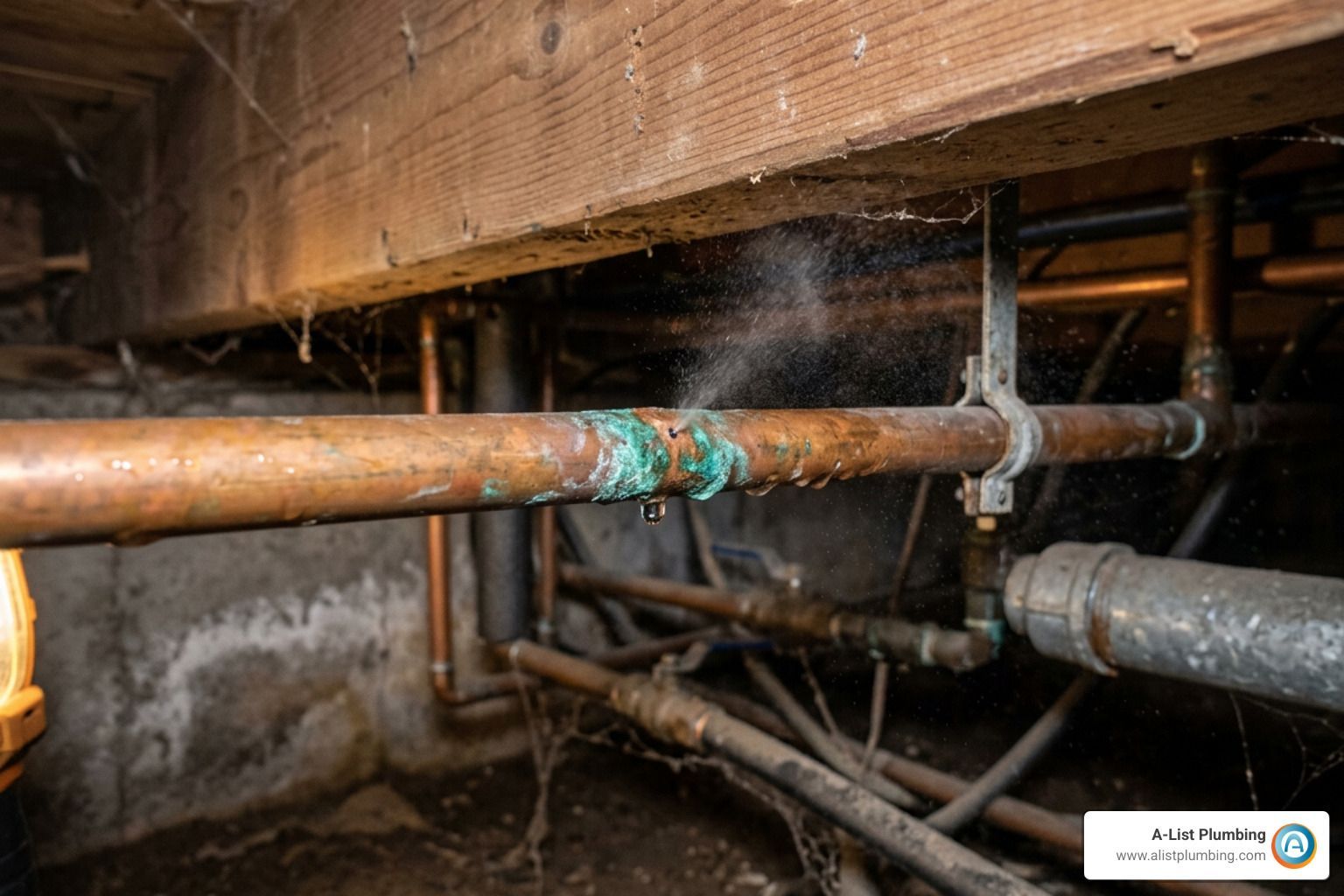
If you've found an outside pipe leaking and it's accessible (like a pipe in a crawlspace or an exposed line leading to a pool), you can often buy yourself some time with a temporary fix.
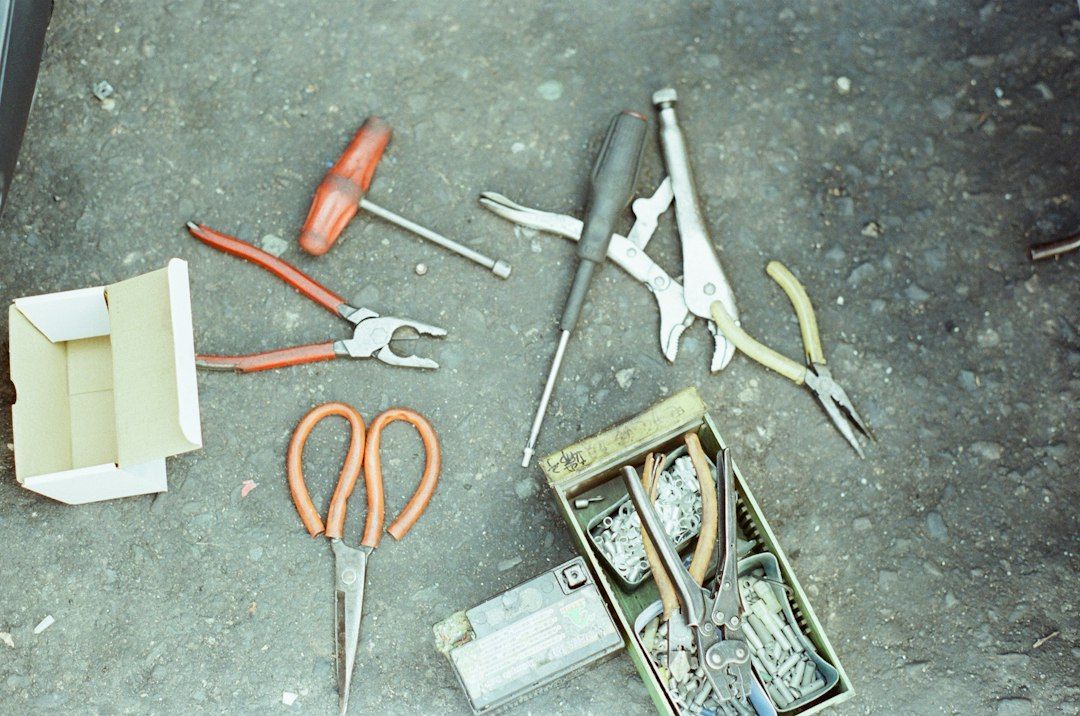
Essential Emergency Kit:
- Self-Fusing Silicone Tape: This is a plumber's best friend. It doesn't have adhesive; instead, it bonds to itself when stretched. It can hold back significant pressure if wrapped tightly.
- Epoxy Putty: A two-part "clay" that you knead together and press over a crack. It hardens into a rock-like seal in minutes.
- Pipe Repair Clamps: A metal sleeve with a rubber gasket inside. You bolt it over the leak, and the pressure of the gasket stops the flow.
- Neoprene Patches: A piece of thick rubber that can be held in place by standard hose clamps.
These materials can slow or stop a leak long enough to prevent more damage, but they should be treated as short-term solutions until a proper repair is completed.
Diverting Water from a Vertical Outside Pipe Leaking
What if you have a trickle running down a vertical pipe that you can't shut off yet? Gravity is your enemy here, as the water will follow the pipe all the way down to your floor or foundation. You can use "diversion tactics" to lead the water into a bucket:
- Wicking String: Tie a piece of thick cotton yarn or hydrophilic string around the pipe. The water will follow the string. Lead the other end of the string into a bucket.
- BluTack Spouts: Use mounting putty to create a little "diving board" or spout on the pipe that forces the water to drip off into a container.
- Aluminum Foil Funnels: Wrap foil around the pipe and shape it into a funnel or a point to direct the flow.
- Cling-Film Redirection: Wrap plastic wrap tightly around the pipe above the leak and fold it outward to create a path for the water.
Semi-Permanent Repairs Without Full Replacement
Sometimes, a full pipe replacement isn't in the cards today. There are "semi-permanent" options that can last months if applied correctly:
- Fiberglass Wraps: These are water-activated tapes that harden into a "cast" around the pipe. They are incredibly strong and can even handle high-pressure lines.
- Mechanical Pipe Plugs: If a section of pipe is no longer needed, these expandable rubber plugs can seal off a line internally.
- Resin-Coated Tape: Similar to fiberglass, these create a chemical bond with the pipe surface.
While these work in a pinch, they are still patches. For a long-term solution, you'll eventually need a broken pipe repair to ensure the system is up to code.
Step-by-Step Guide to Permanent Outdoor Pipe Repair
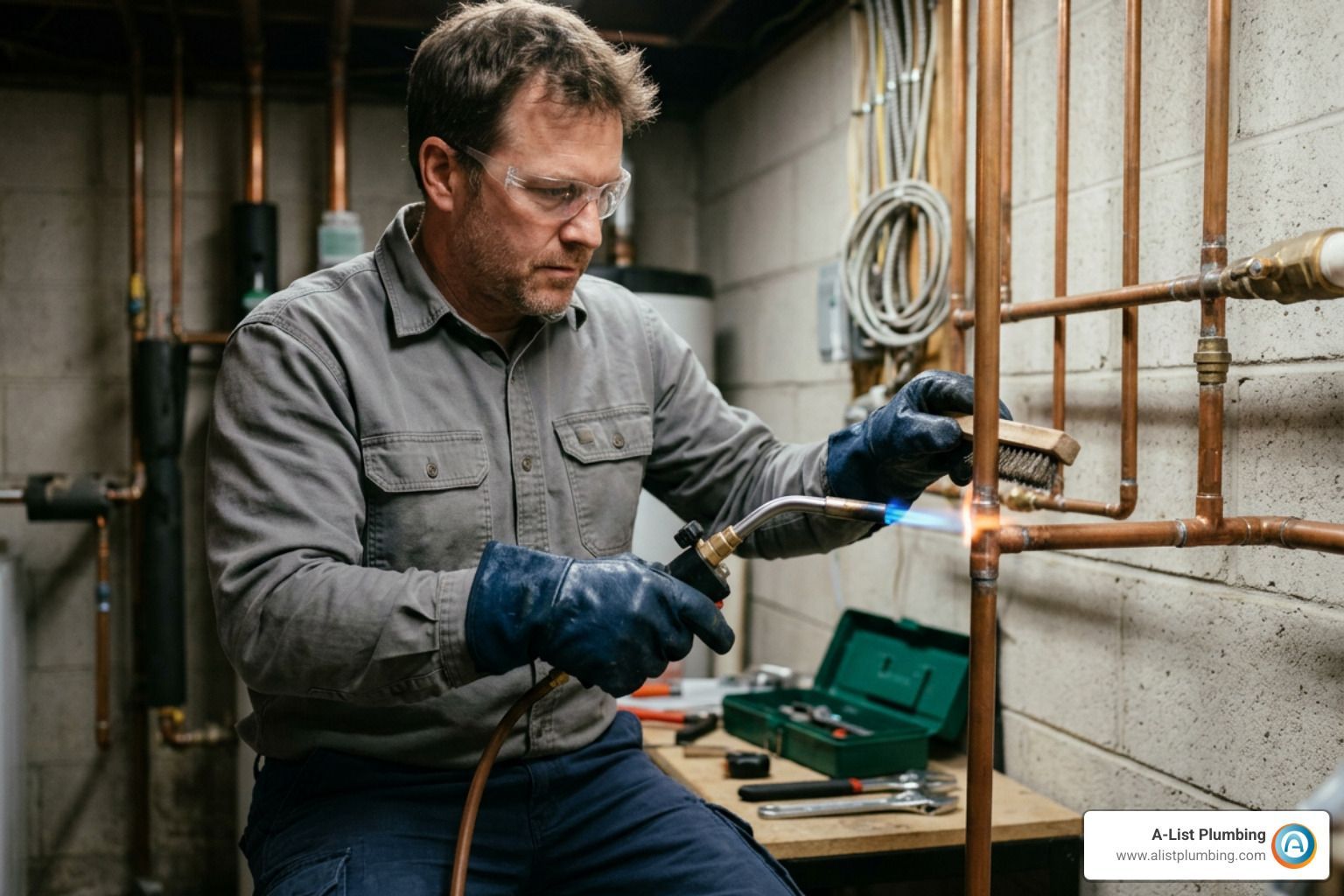
If you're handy and the leak is in a standard PVC or copper line, you can perform a permanent repair yourself. Here is our standard process:
- Shut Off the Water: Don't skip this. Locate your main shut-off and ensure the line is dead.
- Drain the System: Open the lowest faucet in the yard to let gravity pull the remaining water out of the pipes.
- Expose and Clean: Dig around the pipe (carefully) to give yourself at least 6 inches of space on all sides. Scrub the pipe clean of any dirt.
- Cut Out the Damage: Use a pipe cutter or hacksaw to remove the broken section. Pro tip: Cut at least one inch past the visible crack to ensure you're connecting to healthy pipe.
- Identify Your Material: Are you working with PVC (white plastic), CPVC (off-white), copper, or PEX (flexible colored tubing)? You must use the correct fittings for each.
- Apply Solvent or Fittings:
- For PVC, use a purple primer followed by solvent cement. Push the pipe into the coupling, give it a quarter-turn, and hold for 30 seconds.
- For copper or PEX, push-to-connect fittings can be a practical option for DIYers because they do not require soldering.
- Test: Turn the water on slowly. If you blast the air out of the lines too fast, the pressure spike can cause a new leak.
Using the right pipe material, fittings, and cure times is critical. If you are unsure about compatibility, water pressure, burial depth, or local code requirements, it is safer to stop and call a professional.
When to Call a Professional for an Outside Pipe Leaking
We love a good DIY project, but some jobs carry too much risk for a homeowner. You should call us if:
- The Main Line is Bursted: The pipe connecting the city meter to your house is under high pressure and often buried deep. Errors here can lead to massive water bills or a flooded street. Read more about main water lines to see the complexity involved.
- The Leak is Under Concrete: If you have to break through a driveway or patio, you need professional equipment to find the exact spot first.
- You Need Trenchless Technology: We can often replace an entire line by pulling a new pipe through the old one, saving your beautiful landscaping. Check out our trenchless waterlines service for more info.
- Utility Lines are Nearby: In Seattle and Shoreline, gas and electric lines often run parallel to water lines. One wrong shovel strike can be catastrophic. Always call 811 before you dig.
Preventing Future Pipe Bursts and Freeze Damage
In our 22 years of experience, we've found that 90% of outside pipe leaking issues in the Pacific Northwest could have been prevented with better winterization.
- Insulate Everything: Use foam "noodles" or wrap on any exposed pipe. For extra protection, use electric heat tape that kicks on when temperatures drop.
- The "Hose Rule": This is the most important tip. Disconnect your garden hoses in October. Even a frost-free faucet will burst if a frozen hose is still attached to it.
- Upgrade Your Spigots: If you have old-fashioned faucets, consider upgrading to frost-free models that shut off the water inside the heated envelope of your home.
- Pressure Regulators: High water pressure (anything over 80 psi) acts like a hammer on your pipes. Installing a regulator can extend the life of your plumbing by years.
- Draining the Lines: If you have an irrigation system, have it professionally "blown out" with compressed air before the first freeze.
Frequently Asked Questions about Outside Pipe Leaks
How much water does a dripping outdoor faucet waste?
A lot more than you think. A faucet dripping just once per second wastes about 5 gallons per day, which is over 1,800 gallons per year. If you have a steady stream or a "trickle," you could be losing 20 gallons per day or more. Over a year, that's enough water to fill a small swimming pool!
Can I use epoxy putty on a wet pipe?
Most standard epoxy putties require a dry surface to bond properly. However, there are specialized "underwater" or "wet-surface" epoxies designed for this exact purpose. Always check the label for "potable water safe" if the pipe carries drinking water into your home. That epoxy is a temporary seal and may fail if the pipe expands or contracts with the weather.
How do I find a leak buried deep underground?
If the water hasn't reached the surface yet, we use high-tech tools. Acoustic listening devices allow us to "hear" the vibration of water escaping the pipe. Thermal imaging can detect temperature differences in the soil caused by water. In some cases, ground-penetrating radar or nitrogen-tracer gas is used to find the exact breach without digging a single hole.
Conclusion
An outside pipe leaking is a race against time. From the moment the first drop escapes, it begins a process of erosion and waste that only gets more expensive the longer you wait. Whether it's a simple washer replacement on your hose bib or a complex main line repair under your driveway, taking action today is the best way to protect your property value and your wallet.
At A-List Plumbing, we've been serving the Lynnwood, Seattle, and Greater Seattle areas for over two decades. With 22 years of experience, we pride ourselves on same-day availability and transparent pricing. We don't just patch holes; we provide long-term solutions that keep your home's plumbing system healthy for years to come.
If you suspect an exterior leak or have a burst pipe emergency, don't wait for the sinkhole to form. Contact our experts for professional plumbing services today. We're here to help our neighbors in Shoreline, Bothell, Edmonds, and beyond.