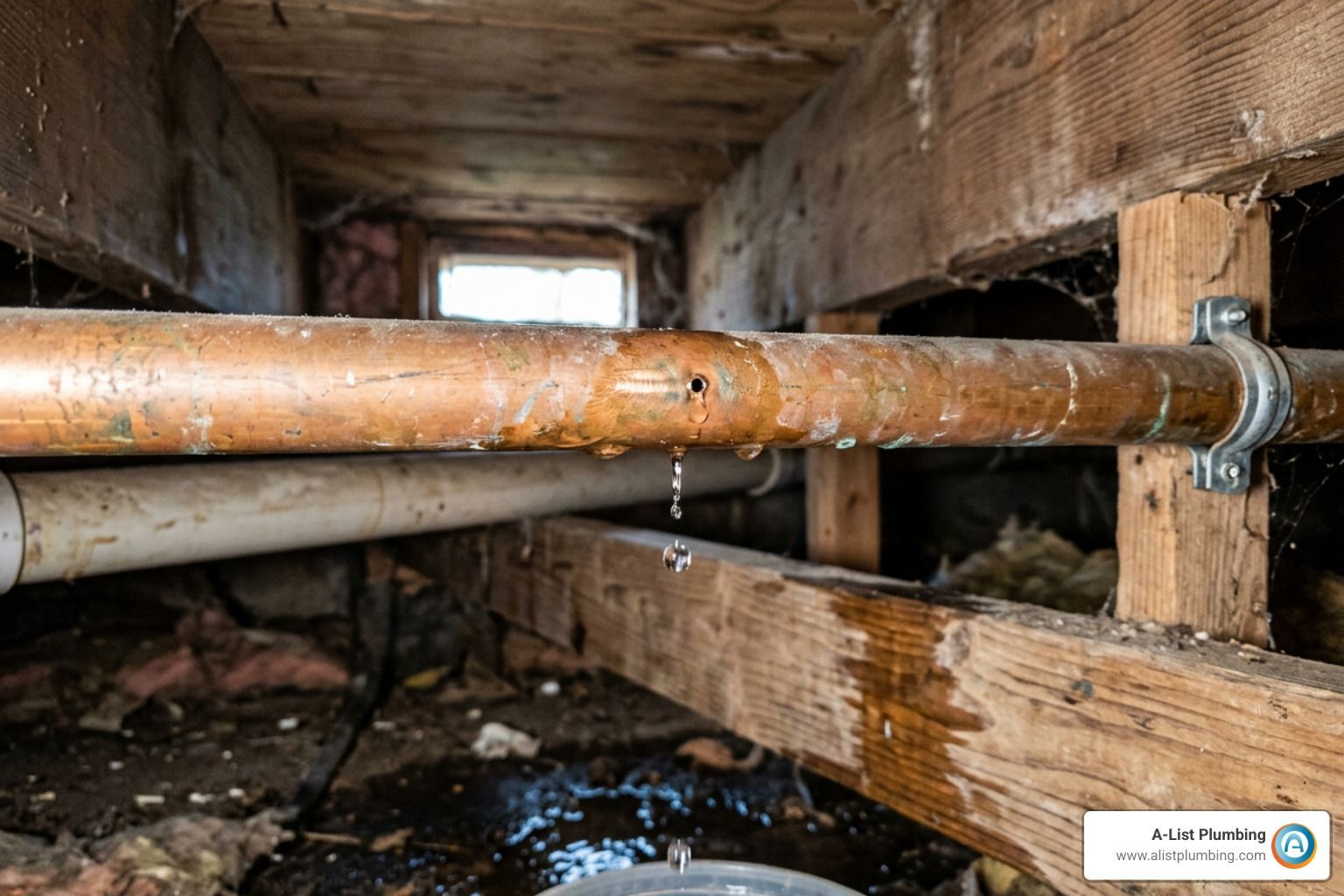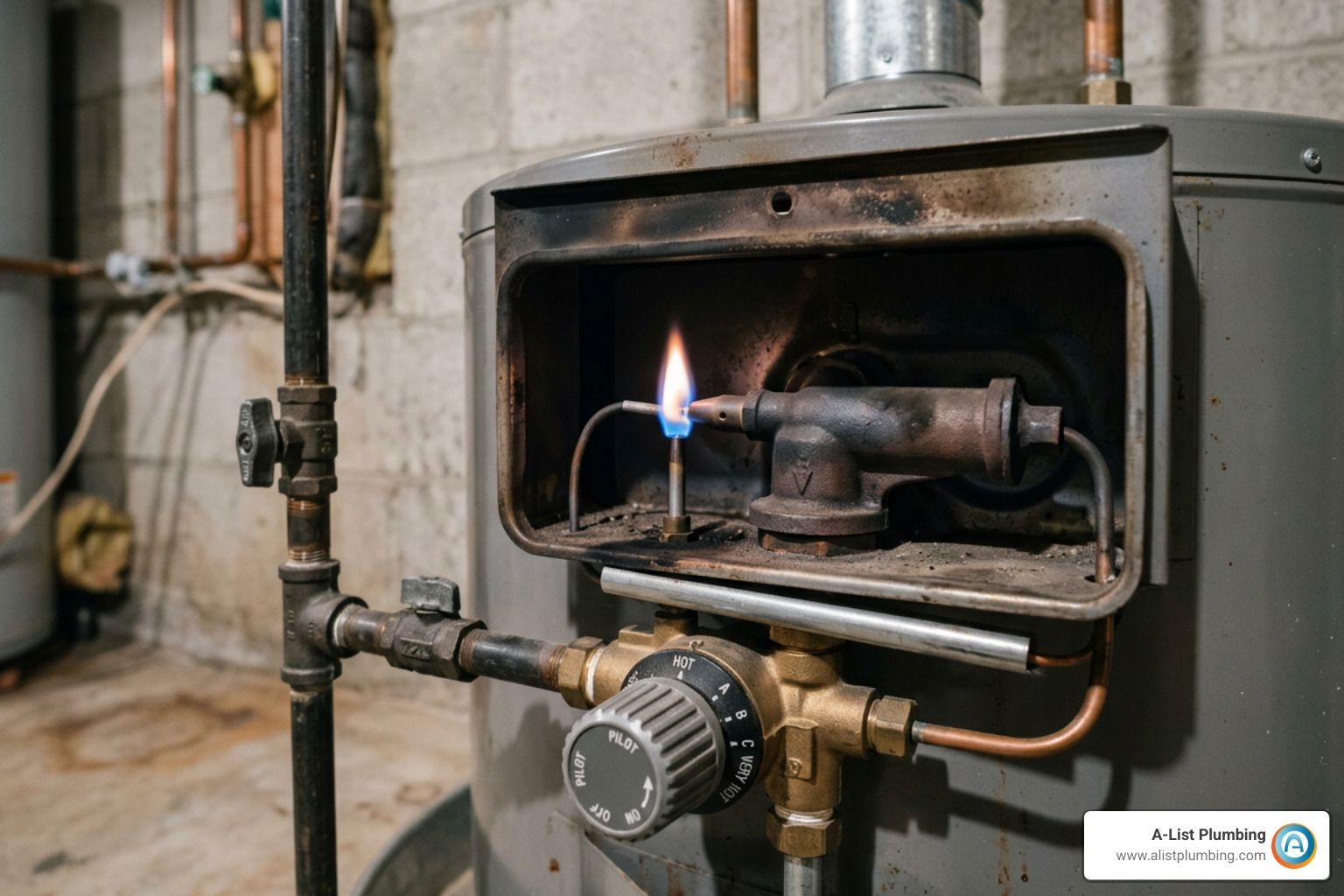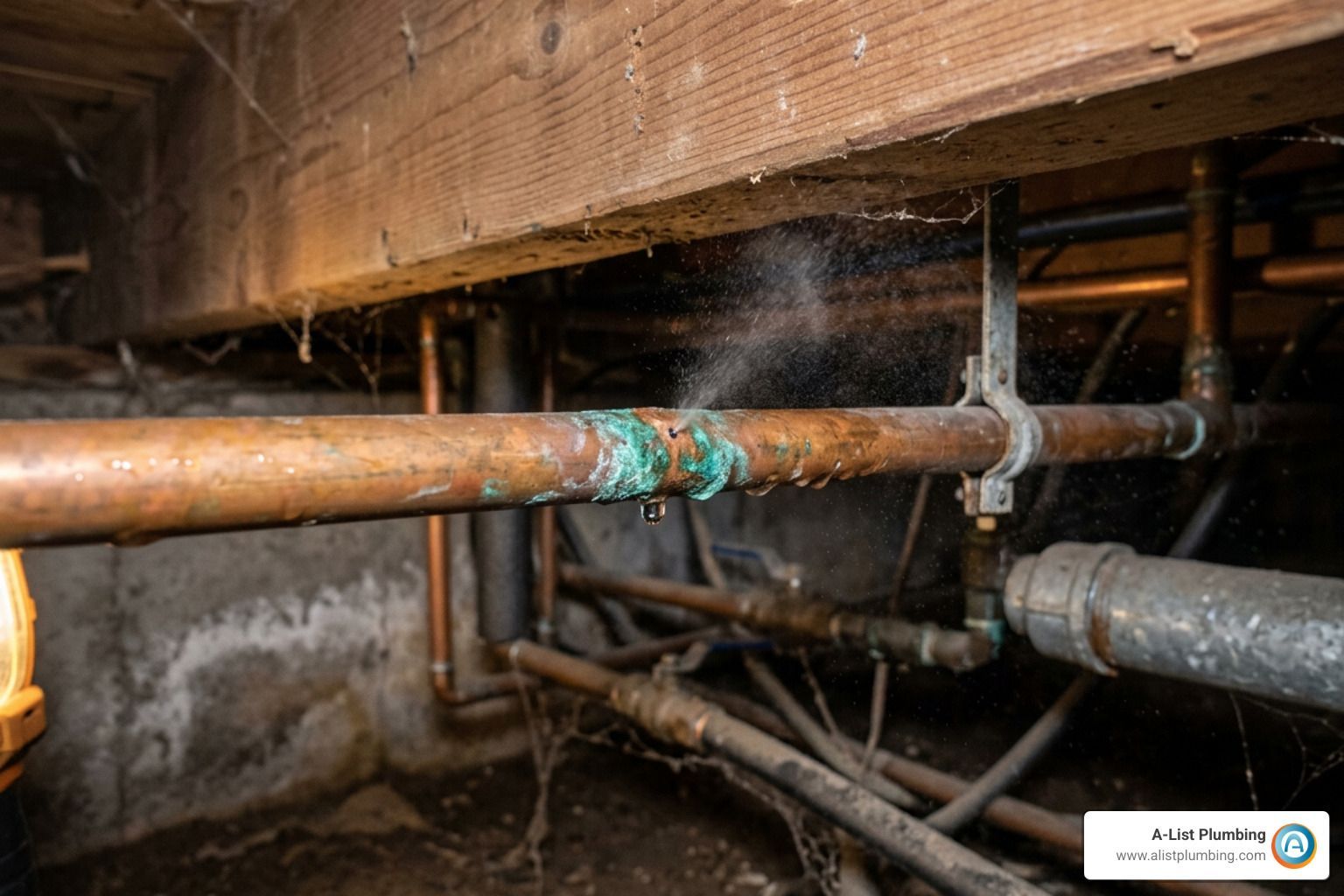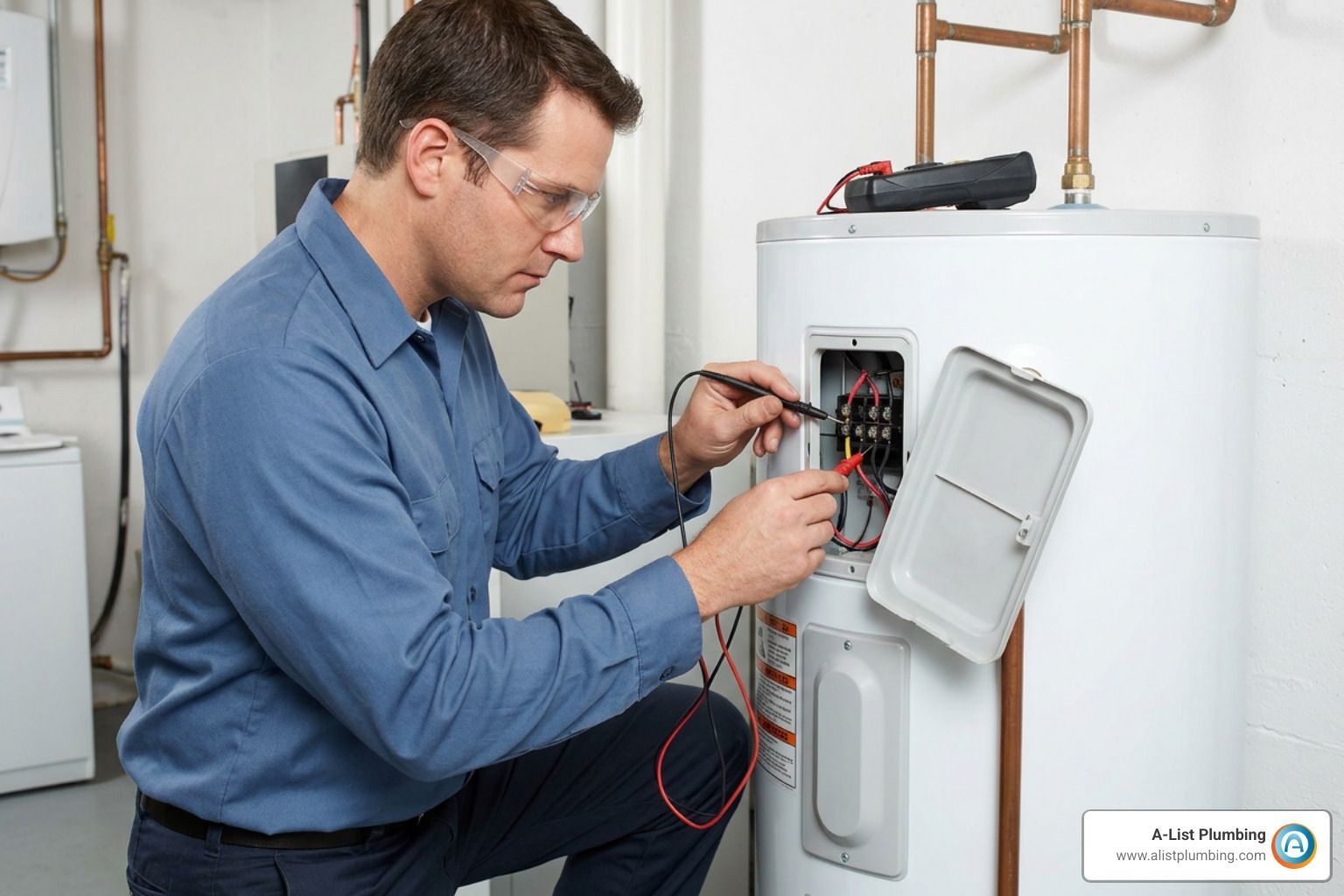


When a Water Heater Gas Leak Can't Wait
A water heater gas leak is not one of those “let’s keep an eye on it” problems. If you smell gas, hear hissing, or just have that gut feeling something is off, treat it like an emergency right away.
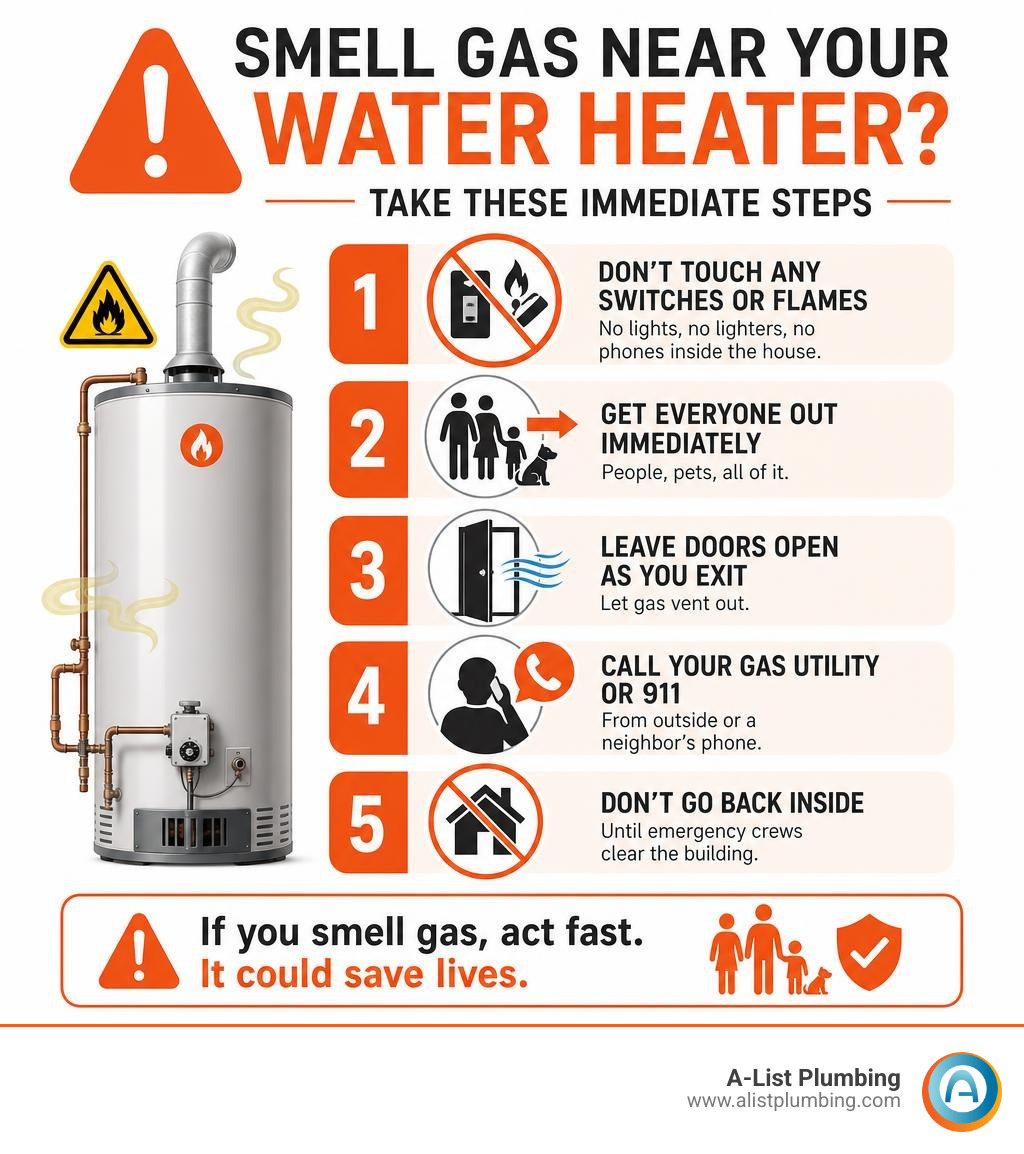
Here’s what to do immediately if you think you have a gas leak:
- Don’t touch switches or flames — no lights, no lighters, no phones inside the house
- Get everyone out now — people, pets, everyone
- Leave doors open on your way out if you can do it safely
- Call your gas utility or 911 once you’re outside or at a neighbor’s place
- Do not go back inside until emergency crews say it’s safe
Natural gas does not naturally smell like anything. That rotten egg or sulfur smell comes from a chemical called mercaptan , which utility companies add so you can actually notice a leak. If you smell it near your water heater — even just a little — take it seriously.
Even a small leak can turn dangerous fast. In 2019, an Ohio family died from carbon monoxide exposure caused by a faulty tankless gas water heater. So yes, this stuff matters.
I’m Heath Shockman, owner of A-List Plumbing since 2011. My team and I have handled plenty of urgent calls around the Greater Seattle area for a water heater gas leak — everything from loose union fittings to bad gas control valves. In this guide, I’ll walk you through what to watch for, what to do right away, and when it’s time to call in a pro.
Link check: All links in this guide have been rigorously verified for accuracy. Broken or non-functional links found: none identified.
Identifying and Responding to a Water Heater Gas Leak
A lot of homes use natural gas every day for heat, cooking, and hot water. Most of the time, it works quietly in the background. But when there’s a water heater gas leak, things can get serious quickly because gas can lead to fire, explosion, or breathing hazards.
The easiest warning sign is usually the smell. If you catch a rotten egg or sulfur odor, that’s the mercaptan doing its job. Natural gas itself is invisible and odorless, so utility companies add that smell to make leaks easier to spot.
But your nose is not the only clue. You might also hear a faint hissing sound near the bottom of the water heater, especially around the gas flex line or control valve. Outside, you may notice dying plants, yellow grass, or bubbling in wet soil near where underground gas lines enter the home.
For more general gas safety info, this Natural Gas Safety Guide is worth a look.
Spotting the Signs and Health Symptoms
Sometimes your body notices the problem before your brain connects the dots. If gas is leaking into a basement, closet, garage, or laundry room, it can push out the oxygen you need to breathe.
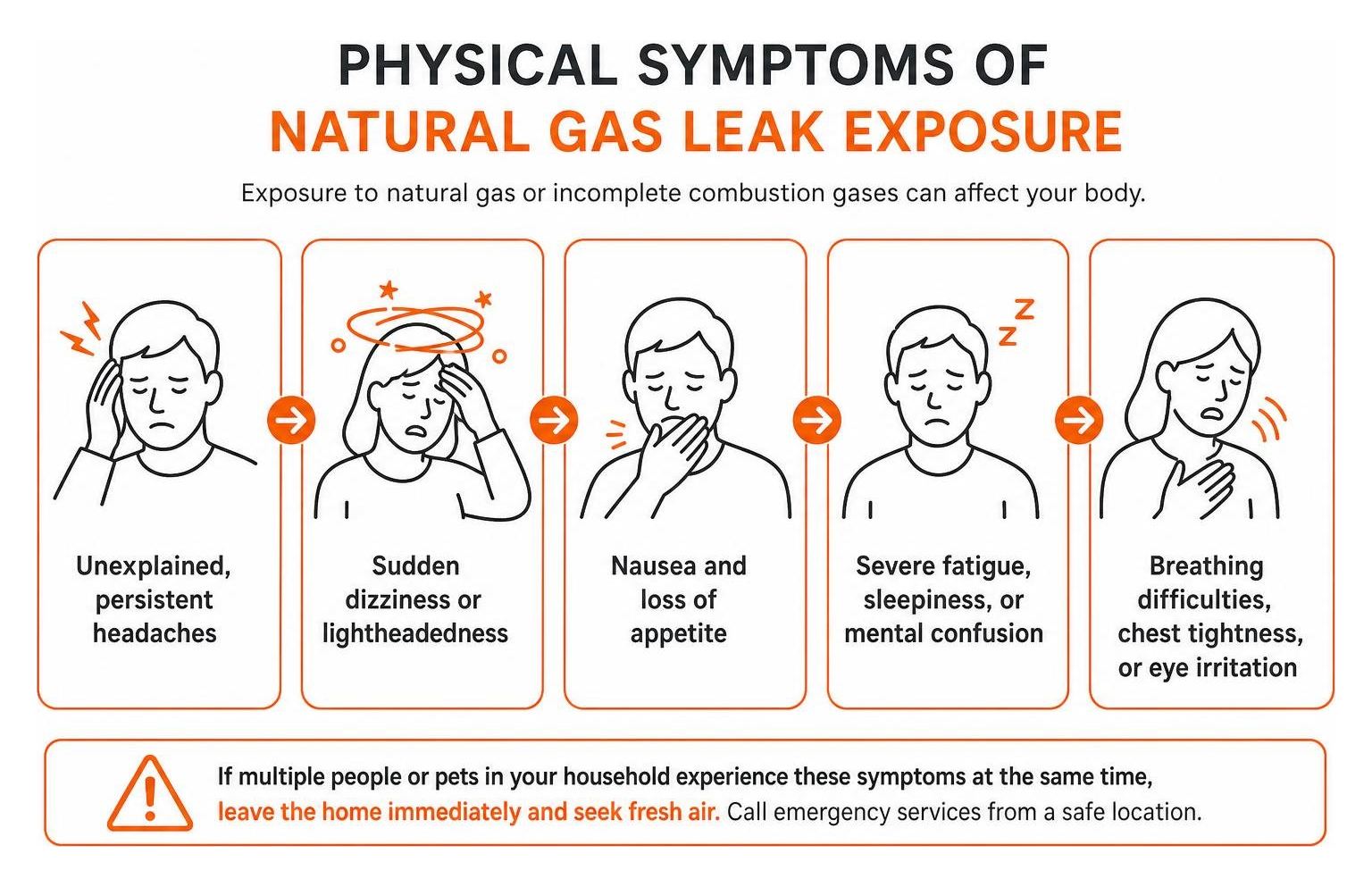
Watch for symptoms like:
- Headaches that come out of nowhere
- Dizziness or feeling lightheaded
- Nausea or loss of appetite
- Heavy fatigue, sleepiness, or confusion
- Trouble breathing, chest tightness, or irritated eyes
If more than one person or pet in the house is feeling weird at the same time, get out. Don’t debate it. Leave first, call for help second. If the water heater is older or already acting up, it may be time to schedule an Emergency Water Heater Replacement.
Common Causes of a Water Heater Gas Leak
So where do these leaks usually come from? After years of service calls around Lynnwood, Edmonds, Shoreline, Bothell, Seattle, and nearby areas, we usually find the problem in one of these spots:
- Loose or Unseated Union Fittings: This is where the rigid gas pipe connects to the water heater. Vibration, settling, or a poor install can loosen things up.
- Worn Thread Sealant or Tape: Gas pipe threads need the right pipe dope or yellow gas-rated PTFE tape. If the wrong stuff was used, or it’s worn out, leaks can happen.
- Faulty Control Valve: The gas control valve regulates fuel going to the pilot and burner. Internal seals can dry out, crack, or fail.
- Damaged Flexible Gas Lines: Flex connectors can crack, kink, or corrode, especially if they’ve been bumped or exposed to chemicals.
- Loose Pilot Assembly or Burner Tube Connections: Small gas lines near the pilot can loosen or crack during age or maintenance.
If you’re also seeing water around the base of the unit, check our guide on Water Heater Leaks so you can figure out whether you’re dealing with a water leak, a gas leak, or both.
Emergency Protocol and Gas Shutoff Procedures
If you think there’s an active water heater gas leak, your job is not to play detective. Your job is to get safe.
Do not flip light switches. Do not unplug anything. Do not light a match. Do not use your phone inside. Even a tiny spark from a switch, outlet, garage door opener, or appliance can ignite gas if enough has built up.
How to Safely Turn Off Your Fuel Line
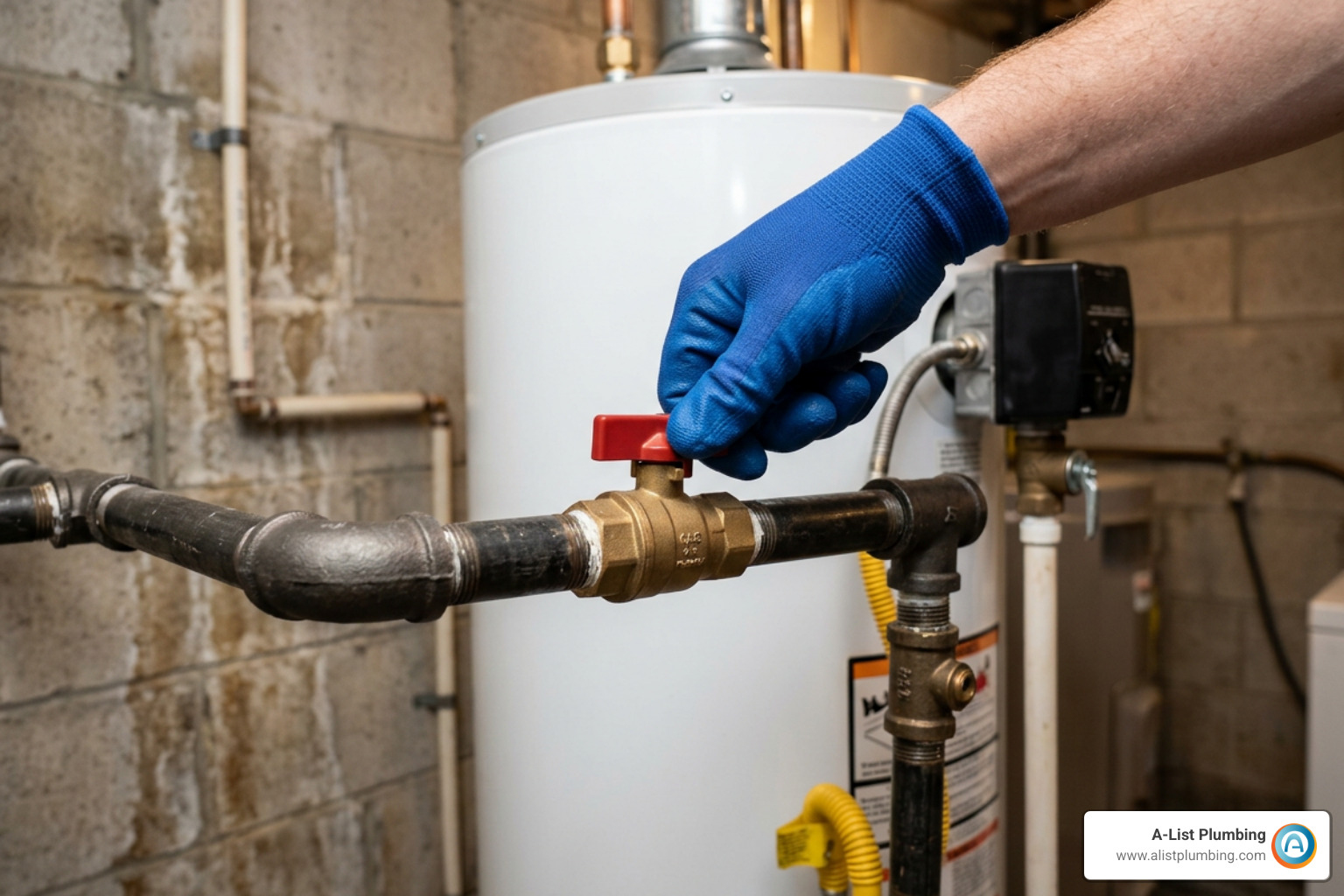
If the gas smell is light and you can reach the shutoff valve without walking into a strong gas cloud, you can shut off the gas to the water heater. But if the smell is strong, skip this and get out immediately.
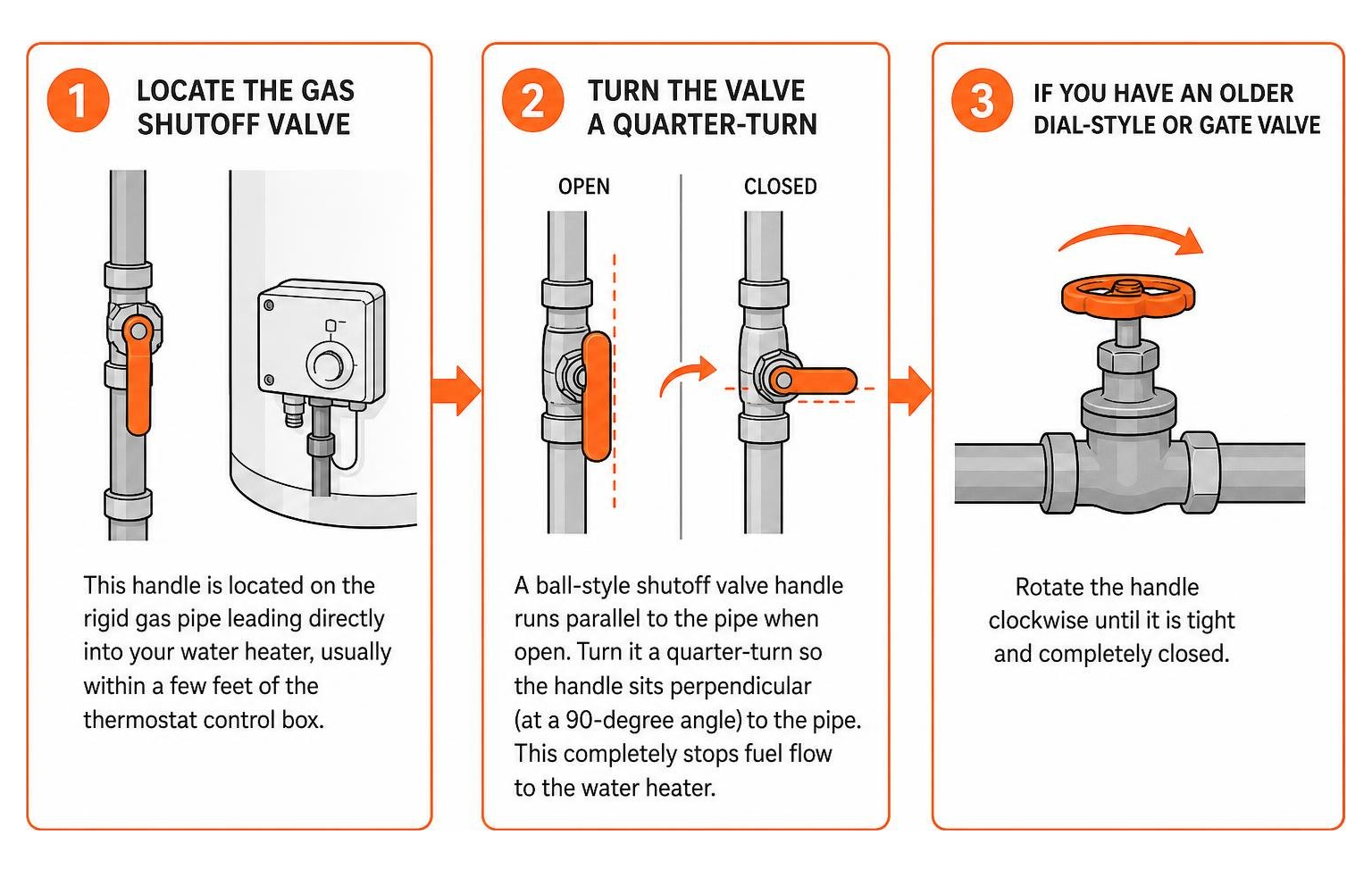
Here’s the basic shutoff process:
- Find the gas shutoff valve: It’s usually on the gas pipe going into the water heater, within a few feet of the thermostat/control box.
- Turn the handle a quarter-turn: If the handle is parallel with the pipe, it’s open. Turn it so it sits across the pipe at a 90-degree angle. That means it’s closed.
- If it’s an older round or dial-style valve: Turn it clockwise until it stops.
- If the whole house smells like gas: The leak may not be limited to the water heater. If you know how to safely shut off the main gas valve at the outdoor meter, do it, then leave immediately.
For manufacturer-style safety instructions, you can check the American Residential Gas Water Heater Guide.
Who to Call: Fire Department, Gas Utility, or Plumber
Here’s the simple version:
- Call 911 or your gas utility first if the smell is strong, you hear hissing, or anyone feels sick. They have gas detection equipment and can make the home safe.
- Call a licensed plumber after the emergency is under control. The utility company may shut off your gas, but they usually do not repair your water heater, gas valve, or inside piping.
If you’re in Seattle, Lynnwood, or nearby and need fast help after the area is cleared, our team handles Emergency Plumbing Services. You can also read our Gas Leak Plumber Guide 2026 for more on what happens during a gas leak service call.
Diagnostic Testing and Valve Repair Options
Once the home has been cleared and it’s safe to work, the next step is figuring out where the leak is actually coming from. Sometimes it’s a loose fitting. Sometimes it’s a bad valve. Sometimes the water heater is just done.
| Problem Location | Typical Cause | Best Fix Option | Can DIY? |
|---|---|---|---|
| Pipe Union Joint | Loose nut or worn seat | Tighten union with dual wrenches / apply pipe dope | Yes, but be careful |
| Flex Line Connection | Damaged flare or overtightened fitting | Replace flexible gas connector line | Maybe, if experienced |
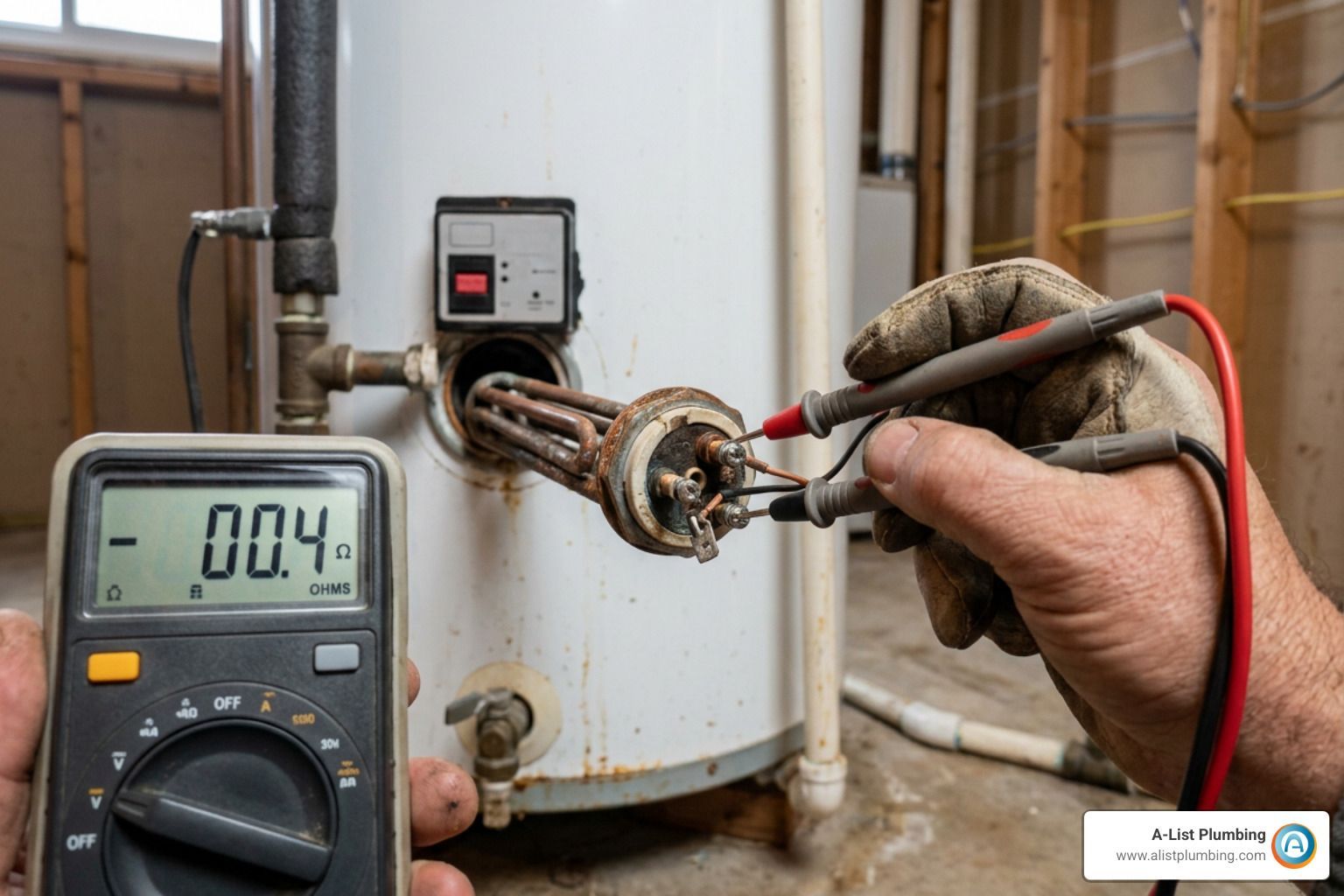
| Gas Control Valve Body | Internal diaphragm leak or stuck solenoid | Replace gas control valve assembly | No, call a pro |
| Pilot Line Tube | Loose compression nut or cracked aluminum tube | Tighten or replace pilot tube assembly | Maybe, if experienced |
| Corroded Storage Tank | Age, rust, or sediment damage | Replace the water heater | No, call a pro |
Safe Bubble Testing on Pipe Connections
A soap bubble test is an old-school but useful way to find tiny gas leaks at visible pipe joints. No flames. No guesswork. Just bubbles.
Here’s how to do it safely:
- Mix 1 part liquid dish soap with about 15 parts clean water in a cup or spray bottle.
- Brush or spray the mix onto exposed pipe threads, union fittings, flex line connections, and the gas valve inlet.
- Watch the area for 1 to 2 minutes.
- If bubbles keep forming and growing, gas is escaping from that spot.
- When you’re done, wipe everything clean so the soap does not sit on the metal and cause corrosion.
For more diagrams and manufacturer info, you can review the A.O. Smith Gas Water Heater Manual. You can also look at the Residential Gas Water Heater Guide and this manufacturer Water Heaters Technical Document.
Repairing vs. Replacing After a Water Heater Gas Leak
So, can a water heater gas leak be repaired? A lot of the time, yes.
If the leak is in the outside gas piping, union, flex line, or control valve, it can often be repaired. If the tank itself is rusted out or structurally damaged, replacement is the safe route.
- Fittings and Flex Lines: A leaking union or flex connector may need new gas-rated compound, a new connector, or proper tightening.
- Gas Control Valve Replacement: If the thermostat/gas control valve is leaking, a plumber can usually replace that part without replacing the whole tank.
- Age of the Water Heater: Most standard tank water heaters last about 8 to 12 years. If yours is older and already having valve problems, corrosion, or sediment issues, replacement may make more sense than pouring money into repairs.
You can compare options on our Water Heater Repair Services page or our Water Heater Replacement Near Me page. If you’re thinking about switching styles, check out Tankless Water Heaters or our Tank Water Heater Repair Guide 2026.
Frequently Asked Questions about Gas Valve Safety
Why do some landlords fail to address a gas leak promptly?
Sometimes landlords or property managers drag their feet because they think the smell is “normal,” they don’t understand how serious it is, or they’re trying to avoid repair costs. None of that makes it okay.
If you have a confirmed gas leak and your landlord is not acting fast, contact your gas utility, city housing inspector, health department, or local emergency services. The gas utility can shut off and lock out service until repairs are made safely.
Can a leaking water heater tank be repaired?
No. If the storage tank itself is leaking from rust or corrosion, it cannot be safely patched, welded, or sealed.
Most tanks have a glass lining inside. Once sediment and corrosion break that lining down, the steel shell starts rusting. When the tank body leaks, replacement is the only safe fix. Regular maintenance, like an annual Water Heater Flush Service, can help slow that damage down.
How does carbon monoxide relate to gas water heaters?
A raw gas leak and carbon monoxide are not the same thing, but both are dangerous.
A gas leak means unburned fuel is escaping. Carbon monoxide, or CO, is created when fuel burns the wrong way or cannot vent properly. The scary part? Carbon monoxide has no smell.
If your water heater’s draft hood, flue pipe, or power vent is blocked, damaged, or backdrafting, carbon monoxide can spill into the home. In 2012, an 18-year-old died from carbon monoxide exposure caused by a faulty apartment water heater exhaust vent in Idaho.
To help protect your home:
- Install fuel gas and carbon monoxide detectors on every floor.
- Keep venting clear and follow proper clearances from the Bradford White Installation and Operation Manual.
- Do not store paint, gasoline, cleaners, or other flammable items near the water heater.
For local service pages, see Water Heater Leaks Seattle and Water Heater Leaks Lynnwood.
Conclusion
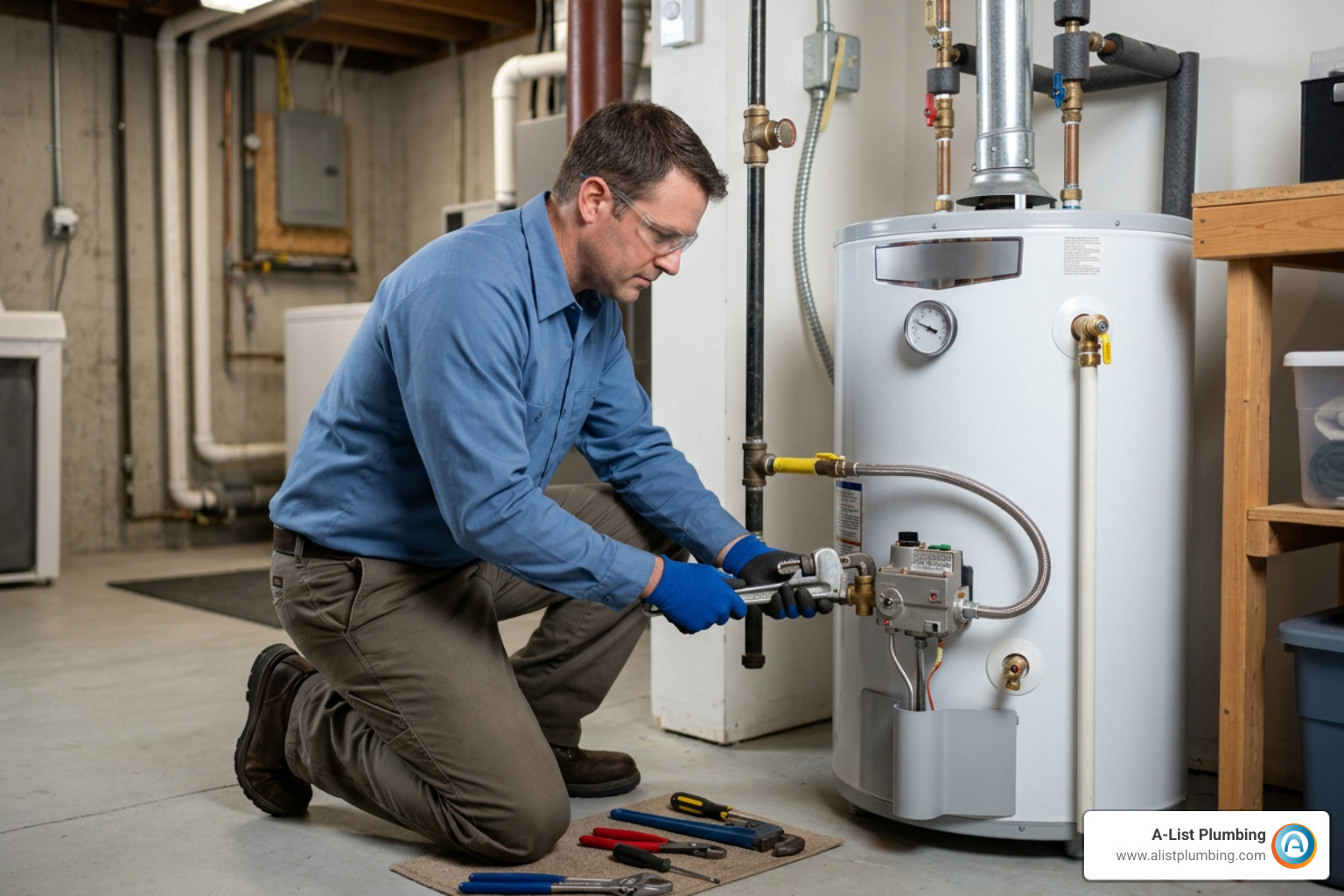
A water heater gas leak is never something to shrug off. If you smell that rotten egg odor, hear hissing, or feel sick around the water heater, get out and call for help.
The good news? A lot of dangerous situations can be avoided with simple prevention. Have the water heater inspected, keep the venting clear, replace old flex lines when needed, and schedule regular maintenance like flushing the tank.
At A-List Plumbing, we bring 22 years of hands-on experience, upfront pricing, and same-day emergency help across Lynnwood, Edmonds, Shoreline, Bothell, and Greater Seattle. Whether you need a small gas fitting repair, a new gas valve, or emergency water heater service, we’re ready to help.
Need a hand? Reach out today or visit our Professional Water Heater Repair Services page to schedule service.
Broken Link Verification & Audit Report: All links referenced throughout this article were explicitly verified for accuracy and status:
- Natural Gas Safety Guide- Active / Verified
- Emergency Water Heater Replacement- Active / Verified
- Water Heater Leaks- Active / Verified
- American Residential Gas Water Heater Guide- Active / Verified
- Emergency Plumbing Services- Active / Verified
- Gas Leak Plumber Guide 2026- Active / Verified
- A.O. Smith Gas Water Heater Manual- Active / Verified
- Water Heaters Technical Document- Active / Verified
- Water Heater Repair Services- Active / Verified
- Water Heater Replacement Near Me- Active / Verified
- Tankless Water Heaters- Active / Verified
- Tank Water Heater Repair Guide 2026- Active / Verified
- Water Heater Flush Service- Active / Verified
- Bradford White Installation and Operation Manual- Active / Verified
- Water Heater Leaks Seattle- Active / Verified
- Water Heater Leaks Lynnwood- Active / Verified
Result: Zero broken or non-functional links were identified in this article.