

Diagnosing the Blockage: Fixture, Branch Line, or Main Sewer?
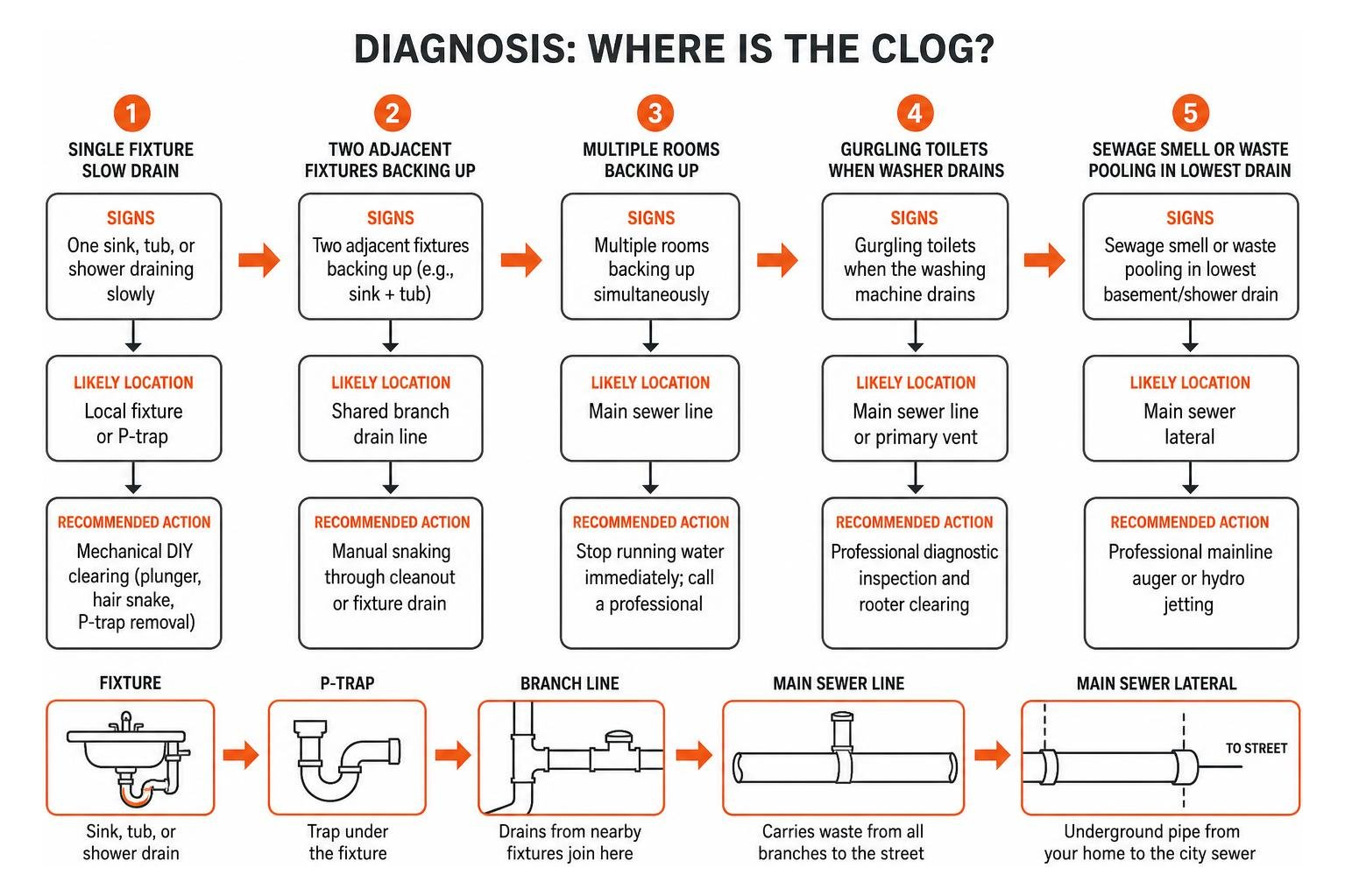
The best way to clear a clogged drain is simple: start easy and work your way up. Flush things out with hot water and soap, grab a plunger, pull out any nasty hairballs, and only snake the line if you really have to—skipping harsh store-bought chemicals altogether. But before you grab your toolbox or rip apart pipes under the sink, let's play detective for a second. Plumbing systems work a lot like a tree: your individual sinks and tubs flow into branch lines, and those all dump into your big main sewer line out to the street.
Pinpointing where the gunk is stuck saves you tons of time, headaches, and messy cleanups. Even pros use reliable expert diagnostic testing methods to figure out how deep a clog goes before jumping in.
| Diagnostic Sign | Likely Location | Recommended Action |
|---|---|---|
| Single sink, tub, or shower draining slowly | Local fixture or P-trap | Easy DIY fix (plunger, hair snake, clean the P-trap) |
| Two adjacent fixtures backing up (like sink + tub) | Shared branch drain line | Snake through the cleanout or drain line |
| Multiple rooms backing up at once | Main sewer line | Shut off the water and call a pro |
| Gurgling toilets when the washer drains | Main sewer line or primary vent | Call a pro for a diagnostic rooter clearing |
| Nasty sewage smell or backup in lowest drain | Main sewer lateral | Get a mainline auger or hydro jetting done |
Single Fixture vs. Multi-Drain Backups
If water only pools when you brush your teeth, you've got an isolated clog right in that sink's stopper or the curved P-trap right underneath. When you need to unclog a bathroom sink drain, simple DIY tricks do the job about 90% of the time.
On the other hand, if running the sink sends dirty water bubbling up inside your shower, the clog is deeper in the shared branch line. Plunging just one sink in that scenario will only splash gross water back and forth between fixtures.
Warning Signs of Sewer Line Obstructions
A main sewer line clog is a whole different beast. Your main pipe carries everything out of your house. When tree roots invade it or decades of buildup choke it off, dirty water has nowhere to go but right back into your home.
Watch out for these telltale red flags:
- Running your kitchen sink or laundry makes water bubble up in your lowest bathtub.
- Toilets gurgle, burp bubbles, or lose water on their own.
- You catch a foul, rotten-egg sewer smell near basement drains.
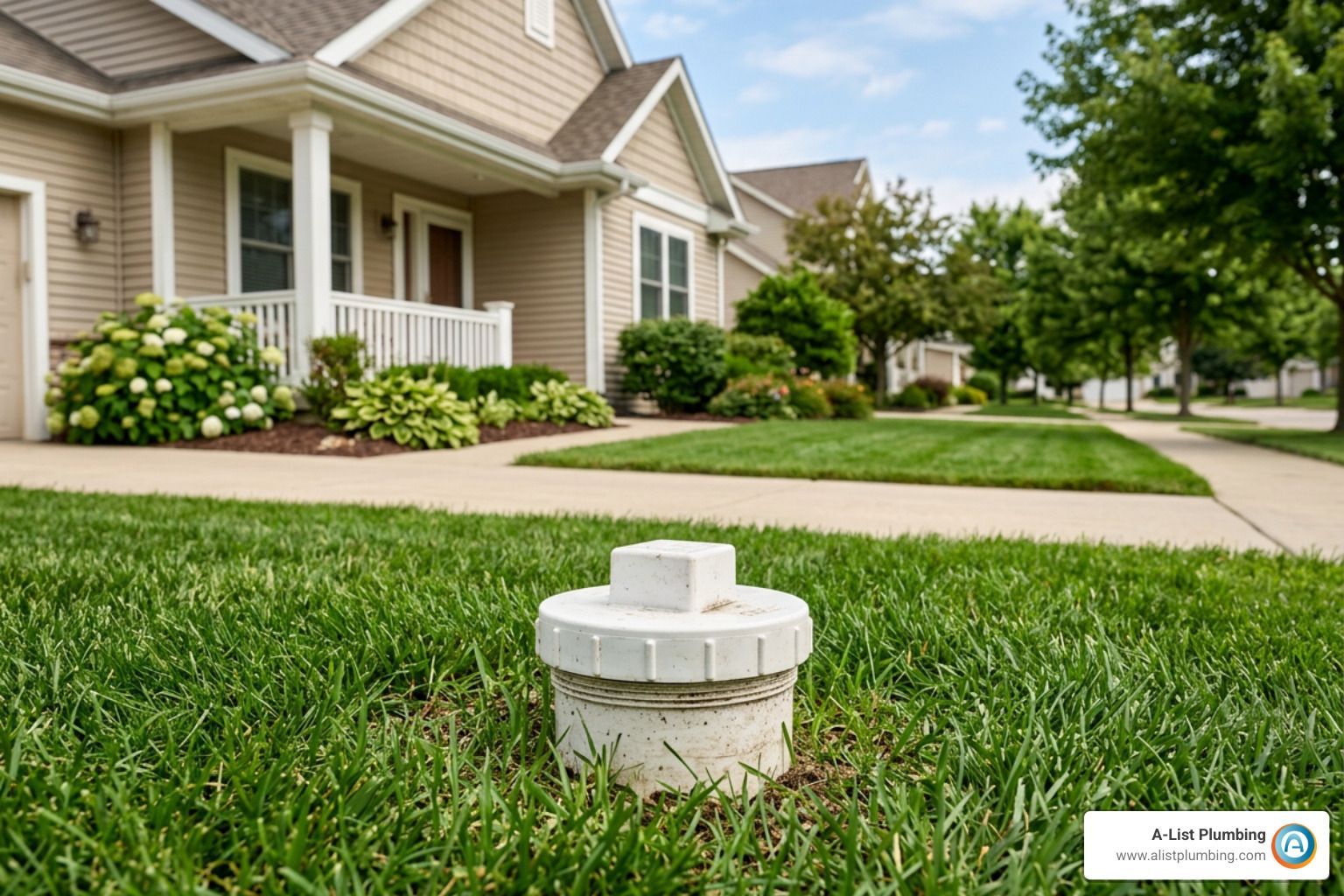
- Wastewater pools around your floor cleanout cap.
Spot any of these? Drop the tools and turn off your water. You'll want professional sewer drain clog repairs for Seattle homes to get things flowing before an expensive mess happens.
The Safe Order of Operations: The Best Way to Clear a Clogged Drain
The biggest mistake people make is reaching straight for a bottle of caustic acid or jamming an oversized snake down a delicate pipe. Take it step-by-step instead: start gentle and safe, then bring out the mechanical tools only if the clog is being stubborn.
Step 1: Hot Water and Natural Degreasers
If you've got a slow kitchen sink coated in old cooking grease and dish soap, some heat and soap are your best friends.
- Check your pipes first: If you have white PVC or ABS plastic pipes under the sink, skip boiling water—it can warp plastic fittings and loosen glued joints. Use very hot tap water instead. For sturdy cast iron or copper pipes, boiling water is fine.
- Squirt in dish soap: Squeeze a good amount of grease-cutting liquid soap right down the drain. It breaks up sticky oils clinging to the pipe walls.
- Flush in stages: Pour hot water down in two or three rounds, waiting a few seconds between pours to let the heat melt the grease.
- Try a natural fizz: For light buildup and bad odors, drop 1 cup of baking soda down the drain, chase it with 1 cup of white vinegar, cover it, wait 15 minutes, and flush with hot water.
Step 2: The Best Way to Clear a Clogged Drain with a Plunger
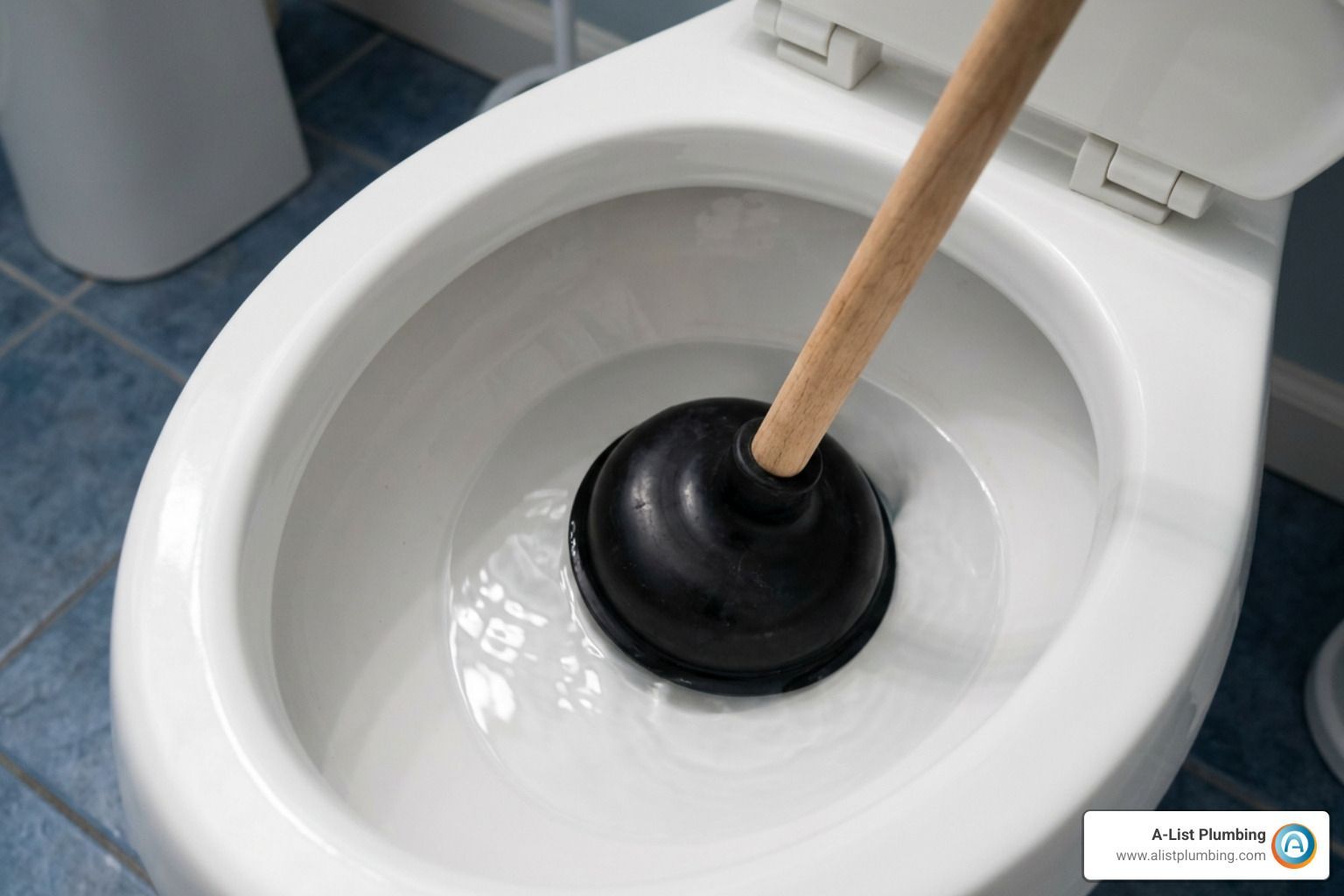
Plunging uses pressure and suction to break clogs apart. Using the wrong plunger—or letting air escape—just wastes your energy. Check out these step-by-step fixture clearing guidelines to nail the technique every time.
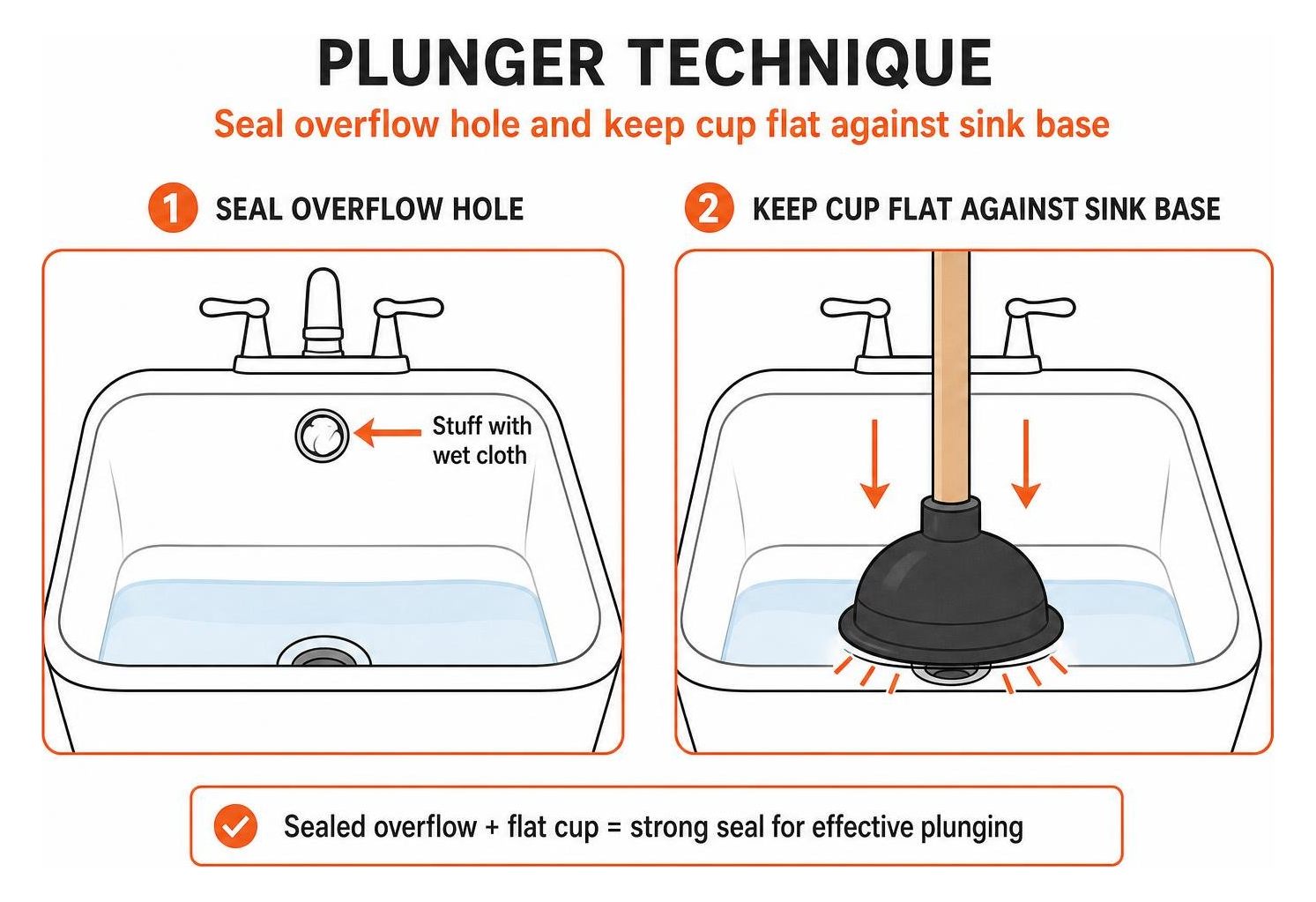
- Grab the right tool: Use a flat cup plunger for sinks and tubs, and save the flanged plunger for toilets.
- Block the overflow: Wet a rag and stuff it tightly into the sink or tub overflow hole so air can't escape while you plunge.
- Add some water: Make sure there's an inch or two of standing water in the basin to cover the plunger cup.
- Get a tight seal: Angle the plunger over the drain to fill the cup with water, then seal it flat against the surface.
- Pound it out: Plunge firmly up and down for 20 seconds. Remember, the upward pull does just as much work loosening the clog as pushing down.
- Check your work: Pop the plunger off. If the water drains fast, run warm tap water for a couple of minutes to wash everything away.
Step 3: Manual Hair Removal and P-Trap Cleaning
When plunging doesn't help in the bathroom, hair wrapped around the drain stopper is almost always to blame. Hair and soap scum create nasty mats that laugh at plungers.
If you need to unblock a shower drain or a bathroom sink:
- Grab a plastic hair snake: A cheap plastic barbed snake (like a Zip-It) slides right past sink stoppers and shower grates.
- Feed, twist, and pull: Push it down until it hits resistance, twist it around so the barbs grab the hair, and yank it out. It's gross, but it works like a charm.
- Clean the P-trap: If the clog is further down under your vanity, unscrew the curved P-trap pipe with a bucket underneath, scrub it out with a bottle brush, pop on fresh washers if needed, and tighten it back up by hand.
Advanced Mechanical Clearing: Using a Drain Snake and Auger Safely
When a clog gets past your P-trap and into the wall, a hand-crank drum snake is your best bet. A 25-foot steel cable can bend around tight corners and hook right into dense gunk.
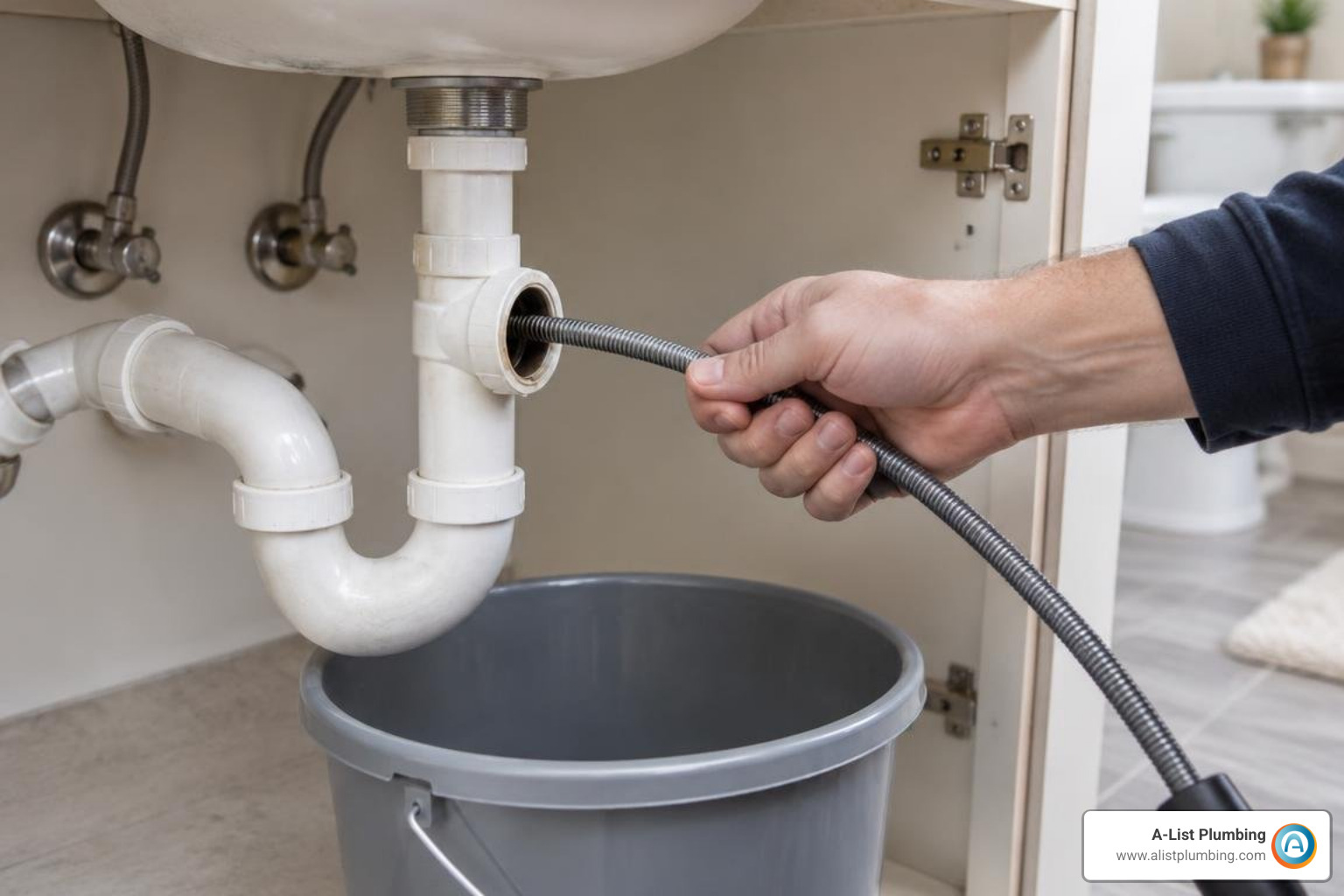
The Best Way to Clear a Clogged Drain Using a Hand Auger
Take it easy with an auger. Forcing the steel wire too hard can scratch pipes or even punch holes in old, worn-out fittings. If you run into stubborn lines that won't budge, our trusted drain snake service in Seattle can clear deep blockages safely with motorized gear.
- Remove the P-trap: Take off the trap under the sink so you can feed the cable straight into the horizontal wall drain.
- Feed the cable: Loosen the drum screw, slide out 6 to 12 inches of cable, push it into the pipe, and lock the screw tight.
- Crank clockwise: Turn the crank handle clockwise while gently pushing forward. When you feel resistance around an elbow bend, keep turning to help the tip slide past.
- Grab the clog: Once you hit squishy, solid resistance, you've reached the clog. Keep cranking clockwise so the tip digs into the gunk.
- Pull it out: Loosen the screw and slowly pull the cable back, wiping it down with an old rag as it goes back into the drum. Toss the clump in the trash, put the P-trap back on, and flush with hot water.
Clearing Stubborn Bathtub and Shower Obstructions
Tubs are tricky because the bottom drain connects right to an overflow pipe. Snaking directly through the tub floor often gets the snake stuck on the bottom elbow.
When you need to unclog a tub drain:
- Unscrew the overflow cover plate on the tub wall.
- Pull the stopper linkage out through the overflow hole.
- Feed your snake straight down through the overflow opening , not the floor drain. That gives the cable a straight shot into the branch line where hair and soap scum love to hide.
Chemical Cleaners vs. Enzymatic Treatments: What You Need to Know
Grocery store aisles are packed with flashy bottles promising to dissolve clogs in seconds. But ask any plumber, and they'll tell you to stay far away from them.
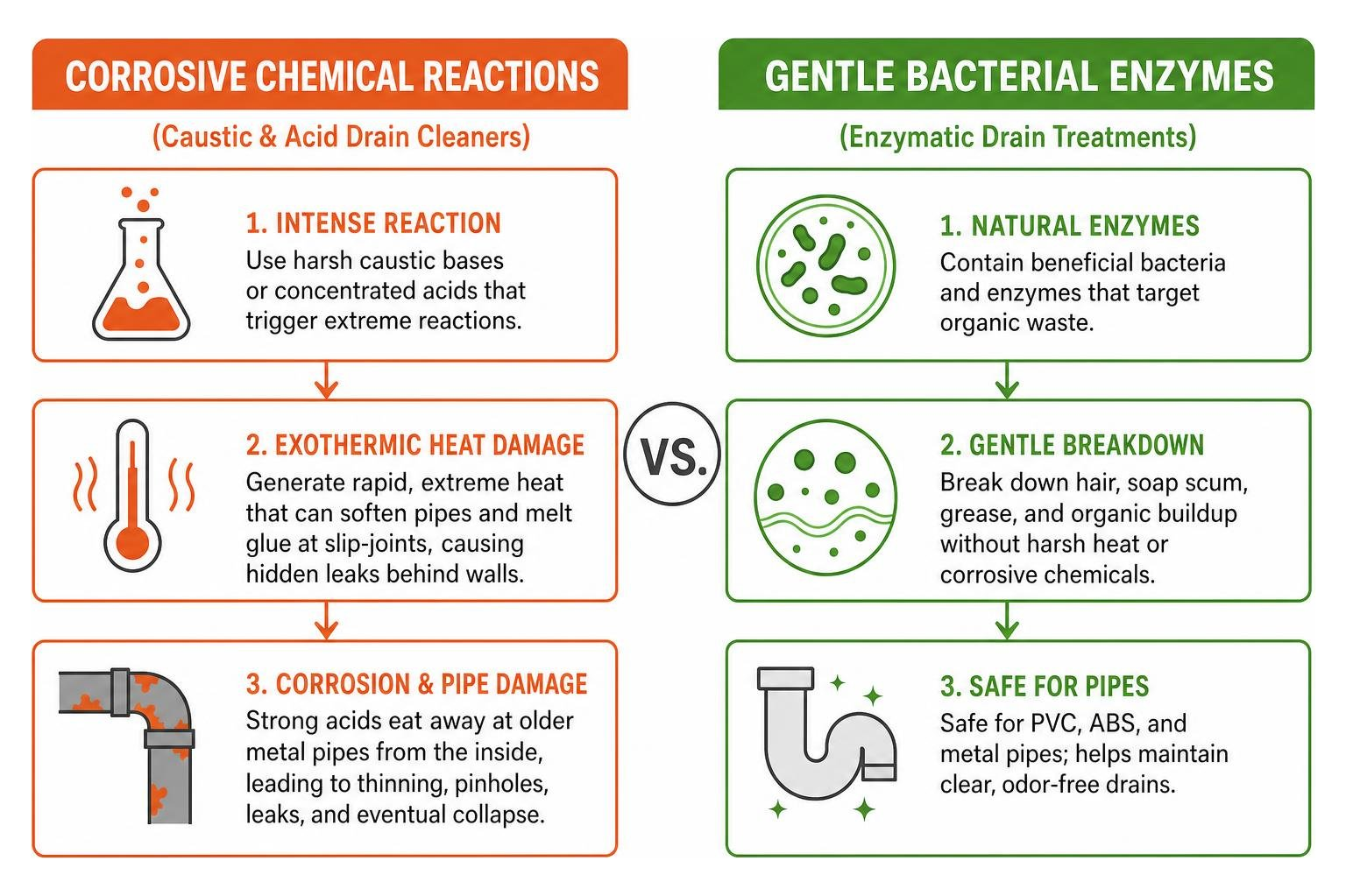
The Real Dangers of Harsh Chemical Cleaners
Most liquid drain openers rely on harsh caustic lye or concentrated sulfuric acid. Here's why they do more harm than good:
- Intense Heat: These chemicals create extreme heat inside your pipes. With plastic PVC pipes, that heat can melt glue, warp joints, and cause hidden leaks behind your walls.
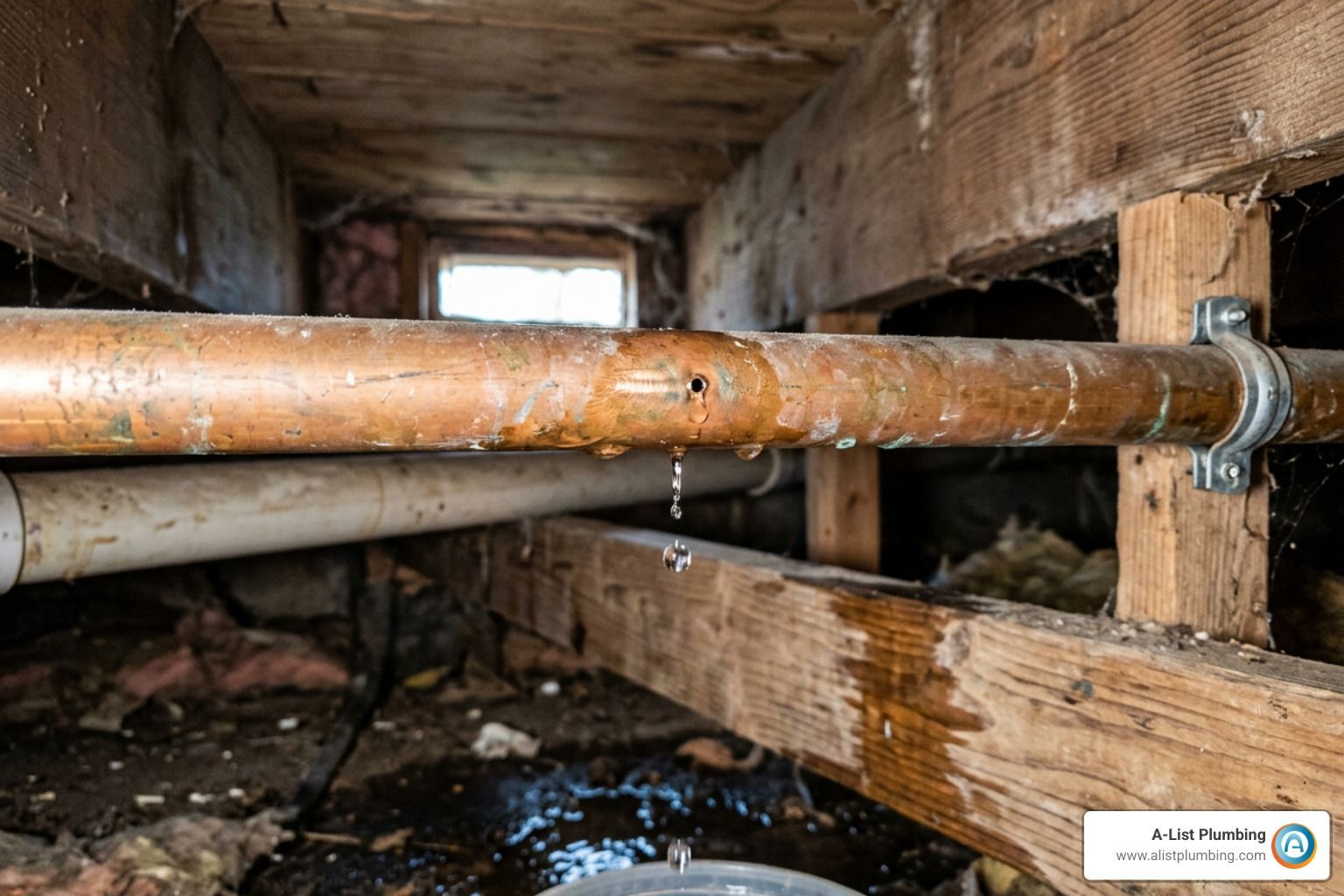
- Pipe Corrosion: In older homes with cast iron, copper, or galvanized steel, harsh acids eat right through metal, leading to pinhole leaks and expensive repiping jobs.
- Dangerous Splashes: If the chemical doesn't clear the clog, you're left with a sink full of toxic, burning liquid. If you try to plunge or take apart the pipe afterward, you risk severe skin burns and nasty fumes.
Why Biological Enzyme Cleaners Are Way Better
If you want a safe liquid cleaner to help clear a drain pipe, grab an enzyme-based treatment instead.
Enzyme cleaners use natural bacteria that eat away at organic gunk, hair, grease, and soap scum over a few hours. They produce zero heat, give off no nasty fumes, won't harm PVC or metal pipes, and are completely safe for septic tanks. Pour some down before bed once a month to keep pipes clean before clogs even start.
Professional Drain Cleaning Solutions for Severe Blockages
When DIY techniques reach their limit, professional plumbing technology takes over. Licensed plumbers carry specialized equipment designed to resolve tough blockages safely and diagnose the root cause of recurring plumbing headaches.
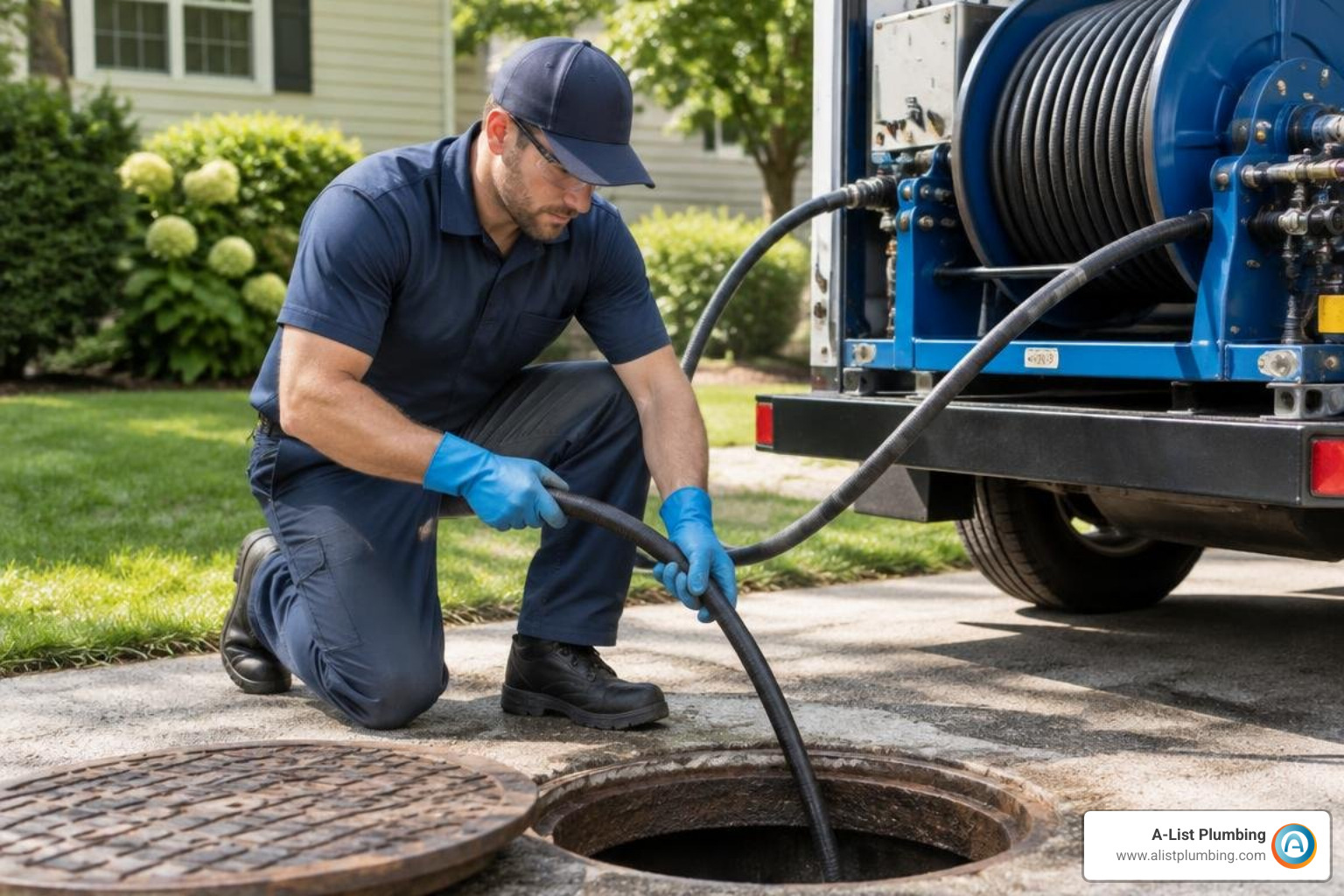
When you call for heavy-duty help, technicians employ three main advanced techniques:
- High-Definition Sewer Camera Inspections: Before blasting away blindly, plumbers insert a flexible fiber-optic camera with a self-leveling head into your main sewer cleanout. This video inspection shows the exact location and nature of the trouble—whether it is an offset joint, a heavy tree root intrusion, pipe belly (sagging section), or broken structural line.
- Professional Rooter Machinery: For tough clogs and aggressive root intrusions, heavy-duty rooter drain service uses motorized steel cables equipped with specialized spinning blades to physically chop through roots and solid obstructions.
- High-Pressure Hydro Jetting: While an auger simply punches a hole through a clog, commercial hydro jetting services use specialized forward- and reverse-facing nozzles that blast water up to 4,000 PSI inside the line. Hydro jetting scrubs the entire internal circumference of the pipe clean, scouring away built-up grease, scale, and organic sludge to leave your plumbing looking almost brand new.
Essential Drain Maintenance: How to Prevent Future Clogs
Clearing a clogged drain is rewarding, but keeping it clear without recurring weekend headaches is even better. Adopting a simple, low-effort maintenance routine stops debris from sticking to pipe walls in the first place.
- Use Mesh Strainers: Drop inexpensive stainless steel mesh catchers into every shower, tub, and bathroom sink. Catching hair above the grate takes five seconds to empty and prevents 90% of bathroom clogs.
- Proper Kitchen FOG Disposal: Never pour fats, oils, or grease (FOG) down your kitchen sink or garbage disposal. Wipe greasy pans with paper towels before washing, and collect used cooking oil in a sealable container for trash disposal.
- Mind Your Garbage Disposal: Avoid feeding fibrous vegetables (celery, corn husks, artichokes), coffee grounds, eggshells, and expandable starches (rice, pasta, potato peels) into your disposal unit.
- Weekly Hot Tap Water Flushes: Once a week, run the hottest tap water down every sink and shower drain for 60 seconds to flush away fresh soap residue and soft fats before they cool and solidify.
- Monthly Enzyme Boost: Pour an enzyme-based drain maintainer down your highest and most frequently used fixtures once a month before going to bed to keep pipe interiors clear of organic slime.
Frequently Asked Questions About Clearing Clogged Drains
What is the fastest way to dissolve hair in a bathroom drain?
Truth be told, nothing safely dissolves a dense, established hair clog in minutes without severely risking your pipes. Hair is made of durable keratin proteins that resist chemical breakdown. The fastest, most effective way to eliminate a hair clog is physical removal using a simple, flexible plastic barbed tool (like a Zip-It) or a wire hook. It pulls the entire hair cluster out mechanically in under two minutes with zero chemical exposure.
Can boiling water crack porcelain sinks or damage PVC pipes?
Yes. Never pour boiling water directly onto cold porcelain fixtures or into modern PVC drainage systems. Rapid temperature shifts can cause thermal shock, cracking vitreous china and porcelain sinks. Furthermore, standard PVC drain pipe joints are rated for temperatures up to roughly 140°F; boiling water at 212°F can soften the plastic, compromise cement joints, and cause hidden leaks. Stick to hot tap water (around 120°F) for safe flushing.
How do I know when to stop DIY and call a licensed plumber?
Stop your DIY attempts and contact a professional immediately if:
- Multiple plumbing fixtures back up simultaneously across the house.
- Water rises into tubs or showers when you run the washing machine or flush a toilet.
- Your drain auger hits immovable, rock-solid resistance that sounds like grinding on stone or metal.
- You smell strong sewer gas or see raw sewage backing up through a basement floor drain.
- You have already poured chemical cleaners down the drain and the fixture remains completely blocked.
When water is actively rising or raw sewage threatens your living space, calling an emergency drain cleaning service right away prevents extensive water damage, mold growth, and expensive subfloor repairs.
Conclusion
Dealing with a clogged drain doesn't have to ruin your weekend or drain your wallet. By following a smart, safe game plan—starting with hot water, moving to a good plunge, and using a hand snake when needed—you can knock out almost any everyday clog without damaging your plumbing. Just remember to skip those harsh chemicals to keep your pipes and hands safe!
Of course, some clogs run deeper than DIY tools can handle. If you're dealing with multiple backed-up drains, stubborn tree roots, or lines that just won't clear, we've got your back. With more than 22 years of hands-on experience, the crew at A-List Plumbing provides fast, reliable drain solutions across Lynnwood, Edmonds, Shoreline, Bothell, and the Greater Seattle area. We offer same-day service and 100% upfront pricing so there are never any surprises.
Ready to get your drains flowing freely again? Get in touch with our team today for professional clog drain repair and let us take care of the dirty work!