

Why a Blocked Shower Drain Is More Than Just an Annoyance
To unblock shower drain quickly, here are the most effective methods:
- Remove visible hair by hand — put on gloves, lift the drain cover, and pull out the clog
- Baking soda and vinegar — pour ½ cup baking soda, then ½ cup white vinegar, wait 30 minutes, flush with hot water
- Boiling water — pour slowly in stages to melt soap scum buildup
- Plunger — use a cup-style plunger with a water seal over the drain opening
- Plumber's snake — insert and rotate to hook and pull out deeper clogs
- Call a plumber — if all DIY methods fail or clogs keep coming back
You step into the shower expecting to relax. Instead, you're standing in a puddle of water that isn't going anywhere.
It's one of the most common household plumbing problems — and it usually comes down to a buildup of hair, soap scum, and body oils slowly narrowing your drain until water has nowhere to go. Left untreated, a clogged drain can lead to worse problems: bad odors, bacterial growth, leaks, and even pipe damage.
The good news? Most shower drain clogs can be fixed at home with tools and ingredients you already have.
I'm Heath Shockman, owner of A-List Plumbing since 2011, and over the years I've seen how a simple, unaddressed shower clog can turn into a costly plumbing repair — knowing how to unblock shower drain issues early is one of the best things a homeowner can do. Let's walk through exactly how to do it.
Common Causes of a Clogged Shower Drain
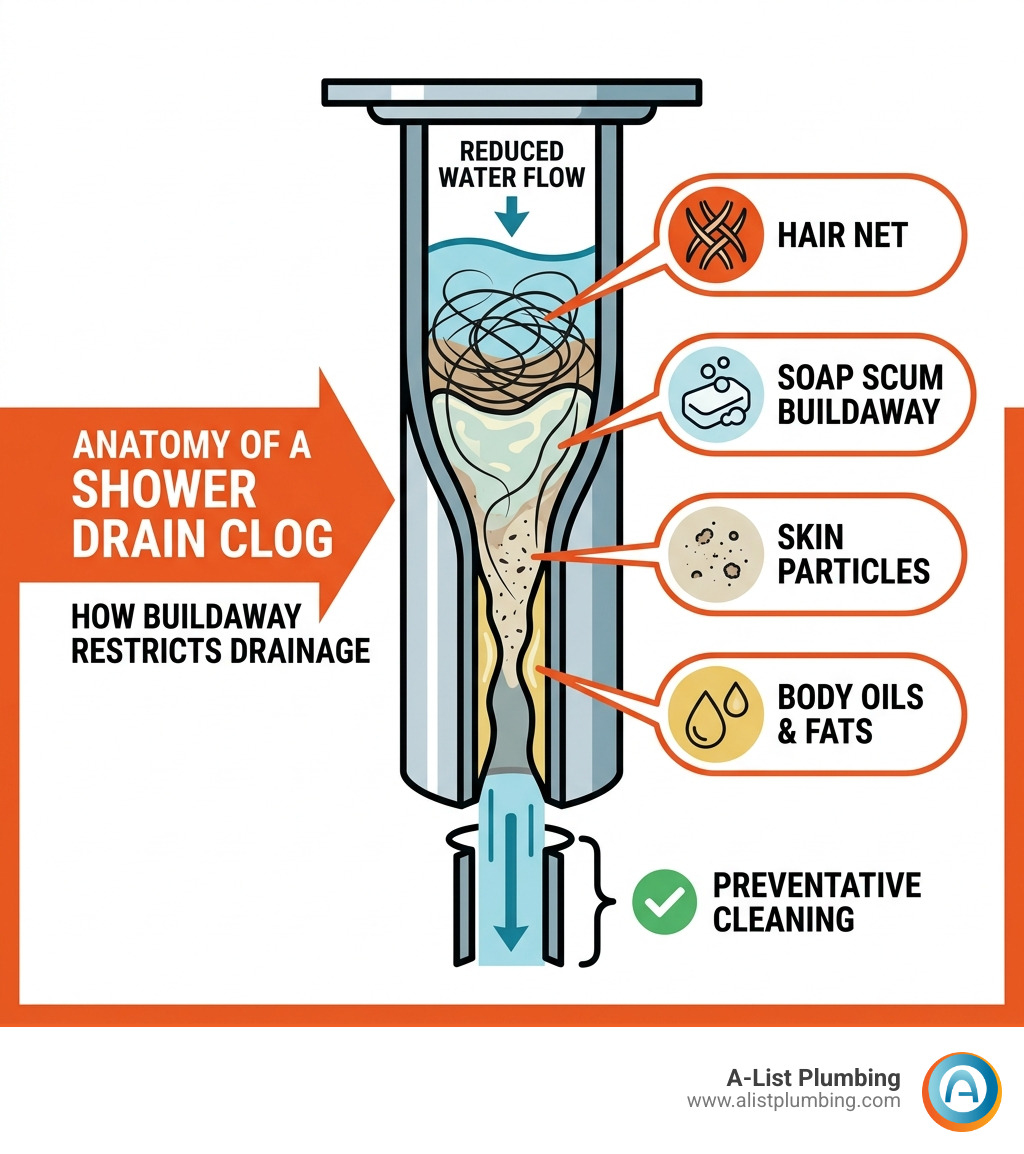
Understanding why your drain is acting up is the first step toward fixing it. In our 22 years of experience serving the Greater Seattle area, we’ve found that shower clogs are rarely caused by one single event. Instead, they are the result of a slow "snowball effect" where different materials bind together inside your pipes.
The primary culprit is almost always hair. Whether it's long or short, shed hair has a nasty habit of tangling together. Once a small net of hair forms, it starts catching everything else that goes down the drain.
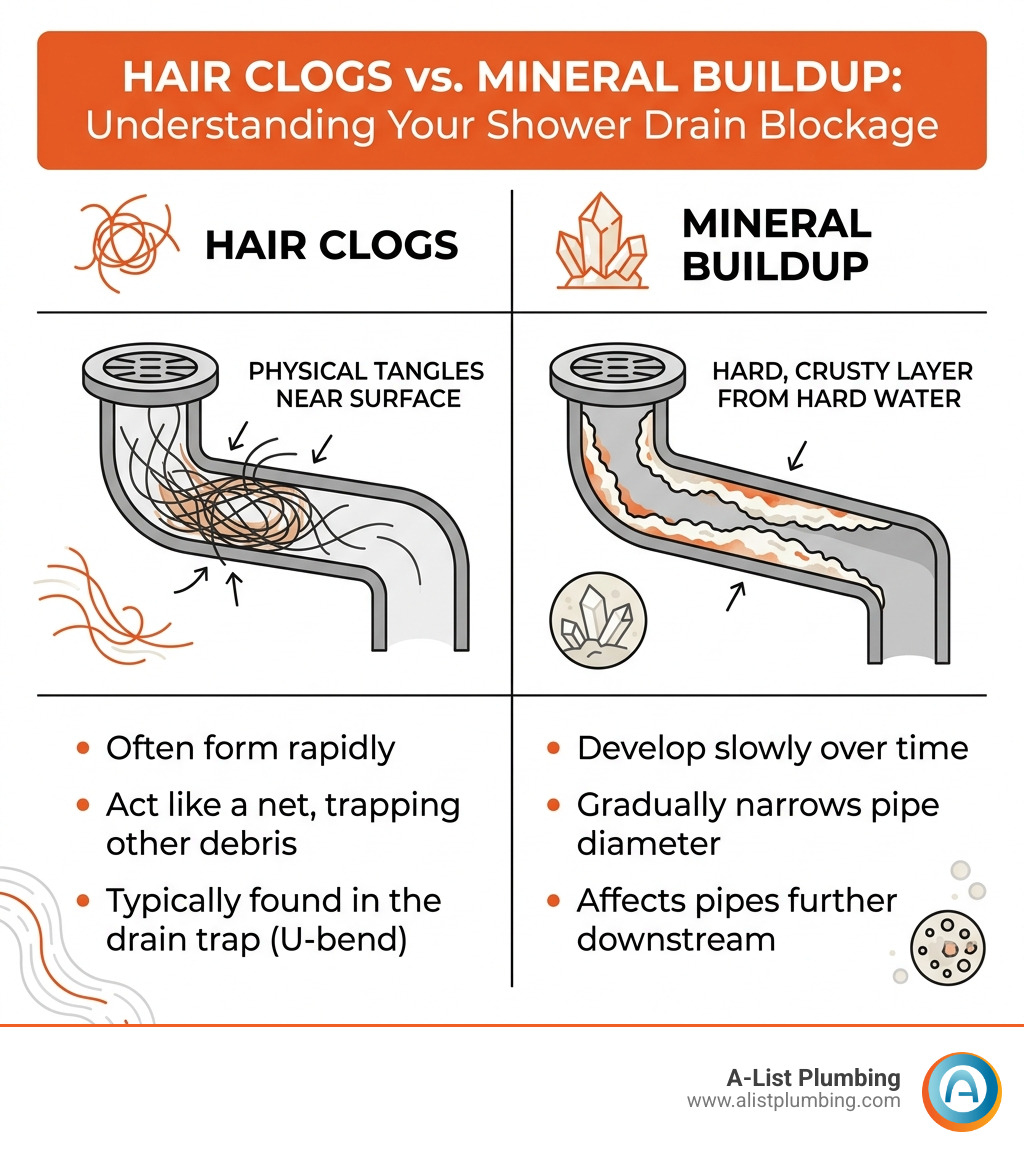
Here are the most frequent offenders:
- Shed Hair: This is the #1 cause. Hair doesn't dissolve; it weaves into a thick mat that acts like a filter, trapping debris.
- Soap Scum: Traditional bar soaps contain fats and oils that react with minerals in our local water. This creates a sticky residue that coats the inside of pipes.
- Skin Particles and Body Oils: As we wash, dead skin cells and natural oils join the soap scum, creating a thick, sludge-like substance.
- Hard Water Deposits: In some parts of Lynnwood and Edmonds, mineral content in the water can lead to calcium and magnesium buildup, which narrows the diameter of the pipe.
According to research on How to Unclog a Shower Drain Quickly and Effectively, these materials often collect just under the surface or in the P-trap, which is the U-shaped pipe designed to hold water and block sewer gases.
How to Unblock Shower Drain Using Natural Solutions
Before you reach for heavy-duty tools or harsh chemicals, we always recommend starting with natural remedies. These are safer for your pipes, better for the environment, and usually involve items you already have in your pantry.
If you're dealing with Clogged Drains, a simple temperature shock or a natural chemical reaction can often do the trick. For more detailed DIY steps, you can also check out this guide on How to Unclog a Shower Drain.
The Baking Soda and Vinegar Method to Unblock Shower Drain
This is the "science fair volcano" method, and it’s surprisingly effective for minor clogs and regular maintenance. When you mix baking soda (a base) with vinegar (an acid), it creates a fizzing reaction that produces carbon dioxide gas. This bubbling action helps physically break up the bond between soap scum and the pipe walls.
The Step-by-Step Process:
- Prep: Pour a pot of hot water down the drain first to soften any grease.
- The Ratio: Pour ½ cup of baking soda directly into the drain.
- The Trigger: Follow it immediately with ½ cup of white distilled vinegar.
- The Wait: Cover the drain with a stopper or a damp cloth to keep the fizzing action contained within the pipe. Let it sit for at least 30 minutes.
- The Flush: Finish by pouring a kettle of hot water down the drain to wash away the loosened gunk.
Using Boiling Water and Dish Detergent
If your clog is mostly made of soap scum and body oils, you need a lubricant and a degreaser. This is where dish detergent comes in.
- Squirt about ¼ cup of grease-fighting dish soap down the drain.
- Let it sit for 10 minutes to penetrate the grime.
- Slowly pour a gallon of boiling water down the drain.
A Note on PVC Safety: If your home in Seattle or Shoreline has PVC (plastic) pipes, be careful with boiling water. Extremely high temperatures can occasionally soften the joints or warp the plastic. In these cases, use very hot tap water instead of boiling water from a kettle. If you aren't sure about your pipe material, it's safer to call for Clog Drain Repair in Seattle WA.
Mechanical Tools to Clear Stubborn Blockages
When liquids don't work, it's time to get physical. Most shower clogs are within the first foot or two of the drain, meaning you can often reach them with simple tools.
How to Use a Plumber’s Snake to Unblock Shower Drain
A plumber's snake (or drain auger) is a flexible cable that you feed into the pipe to either break up or hook onto a clog. For those in our service area needing Drain Rooter Services, this is the manual version of what the pros use.
How to use it:
- Remove the drain grate using a screwdriver.
- Feed the cable into the drain until you feel resistance.
- Rotate the handle in a clockwise motion. This helps the tip of the snake "bite" into the hair clog.
- Gently pull the snake back out. You’ll likely bring a nasty mass of hair and slime with it.
- Repeat the process until the snake comes back clean.
If you are in the city and need local assistance, our Rooter Drainage Service in Seattle WA can handle deeper blockages that a standard hand-snake can't reach.
Using a Plunger for Shower Clogs
Many people think plungers are only for toilets, but they work great for showers too—provided you use the right one. You want a cup plunger(the one that looks like a simple rubber bowl) rather than a flanged toilet plunger.
- The Seal: Apply a small amount of petroleum jelly to the rim of the plunger to create a tighter airtight seal.
- The Water: Ensure there is enough standing water in the shower to cover the rubber cup.
- The Motion: Use quick, vigorous up-and-down motions. The goal is to use water pressure to push and pull the clog until it breaks free.
- Pro Tip: If you have a tub-shower combo, make sure to cover the overflow drain with a damp rag or duct tape, otherwise, the air will just escape there instead of clearing the clog.
When DIY Fails: Calling the Professionals
We love a good DIY success story, but sometimes the clog is simply too deep or too solid for home remedies. If you’ve tried snaking and plunging and the water is still pooling around your ankles, it’s time to call in the experts at A-List Plumbing.
Signs you need a professional:
- Recurring Clogs: If you unblock shower drain issues only for them to return a week later, you likely have a deeper buildup that needs professional cleaning.
- Foul Odors: A persistent "rotten egg" smell can indicate a sewage backup or a dried-out P-trap.
- Gurgling Pipes: If your drain makes a glug-glug sound when you use the sink or toilet, the blockage might be in your main vent stack or sewer line.
- Multiple Backups: If the shower and the toilet are both backing up, the problem is definitely deeper than a simple hair clog.
For residents in the Greater Seattle area, we provide specialized Sewer Drain Clog Repairs for Seattle using video camera inspections and hydro-jetting to clear lines completely.
Frequently Asked Questions about Shower Drains
Is it safe to use chemical drain cleaners?
While they are sold in every hardware store in Lynnwood, we generally advise against them. These cleaners use caustic chemicals that generate heat to dissolve hair. Over time, this heat and corrosion can weaken your pipes, damage septic systems, and create toxic fumes in your bathroom. They are a "last resort" that often causes more harm than good.
How do I remove hair from a shower drain manually?
The most direct way to unblock shower drain hair is to go in after it.
- Unscrew the drain cover.
- Use a flashlight to look inside.
- Use needle-nose pliers or a wire coat hanger with a small hook bent into the end.
- Fish around the crossbars of the drain. You’d be surprised how much hair accumulates right at the entrance.
If the hair is tangled deep in the pipe, you may need professional De-rooting Plumbing services, especially if tree roots have infiltrated your outdoor lines.
What are the best ways to prevent future shower clogs?
Prevention is much easier than a repair!
- Drain Strainers: Spend $5 on a mesh hair catcher. It's the single best investment you can make for your plumbing.
- Pre-Shower Brushing: Brush your hair before you hop in to remove loose strands before they hit the drain.
- Monthly Flushing: Once a month, pour a gallon of near-boiling water down the drain to keep soap residues from hardening.
Conclusion
A clogged shower doesn't have to ruin your morning. By using the natural methods, mechanical tools, and prevention tips we've outlined, you can keep your bathroom running smoothly through April 2026 and beyond.
However, if you're facing a stubborn blockage that refuses to budge, don't risk damaging your pipes. At A-List Plumbing, we bring 22 years of experience to every job in Lynnwood, Shoreline, Edmonds, and Bothell. We pride ourselves on transparent pricing and same-day availability for those plumbing emergencies that just can't wait.
Whether you need a simple drain cleaning or a complex sewer repair, our team is ready to help. Contact us today for expert Plumbing Services and let us get your drains flowing freely again!