

Why a Clear Drain Pipe Matters More Than You Think
A clear drain pipe is something most homeowners don't think about — until water starts backing up in the sink at the worst possible moment.
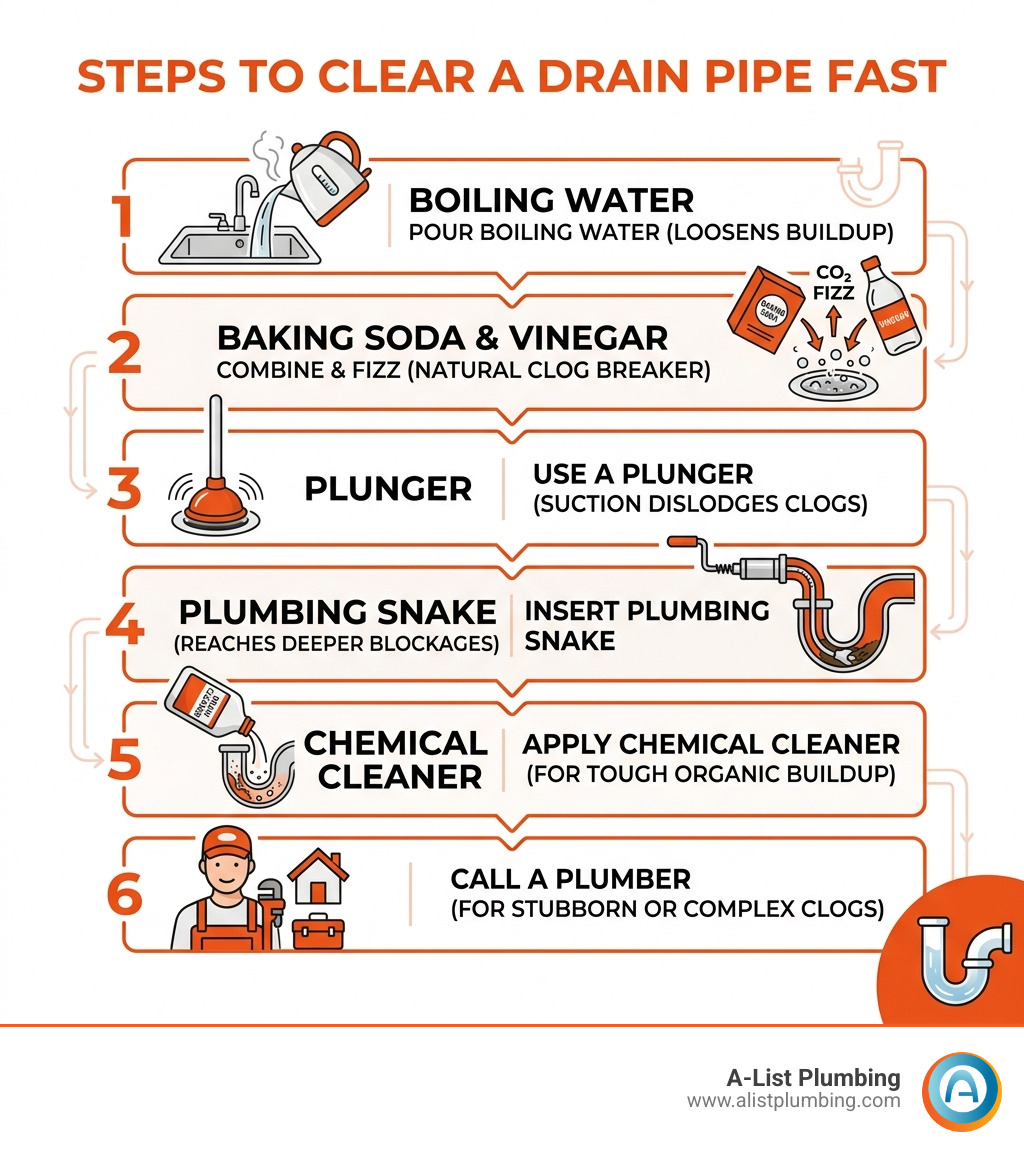
Here's how to clear a drain pipe fast:
- Pour boiling water down the drain to loosen buildup
- Add baking soda and vinegar(1 cup each) and let it fizz for 30 minutes
- Use a plunger to break up stubborn blockages with suction
- Try a plumbing snake or auger for deeper clogs that won't budge
- Use a chemical drain cleaner(like CLR) for tough organic buildup
- Call a licensed plumber if the clog keeps coming back or multiple drains are slow
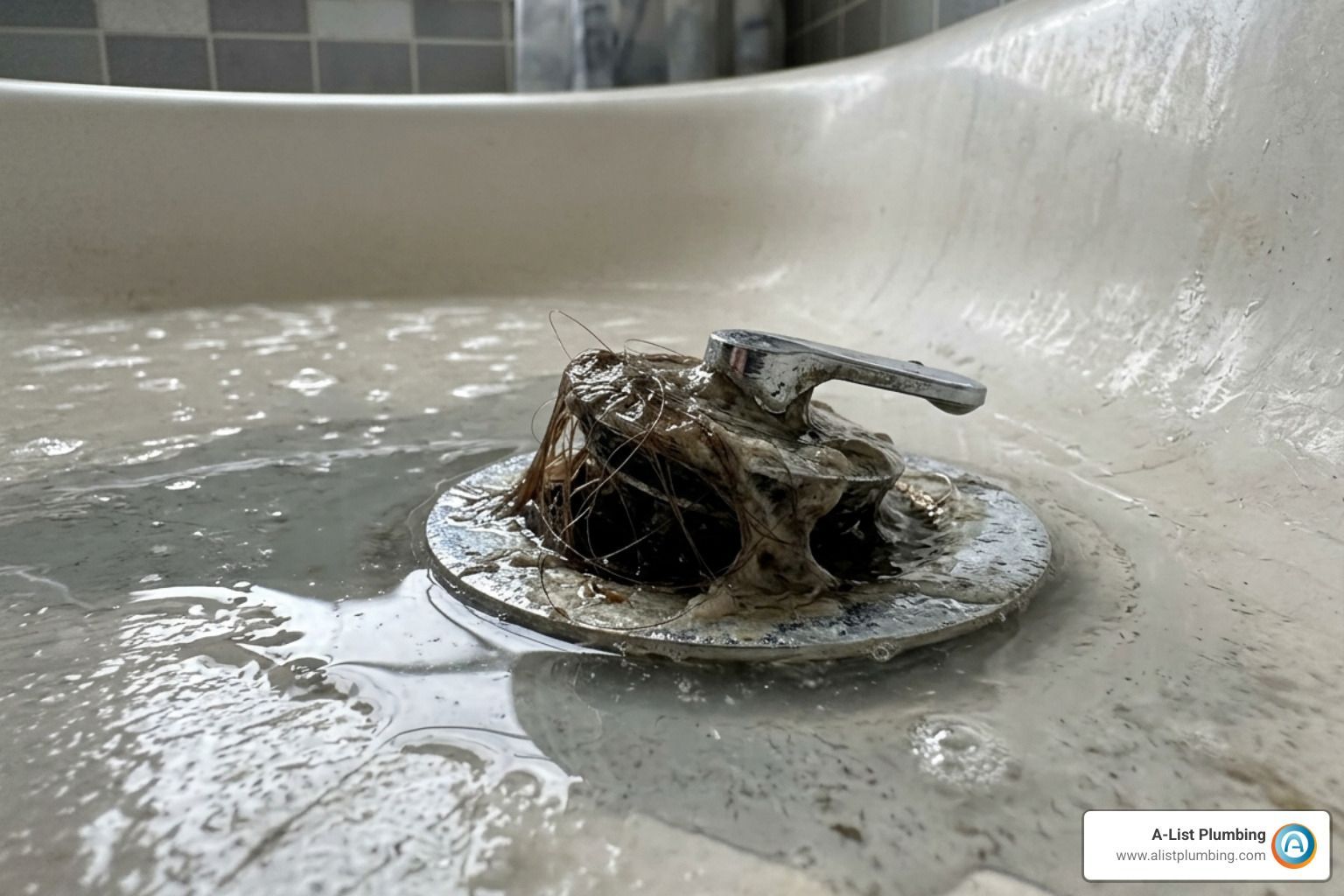
Drain clogs are one of the most common plumbing headaches in Seattle-area homes. Grease, hair, soap scum, and even bacterial slime can build up inside pipes over time — quietly narrowing the flow until water has nowhere to go.
The good news? Most clogs can be handled quickly with the right approach.
I'm Heath Shockman, owner of A-List Plumbing since 2011, and I've cleared hundreds of blocked pipes across Greater Seattle's residential and commercial properties. Knowing how to clear drain pipe blockages — and when to call in a pro — can save you serious time, money, and stress.
Understanding the Causes of Slime and Biofilm Buildup
When we talk about a clear drain pipe, we aren't just talking about hairballs in the shower or a stray bottle cap in the kitchen sink. One of the most persistent and "gross" causes of blockages is something called biofilm, often referred to in the industry as "white slime."
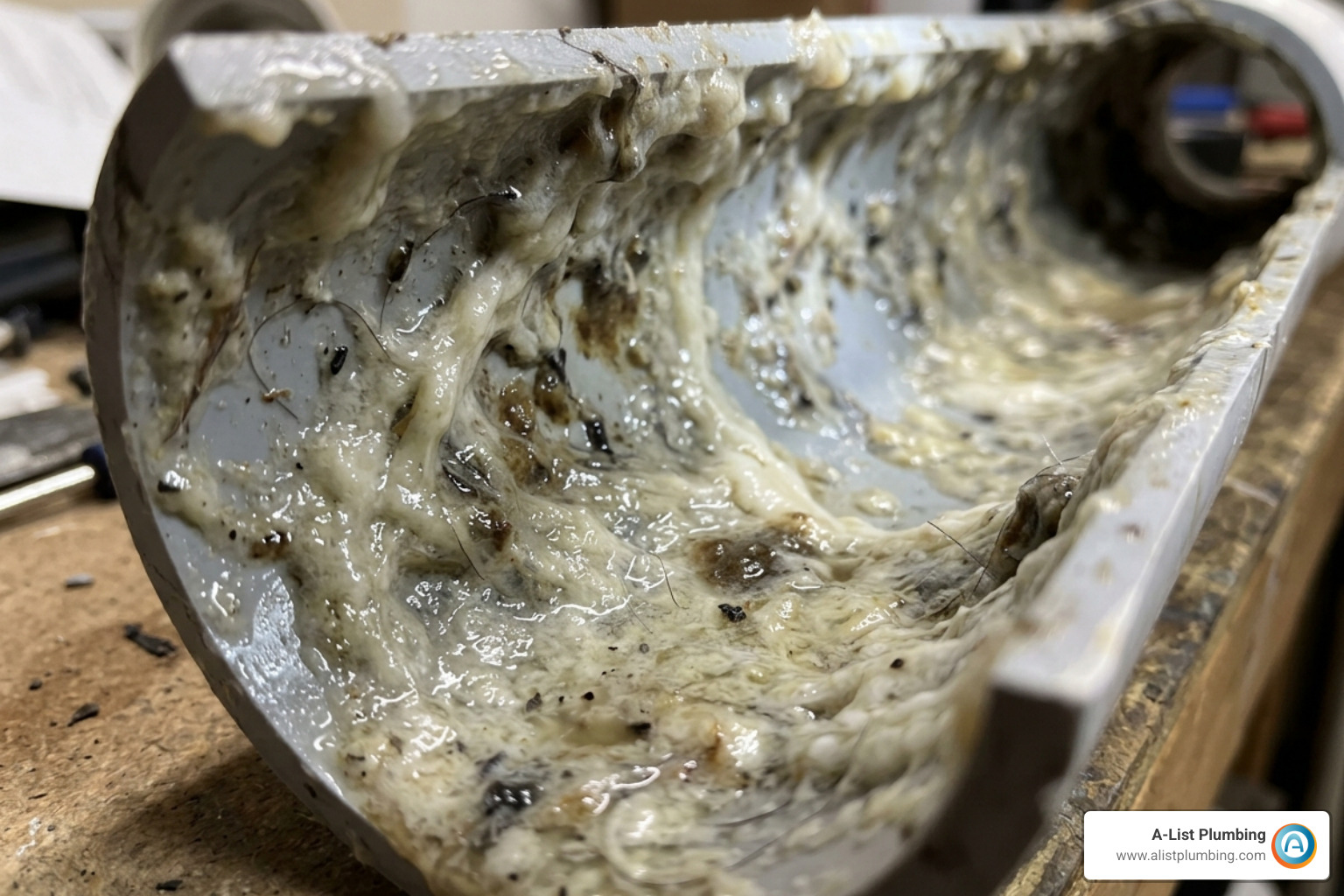
White slime is a complex colony of bacteria and algae that thrives in moist environments. While you might see it in your bathroom sink, it is a massive problem for HVAC (heating, ventilation, and air conditioning) and refrigeration condensate lines. As your AC unit pulls moisture from the Seattle air in April 2026, that water drips into a drain pan and travels through a PVC pipe.
Because this water is often stagnant or moves slowly, it becomes a breeding ground for microorganisms. These bacteria attach themselves to the inner walls of the pipe, creating a sticky matrix that traps other debris. Over time, this "slime" becomes thick enough to completely plug the line, leading to water backups that can damage your drywall or flooring.
Innovative products like ClearDrain PVC: Biocide-Free, Slime-Blocking Piping for Reliable HVAC Drainage have been developed specifically to combat this. Unlike standard PVC, these systems are designed to prevent microorganism attachment from the start, ensuring the pipe stays clear without the constant need for aggressive chemical treatments.
Proven Methods to Clear Drain Pipe Clogs Fast
If you are currently staring at a sink full of grey water, you need a solution now. Depending on the severity of the clog, you have a few DIY options. We generally recommend starting with the gentlest method first to protect your plumbing.
The Natural Duo: Baking Soda and Vinegar
This is the "9th-grade science fair" method, and it’s surprisingly effective for minor organic clogs and smelly drains.
- Boiling Water: Start by pouring a kettle of boiling water down the drain to melt grease.
- The Mix: Pour one cup of baking soda into the drain, followed by one cup of white vinegar.
- The Reaction: The acid-base reaction creates carbon dioxide (CO2) bubbles. These bubbles physically agitate and loosen the "gunk" sticking to the pipe walls.
- The Flush: Let it sit for 30 minutes, then flush with more boiling water. The pressure of the water combined with the loosened debris helps clear drain pipe obstructions effectively.
Chemical Solutions
When natural remedies fail, you might turn to commercial products. For example, 42 oz. Clear Pipes & Drains Build-Up Remover Treatment is a non-toxic option that meets EPA safer product standards. It works by targeting the buildup at the source.
However, be cautious with heavy-duty "clog destroyers." While they contain sodium hydroxide or sodium hypochlorite to dissolve hair and grease, they also generate heat. In older homes around Edmonds or Shoreline, frequent use of these chemicals can actually weaken plastic pipes or damage the finish on your fixtures. If you’ve tried a chemical cleaner and the water still won't budge, it’s time for Clog Drain Repair in Seattle WA.
| Method | Best For | Pros | Cons |
|---|---|---|---|
| Baking Soda & Vinegar | Smelly drains, minor grease | Eco-friendly, cheap | Won't fix heavy hair clogs |
| Boiling Water & Soap | Kitchen grease buildup | Safe for all pipes | Only works on heat-sensitive clogs |
| Chemical Cleaners | Tough hair clogs | Very fast acting | Can damage pipes/environment |
| Enzyme Treatments | Monthly maintenance | Prevents slime buildup | Not for immediate "emergency" clogs |
Advanced Tools for Stubborn Household Blockages
Sometimes, science experiments aren't enough. You need mechanical force to get a clear drain pipe.
The Power of the Plunger
Not all plungers are created equal.
- Cup Plungers: These have a flat bottom and are designed for sinks and tubs.
- Flange Plungers: These have a fold-out sleeve (the flange) designed to fit into the hole of a toilet to create a tight seal.
To use a plunger effectively in a sink, fill the basin with enough water to submerge the head. If you have a double kitchen sink, plug the "other" side with a stopper or a wet rag. This directs all the suction and pressure toward the clog rather than letting it escape out the other drain.
The Plumbing Snake (Auger)
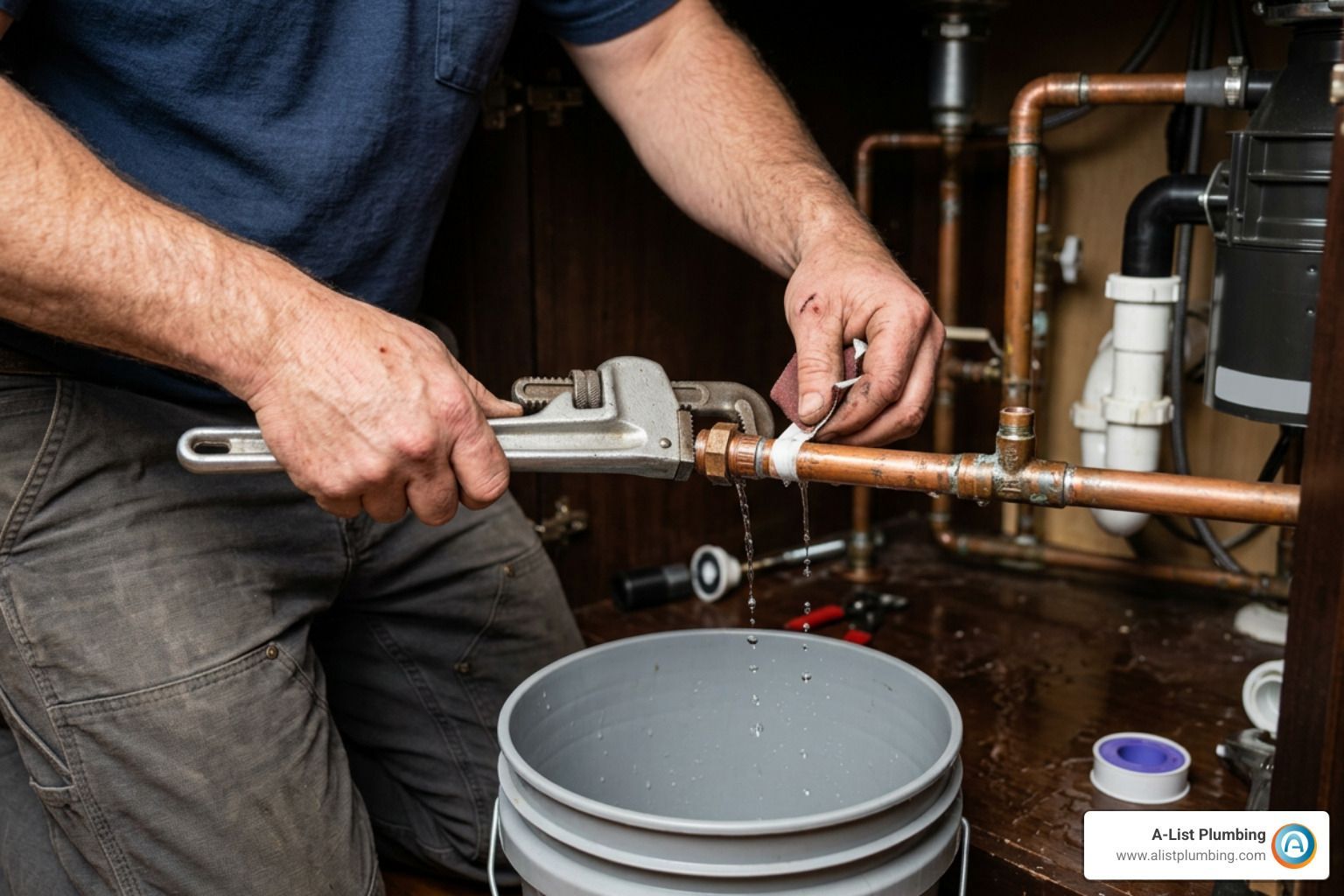
If the clog is deep in the "P-trap" or further down the line, a plumbing snake is your best friend. You insert the flexible cable into the drain until you feel resistance. By rotating the handle, the "corkscrew" end either breaks the clog apart or hooks onto it (like a clump of hair) so you can pull it out.
For those in Bothell or Lynnwood dealing with recurring issues, a Rooter Drainage Service in Bothell WA uses professional-grade motorized augers that can reach much further and handle tougher obstructions than a hand-cranked snake.
Innovative Solutions: ClearDrain PVC for HVAC Systems
While most of this guide focuses on sinks and toilets, we can't ignore the specialized needs of HVAC and refrigeration systems. Standard Schedule 40 (SCH40) PVC is the "standard" for drainage, but it has a major flaw: it is a perfect home for white slime.
This is where ClearDrain PVC Product Line | RectorSeal changes the game. It isn't just a different color of pipe; it’s a completely different technology engineered to keep a clear drain pipe for years without chemical biocides.
How Zinc Technology Keeps a Clear Drain Pipe
The secret to ClearDrain PVC is zinc-infused technology. Zinc is naturally antimicrobial. By infusing it directly into the PVC during manufacturing, the pipe creates an environment where bacteria, algae, and molds cannot easily attach or grow.
- Slippery Inner Walls: The technology creates a smooth, hydrophobic (water-repelling) surface.
- Electrostatically Repulsive: It literally pushes microorganisms away from the pipe wall.
- 1,000x Effectiveness: Testing shows it is up to 1,000 times more effective at preventing white slime blockages than standard PVC.
- 99.9% Reduction: It can reduce the growth of slime-blocking bacteria by up to 99.9% compared to traditional piping.
Key Features of ClearDrain PVC Components
This system isn't just about the straight pipe; it’s a full ecosystem of fittings designed to meet ASTM D1785 and D2466 standards.
- Product Variations: You can find everything from ClearDrain PVC 3/4" SCH40 PVC PE Pipe 7ft to 10ft lengths, P-traps, 90-degree elbows, and tees.
- UV-Resistance: These pipes are built to last and won't lose their effectiveness if exposed to sunlight during installation.
- Eco-Friendly: Because the protection is built into the material, you don't have to flush toxic biocides or "slime tabs" down the drain, making it a safer choice for the Puget Sound environment.
Professional Maintenance and Prevention Strategies
The best way to clear drain pipe issues is to make sure they never happen in the first place. Prevention is always cheaper than an emergency plumber visit on a Sunday night.
The "Big Three" Prevention Tips
- Drain Strainers: Use them in every shower and tub. They cost a few dollars and catch hair before it ever reaches the pipe.
- No Grease Down the Sink: Liquid grease cools and solidifies in your pipes, acting like glue for every other piece of debris that passes by. Pour grease into a tin can and toss it in the trash.
- Coffee Grounds belong in the Compost: Coffee grounds do not "scrub" your pipes; they settle in the P-trap and create a sludge that is incredibly difficult to clear.
If you are dealing with tree roots—a common problem in older Seattle neighborhoods with lush landscapes—DIY methods won't work. You’ll need a professional De-Rooting Plumbing Repair in Lynnwood WA to physically cut the roots out of the line.
Maintaining a Clear Drain Pipe Long-Term
We recommend a monthly "maintenance flush." Simply pour a gallon of boiling water mixed with a little dish soap down your high-traffic drains. This helps dissolve soap scum and light grease before they harden. For homes with older sewer lines, scheduling a Sewer Drain Clog Repairs for Seattle inspection every few years can catch small issues before they become massive backups.
Frequently Asked Questions
Is ClearDrain PVC safe for residential use?
Yes! While it was designed primarily for HVAC and refrigeration condensate lines where slime is a major issue, it is a Schedule 40 PVC product that meets standard plumbing certifications (ASTM D1785). It is biocide-free and does not leach chemicals, making it safe for use in residential applications where condensate drainage is required.
How does baking soda and vinegar actually break down a clog?
It’s all about the CO2. When you mix the base (baking soda) and the acid (vinegar), the chemical reaction creates rapidly expanding bubbles. In the confined space of a pipe, these bubbles provide a mild mechanical force that can break apart the "glue" holding a clog together. When followed by boiling water, the pressure and heat flush the loosened debris away.
When should I stop DIY attempts and call a plumber?
You should call us if:
- The clog is deep and a standard 25-foot hand snake can't reach it.
- You have multiple drains backing up at once (this usually means a main sewer line clog).
- You’ve used chemical cleaners and the water still isn't moving (don't keep adding chemicals!).
- The clog keeps recurring every few weeks. This suggests a structural issue like a bellied pipe or root intrusion.
Conclusion
Keeping a clear drain pipe is essential for a healthy, stress-free home. Whether you are using a simple baking soda mix to freshen your kitchen sink or upgrading your HVAC system with zinc-infused ClearDrain PVC to prevent "white slime" disasters, a little bit of knowledge goes a long way.
At A-List Plumbing, we bring 22 years of experience to every job, from Lynnwood and Edmonds to Shoreline and Bothell. We pride ourselves on transparent pricing and same-day availability for those moments when DIY just isn't enough. If you’re facing a stubborn backup that refuses to budge, don't risk damaging your pipes—reach out to us for Expert Plumbing Services and let us get things flowing again.