

What to Do When Your Water Heater Thermostat Fails
Fix water heater thermostat problems by following these steps:
- Turn off power at the circuit breaker before touching anything
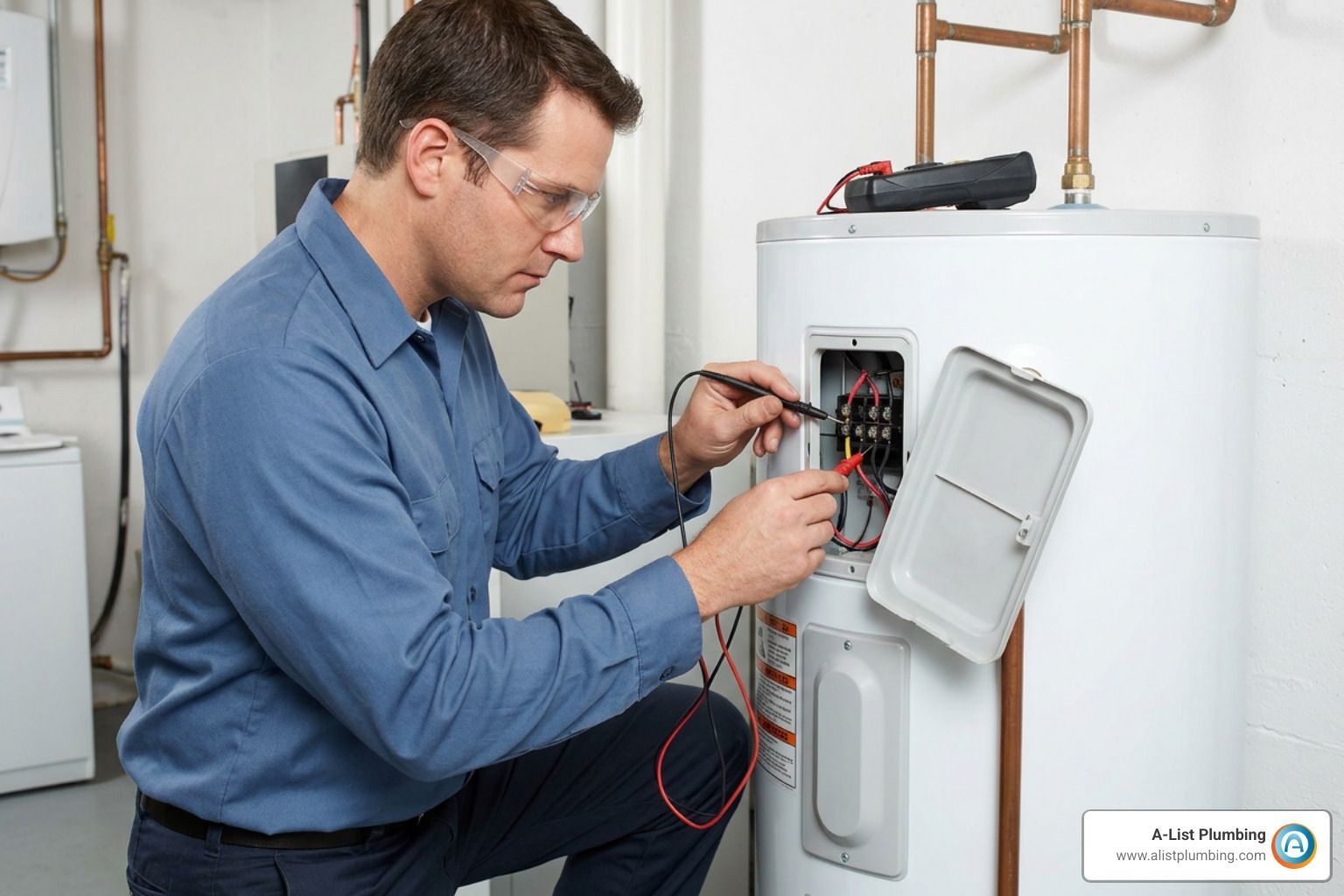
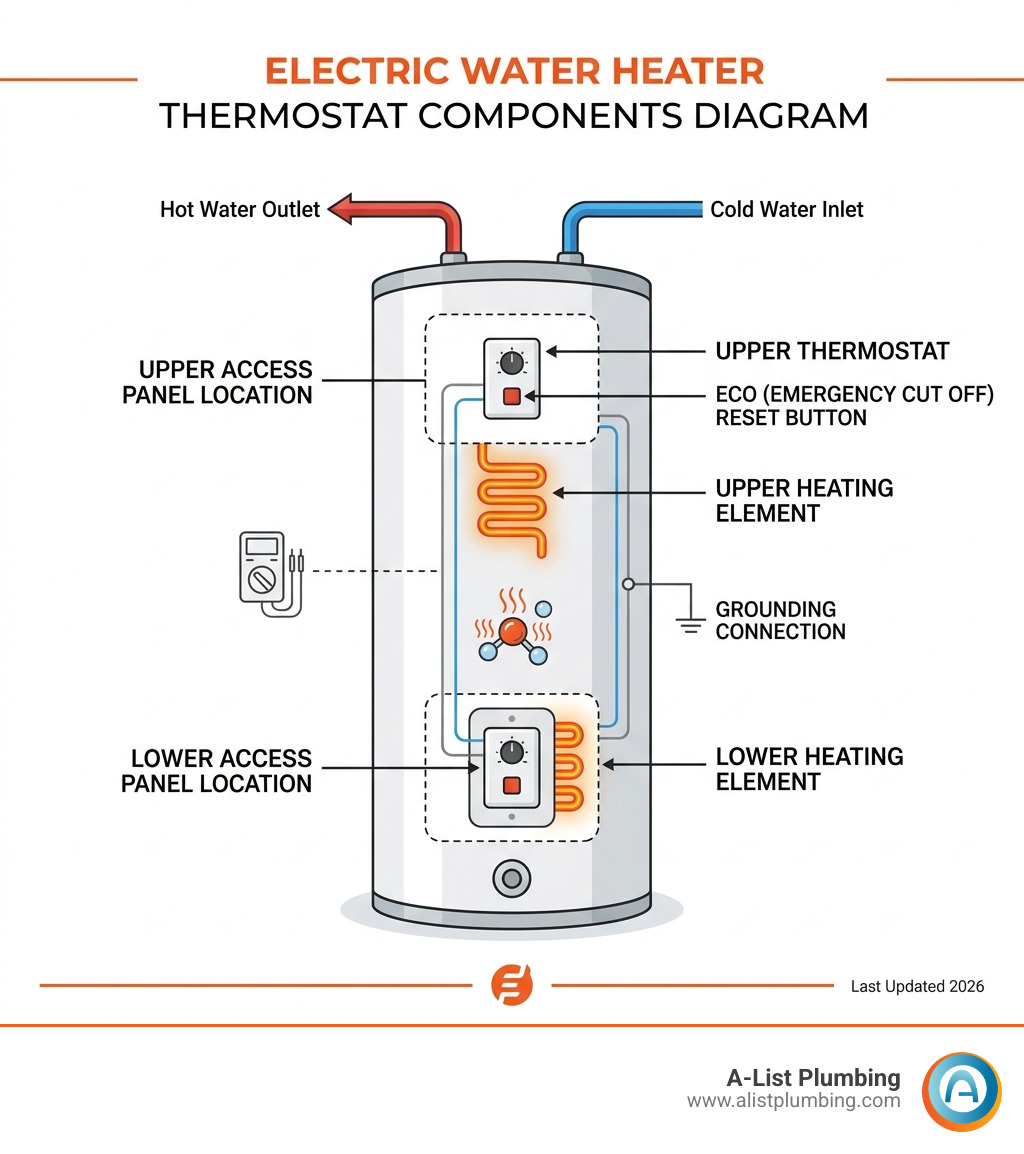
- Remove the access panel and locate the upper and lower thermostats
- Press the red reset button on the upper thermostat — this alone may solve the problem
- Test continuity with a multimeter to confirm which thermostat has failed
- Replace the faulty thermostat, mount it flush against the tank, and reconnect wires in the original positions
- Set the temperature to 120°F, restore power, and wait up to two hours before testing
Cold showers are miserable. So is scalding water that you can't control.
When your water heater thermostat fails, you'll know it — water that won't get hot, water that gets too hot, or a tank that runs out of hot water way too fast. These aren't just inconveniences. In the Greater Seattle area, where cold weather makes hot water essential, a broken thermostat can feel like a real emergency.
The good news? Many thermostat issues are fixable without calling a plumber — if you're comfortable working around electricity and know the right steps.
This guide walks you through everything: diagnosing the problem, testing both thermostats, replacing a faulty unit, and knowing when it's smarter to call a pro.
I'm Heath Shockman, owner of A-List Plumbing since 2011, with extensive experience diagnosing and repairing residential water heaters across the Greater Seattle area. Knowing how to fix water heater thermostat issues quickly is something my team handles regularly — and I want to give you the same knowledge we use every day.
Common Signs You Need to Fix a Water Heater Thermostat

How do you know if your thermostat is the culprit? Since the thermostat is the "brain" of your water heater, its failure sends mixed signals to the heating elements. Here are the most common red flags we see in April 2026:
- No Hot Water at All: If your shower is ice-cold, the upper thermostat (which controls the initial heating) may have failed or the high-limit switch has tripped.
- Running Out of Hot Water Quickly: If you have hot water for five minutes and then it goes lukewarm, your lower thermostat is likely dead. The upper element heats the top of the tank, but the lower one isn't kicking in to maintain the volume.
- Scalding Hot Water: If the water is dangerously hot, the thermostat may be "stuck" in the ON position, constantly powering the elements. You can learn more about this in this guide on How to Fix a Water Heater That's Overheating.
- Inconsistent Temperatures: If the water is hot one minute and cool the next, the thermostat is likely struggling to provide accurate readings to the system.
- High Energy Bills: A faulty thermostat can cause the heater to work overtime, leading to a spike in your monthly utility costs.
Repair vs. Replacement Costs in 2026
Before you dive into a DIY project, it helps to know the numbers. As of April 2026, the average cost for a professional water heater repair is approximately $590. However, individual thermostats are relatively affordable, typically costing between $150 and $200 each. If you need to replace both the upper and lower units, expect to pay $300 to $400 for parts.
That the life expectancy of an electric hot water heater is often cited at 3-5 years by some experts, though well-maintained units in the Seattle area can last longer. If your tank is over 10 years old and leaking, a full replacement (ranging from $875 to $1,750) might be more cost-effective than a repair. For residents in the city, check out our Water Heater Repair in Seattle WA page for local assistance.
Essential Tools and Safety for Thermostat Repair
Safety isn't just a suggestion; it’s the most important part of the job. Electric water heaters run on a 30-amp or 40-amp double-pole circuit breaker, providing 240 volts. That is more than enough to be fatal if handled incorrectly.
The DIY Toolkit
To fix water heater thermostat issues, you’ll need:
- Digital Multimeter: For testing continuity and voltage.
- Non-Contact Voltage Tester: To verify the power is truly off.
- Screwdrivers: Both Phillips and flat-head (insulated handles are best).
- Protective Gloves: To protect against sharp metal edges on the access panels.
- Flashlight: Most water heaters are tucked away in dark closets or basements.
Safety Precautions
- Lockout the Power: Turn off the breaker and tape it in the "OFF" position so no one accidentally flips it back on while you're working.
- Verify with a Tester: Even after flipping the breaker, use your voltage tester on the wires inside the water heater panel to ensure there’s no "ghost" voltage.
- Check for Moisture: If there is standing water around the heater, do not touch the unit. Call a professional for Water Heater Repair in Shoreline WA immediately.
- No Mixing Parts: Always replace a thermostat with the exact same model or a manufacturer-approved equivalent.
How to Test and Fix Water Heater Thermostat Issues
Most modern electric water heaters (over 30 gallons) have two thermostats. The upper thermostat is the primary controller. Once the top of the tank is hot, it flips a switch to send power to the lower thermostat, which maintains the rest of the tank.
The "Click" Test
A quick way to check a thermostat is the click test. With the power OFF, turn the temperature dial all the way up and then all the way down. You should hear a distinct "click" as the contacts open and close. If you don't hear anything, the internal mechanism is likely broken.
Continuity Testing
To be certain, you need a multimeter. For a detailed walkthrough, you can reference How to Test Your Water Heater Thermostat.
- Disconnect the wires from the thermostat terminals (label them first!).
- Set your multimeter to the lowest Ohms (Ω) setting.
- Touch the probes to the terminals. A reading of "0" or close to it means there is continuity (the path is open). No reading (Infinity or OL) means the thermostat is dead and needs replacement.
If you're in the North End, our team provides expert Water Heater Repair in Lynnwood WA to handle these diagnostics for you.
Troubleshooting Steps to Fix Water Heater Thermostat Problems
Sometimes the thermostat isn't the only problem. We often find that sediment buildup at the bottom of the tank "buries" the lower element, causing it to burn out. This can make it seem like the thermostat is failing when the element is actually the culprit.
Using Ohm's Law, we can test the heating elements. A healthy 4,500-watt element should show a resistance between 11.5 and 14.5 ohms. If the reading is outside this range, or if there is continuity between a terminal and the metal tank (a ground fault), the element must be replaced. For those in the Bothell area, we offer specialized Water Heater Repair in Bothell WA.
Diagnosing Element Failure vs. Thermostat Failure
If your thermostat has burned contacts or melted wire insulation, don't just replace the thermostat. Burned wires usually indicate a loose connection or an element that is drawing too much current. Check the terminal torque —screws that aren't tight enough create resistance, which generates heat and melts plastic. If you're seeing melted components, it might be time for a professional Water Heater Repair in Ballard WA.
Step-by-Step Guide to Replace a Faulty Thermostat
Once you've confirmed the unit is faulty, follow these steps to fix water heater thermostat wiring and hardware:
- Document the Wiring: Take a clear photo of the existing wiring. This is your roadmap for the new installation.
- Disconnect Wires: Use your screwdriver to loosen the terminal screws and pull the wires away.
- Remove the Thermostat: Most are held in by simple metal spring clips. Pull the tabs back and lift the thermostat out.
- The Business Card Test: When you snap the new thermostat into place, it must be flush against the tank. If there is a gap, it won't sense the water temperature correctly. Try to slide a business card between the thermostat and the tank; if it fits, you need to bend the mounting bracket to ensure a tighter fit.
- Reconnect: Using your photo as a guide, reconnect the wires. Ensure they are tight; loose wires are a fire hazard.
For a deeper dive into this process, see this Step-by-Step Guide for Homeowners. If you live near the waterfront, we provide Water Heater Repair in Edmonds WA to ensure your installation is up to code.
Setting the Correct Temperature for Safety
We recommend setting both the upper and lower thermostats to 120°F (49°C). While many manufacturers ship units set to 140°F, 120°F is the "sweet spot" for several reasons:
- Scalding Prevention: Water at 140°F can cause third-degree burns in seconds.
- Bacteria Control: 120°F is hot enough to prevent the growth of Legionella bacteria.
- Energy Savings: Lowering the temp saves money on your electric bill.
If you need help adjusting your settings safely, our Water Heater Repair in Magnolia WA experts are just a call away.
Final Testing After You Fix Water Heater Thermostat Wiring
After everything is tightened and the access panels are back on:
- Restore power at the breaker.
- Wait: It can take up to two hours for a standard tank to fully heat up.
- Check the temperature at the tap furthest from the heater.
If you're still experiencing issues in the Queen Anne area, contact us for Water Heater Repair in Queen Anne Seattle WA.
Frequently Asked Questions about Water Heater Thermostats
Do I need to drain the tank to replace the thermostat?
No! This is a common misconception. Unlike the heating elements, the thermostats are mounted on the outside of the tank, held against the metal skin by a bracket. You can replace them "dry" without losing a drop of water. However, if you see water inside the access panel, you don't have a thermostat problem—you have a leak. See our guide on Water Heater Leaks in Seattle WA if you notice moisture.
Why does my high-limit switch keep tripping?
The red button on your upper thermostat is the Emergency Cut Off (ECO). If it keeps tripping, it means the water is exceeding 170°F-180°F. This is usually caused by a grounded heating element that stays on even when the thermostat tells it to stop, or a faulty upper thermostat. If you're constantly resetting this button, it will eventually weaken and fail. Residents in Snohomish County can find help at Water Heater Leaks in Lynnwood WA.
Can I replace a gas water heater thermostat myself?
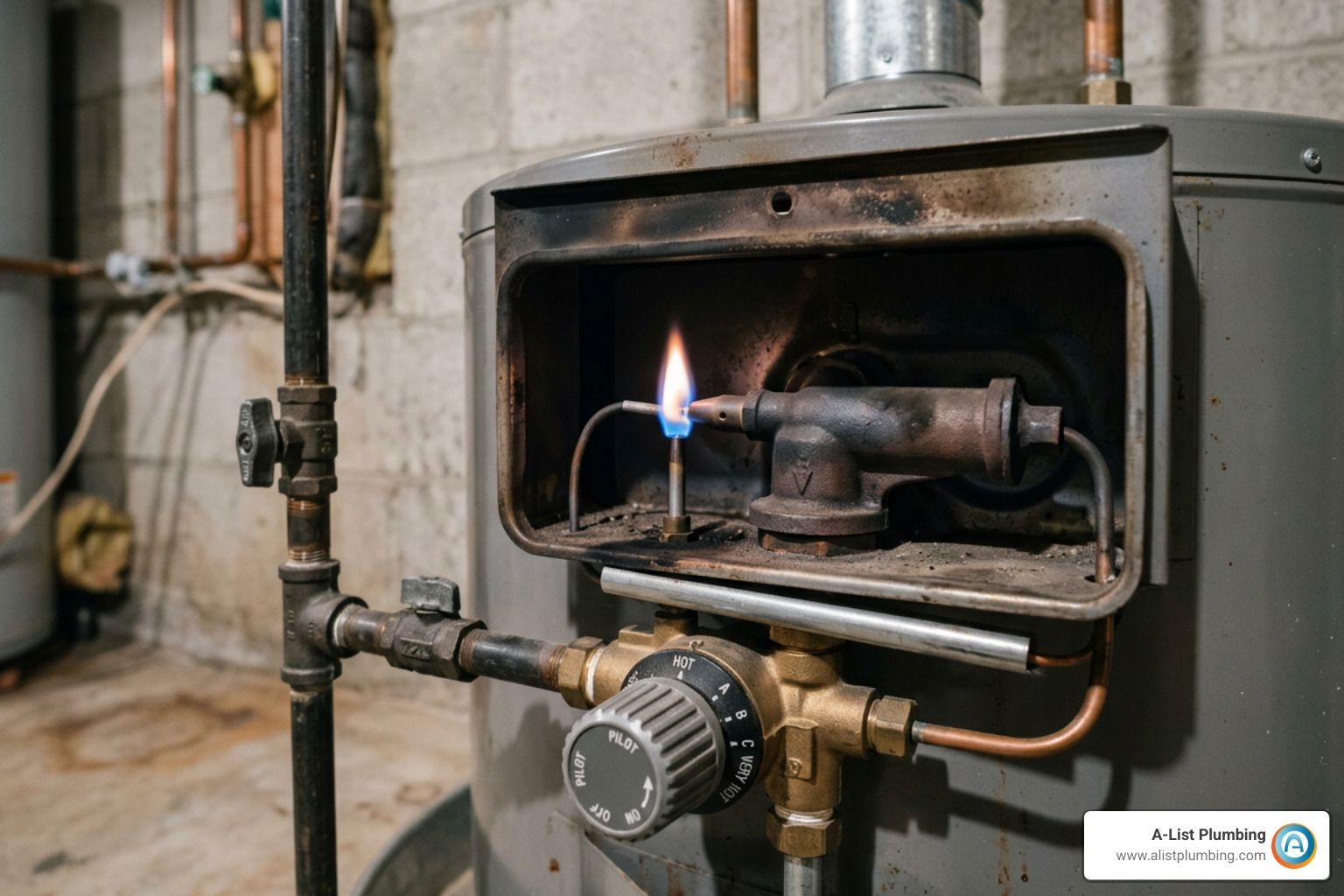
We strongly advise against this. On a gas water heater, the thermostat is part of the gas control valve assembly. Replacing it involves disconnecting gas lines, which carries a high risk of leaks, fires, or explosions. This is a job that must be handled by a licensed professional. If you smell gas or have a failing gas valve, visit Water Heater Leaks in Shoreline WA for emergency service.
Conclusion
Being able to fix water heater thermostat issues can save you time and money, but it requires a healthy respect for electricity and a methodical approach. Whether it's a simple reset of the ECO button or a full replacement of the upper and lower units, getting your hot water back to a safe, consistent 120°F is the goal.
At A-List Plumbing, we’ve spent the last 22 years helping neighbors in Lynnwood, Edmonds, and throughout the Greater Seattle area keep their homes running smoothly. We pride ourselves on transparent pricing and same-day availability for those times when a DIY fix just isn't enough.
If you've tried these steps and you're still stuck in a cold shower, don't sweat it (or freeze!). We're here to help with professional diagnosis and repair. For More info about water heater repair services, contact us today.