

When Your Sewer Line Collapses: What Every Seattle Homeowner Needs to Know
A collapsed sewer line is one of the most serious plumbing emergencies a homeowner can face — and if you're dealing with it right now, here's what you need to know fast:
Quick answer: Key signs of a collapsed sewer line
- Multiple drains backing up at the same time
- Gurgling sounds from toilets or sinks
- Persistent sewage odors inside or outside your home
- Soggy, sunken, or unusually green patches in your yard
- Sewage backing up when you run the washing machine or flush the toilet
- Sudden increase in rats or roaches
If you're seeing more than one of these signs at once, you're likely dealing with a structural failure — not a simple clog.
Every drain in your home flows into a single main sewer line. When that line collapses, your entire plumbing system stops working. No showers. No laundry. No toilets. And the longer you wait, the worse the damage gets — to your home, your yard, and potentially your foundation.
In the Greater Seattle area, older pipes, heavy tree root growth, and wet shifting soils make collapsed sewer lines more common than most homeowners expect. It can start as a slow drain or a faint smell. Then one morning, you're running the washing machine and sewage is backing up into your shower.
I'm Heath Shockman, owner of A-List Plumbing, and I've spent years helping Seattle-area homeowners diagnose and repair collapsed sewer lines — including the tricky environmental factors our Northwest climate throws at underground pipes. This guide covers everything you need to know to act fast and make smart decisions.
Identifying the Signs of a collapsed sewer line
Detecting a collapsed sewer line early can be the difference between a localized repair and a full-scale property restoration. Because these pipes are buried deep underground, they don't always "fail" in one loud bang. Instead, they provide a series of increasingly urgent warnings.
One of the most ironic signs is a "super lawn." If you notice a patch of grass that is suddenly much lusher, taller, and greener than the rest of your yard—especially during a dry spell in July or August—you might have a leak. Raw sewage acts as a potent, albeit disgusting, fertilizer. While your grass thrives, the soil underneath is likely becoming oversaturated and unstable.

Beyond the grass, keep your nose on high alert. A functional sanitary sewer system is designed to be airtight, with P-traps and vent stacks keeping odors out of your living space. If you smell rotten eggs or "sewer gas" in your basement, crawlspace, or even out in the yard, the pipe’s structural integrity has been breached.
You should also watch for "hitchhikers." Rats and cockroaches live in municipal sewer systems. A collapsed sewer line creates a doorway for these pests to leave the pipe and enter the soft soil around your foundation, eventually finding their way into your walls. If you’re seeing a sudden influx of pests despite a clean home, your sewer line might be the culprit. For more technical details on how these issues manifest locally, you can review Side Sewer Defects & Issues - Utilities.
Is it a Clog or a collapsed sewer line?
It is the age-old question for homeowners: "Do I just need a plunger, or am I in trouble?"
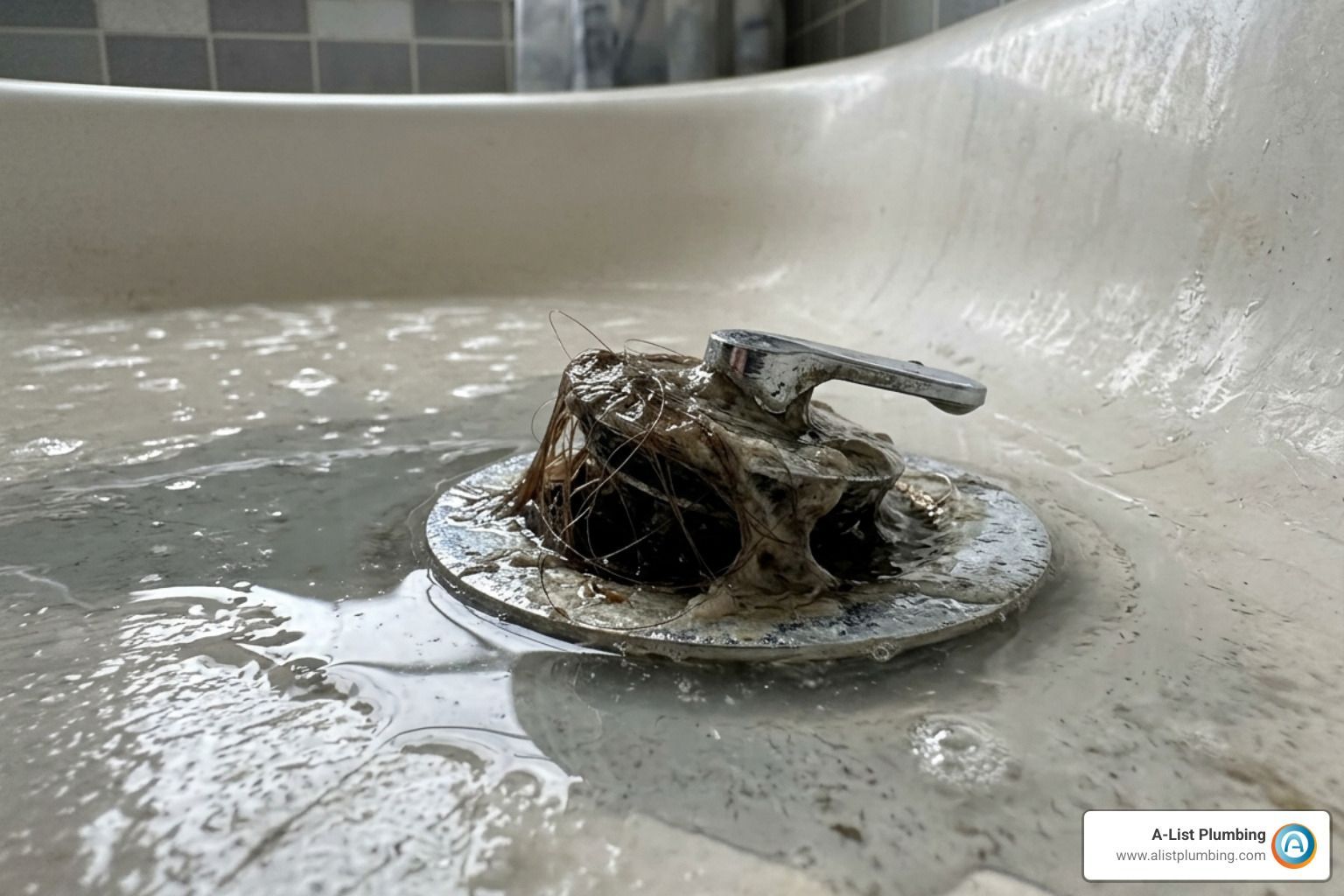
A simple clog is usually isolated to one fixture. If your kitchen sink is slow but the bathroom works fine, it’s likely a localized grease or food blockage. However, a collapsed sewer line affects the "trunk" of the plumbing tree. When the main line fails, every "branch" (your sinks, toilets, and showers) struggles to drain.
If you find that flushing the toilet causes water to bubble up in the shower, or running the washing machine leads to a floor drain backup, you are likely dealing with a structural failure. Unlike a clog, which can often be cleared with professional Sewer Drain Clog Repairs For Seattle, a collapse means the pipe walls have caved in, physically blocking the path with shards of clay, rusted iron, or dirt.
Physical Symptoms Around Your Property
As we move into April 2026, we are seeing more cases where soil shifting—exacerbated by our heavy Northwest rains—leads to visible property damage. When a sewer pipe collapses, the water that should be heading to the treatment plant instead erodes the soil surrounding the pipe.
This leads to:
- Sinkholes and Indentations: If you see a dip in your lawn or a sunken pavers on your driveway, the soil may be washing away into a void created by the broken pipe.
- Foundation Cracks: In severe cases, particularly in places like Edmonds or Shoreline where homes may sit on slopes, the escaping water can undermine the concrete slab or foundation. If you see new, radiating cracks in your basement floor or supporting walls, it’s time to call us immediately.
- Mold Growth: Constant moisture from a broken line under the house can cause humidity levels to spike in crawlspaces, leading to rapid mold colonization.
Local residents can find more information on how the city manages these systems at the Sewer Utility System - City of Edmonds, WA.
Root Causes: Why Sewer Pipes Fail
Why does a pipe that has worked for decades suddenly give up the ghost? In the Greater Seattle area, the answer is usually a combination of age and biology.
Aging Materials and the 50-Year Limit
Many homes in Lynnwood, Bothell, and Seattle were built using clay tile or cast iron pipes. While durable, these materials have a finite lifespan.
- Clay Pipes: These were popular because they don't corrode, but they are brittle. Over 50 to 60 years, the joints shift, and the sections can crack under the weight of the earth.
- Cast Iron: These pipes eventually succumb to internal corrosion, thinning the "belly" of the pipe until it collapses under hydrostatic pressure.
- Orangeburg Pipe: Often found in mid-century homes, this is essentially tar-paper pipe. Over time, it softens, deforms into an oval shape, and eventually flattens completely.
Environmental and Structural Stressors
Our environment plays a huge role. The "freeze-thaw" cycles common in Washington can cause the ground to expand and contract, putting immense pressure on rigid, older pipes. Furthermore, tree roots are "water seekers." They can sense the moisture escaping from a tiny hairline crack or a loose joint. Once a root enters the pipe, it expands, acting like a slow-motion explosion that eventually shatters the line.
Heavy vehicle traffic on the surface or nearby construction can also send vibrations through the soil, triggering a collapse in a pipe that was already weakened by age. For homeowners in Lynnwood, keeping lines clear of debris can help, as seen in the Sewer Line Cleaning - City of Lynnwood guidelines, but cleaning won't fix a pipe that has already lost its structural integrity.
Professional Diagnosis and Repair Options
If we suspect a collapsed sewer line, we don't start digging up your prize roses right away. Modern technology allows us to see exactly what’s happening underground without the guesswork.
The first step is a high-definition video scoping. We feed a waterproof camera attached to a fiber-optic cable into the line. This allows us to see the exact point of failure—whether it’s a root mass, a "belly" in the pipe, or a total cave-in. We use a transmitter on the camera head to pinpoint the location and depth from above ground, so we know exactly where the problem lies.
Once we have the data, we provide Expert Sewer Installation And Repair Services By A List Plumbing In Lynnwood.
How Professionals Fix a collapsed sewer line
In April 2026, the gold standard for repair is "trenchless" technology. This allows us to fix the pipe with minimal disruption to your landscaping or driveway.
| Method | How it Works | Best For |
|---|---|---|
| Pipe Lining (CIPP) | A resin-coated sleeve is pulled into the pipe and inflated. It hardens into a "pipe within a pipe." | Cracks, leaks, and minor structural issues. |
| Pipe Bursting | A conical bursting head is pulled through the old pipe, shattering it while simultaneously pulling a new HDPE pipe behind it. | Partial collapses and significant resizing needs. |
| Traditional Excavation | Digging a trench to physically remove and replace the section of pipe. | Total collapses where the pipe is flattened or missing. |
Trenchless methods like Cured-In-Place Pipe (CIPP) and pipe bursting are favorites because they often boast a 50-year lifespan and can be completed much faster than traditional digging.
When Trenchless Repair is Not Possible
As much as we love trenchless options, they aren't magic. For a pipe to be lined, it needs to have enough "host" structure left to hold the sleeve. If the collapsed sewer line has completely disintegrated or is entirely filled with soil, a lining tool can't pass through. In these cases, or where large soil voids have created a "sinkhole" effect under your yard, traditional excavation is the only safe and permanent solution.
Costs, Responsibility, and Prevention
Let’s talk numbers. A collapsed sewer line is an investment in your property’s future, but the upfront cost can be daunting.
Typical repair costs in the Greater Seattle area range from $3,000 to $15,000, depending on the depth of the pipe, the length of the run, and the method used. Trenchless repairs often fall in the middle of that range, but they save you thousands in "indirect" costs—like replacing a paved driveway or re-landscaping a yard that would otherwise be destroyed by an excavator.
Who Is Responsible?
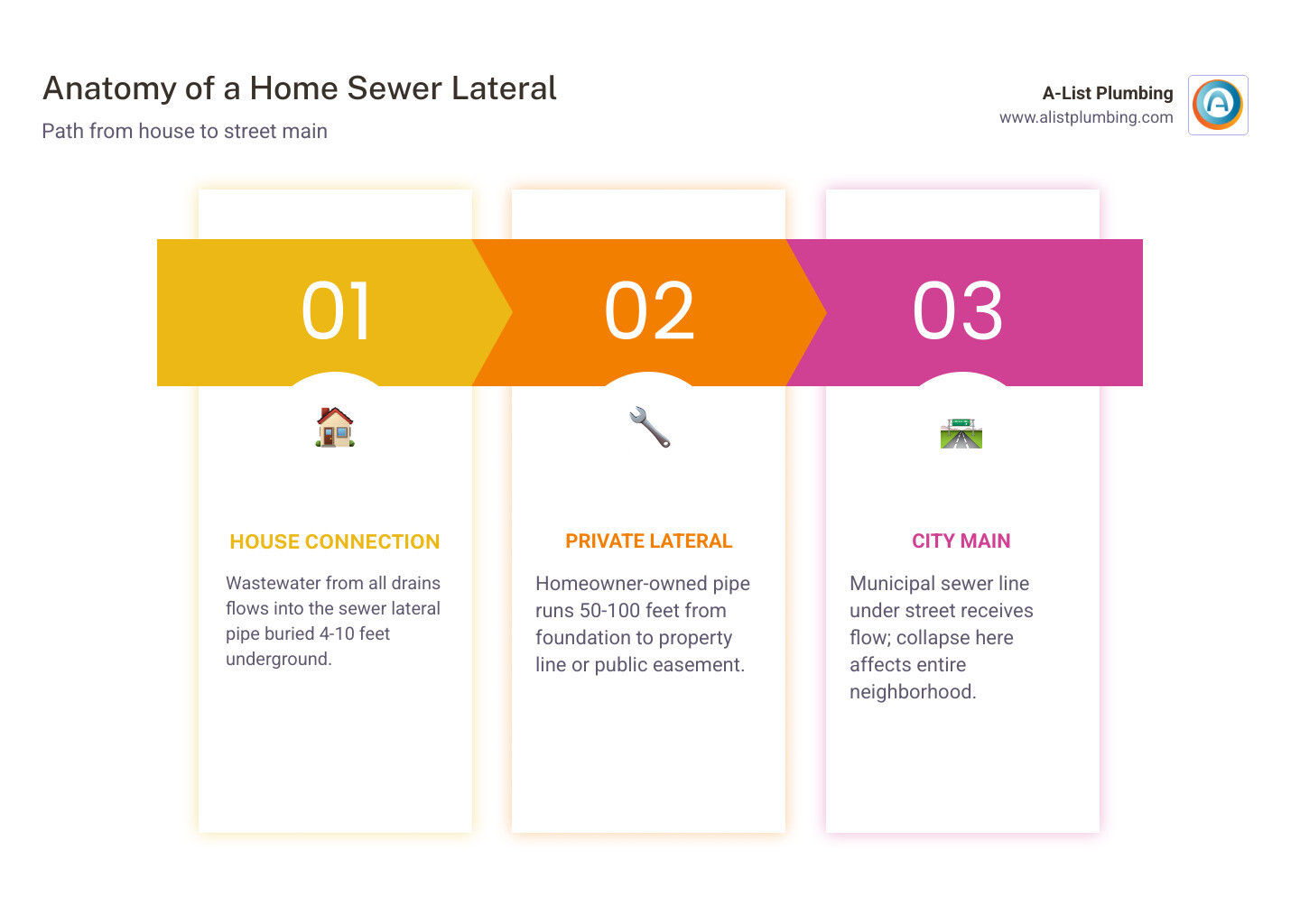
A common point of confusion is where your responsibility ends. In most of our service areas—including Seattle, Shoreline, and Edmonds—the homeowner is responsible for the "side sewer" all the way from the house to the connection at the municipal main. This often includes the portion of the pipe that runs under the sidewalk or even into the street.
Safety is paramount during these repairs. Excavation is dangerous work, as highlighted by the tragic news involving construction workers in Shoreline. This is why we always prioritize trenchless methods and follow strict shoring and safety protocols when digging is required.
Managing Future Risks
You don’t have to wait for a disaster to act. Here is how we recommend preventing a collapsed sewer line:
- Regular Inspections: If your home is over 40 years old, have a camera inspection every 2–3 years.
- Root Management: If you have large trees near your sewer run, consider professional root foaming treatments or installing physical root barriers.
- Insurance Riders: Check your homeowner's policy. Standard policies often exclude sewer backups or collapses due to wear and tear. Ask your agent about "Service Line Coverage" or "Sewer Backup" riders—they are usually very affordable and can save you $10,000+ in the event of a failure.
Frequently Asked Questions about Sewer Failure
How long does it take to repair a collapsed line?
With trenchless methods, we can often complete a repair in 1 to 2 days. Traditional excavation usually takes longer—between 3 to 5 days —because of the time required for digging, hauling dirt, and backfilling the trench.
Who is responsible for repairs under the street?
In the vast majority of cases in Seattle and surrounding cities, the homeowner owns the entire lateral line up to the point where it taps into the city's main sewer. Even if the collapse is under the asphalt of a public road, the repair cost usually falls on the property owner. Always check your local municipal code, as some cities have specific cost-sharing programs.
Does homeowners insurance cover a collapse?
Most standard policies do not cover "gradual" failure like rot, corrosion, or root intrusion. However, if the collapse was caused by a "sudden and accidental" event—like a significant soil shift or a third party damaging the line during construction—you might have a claim. This is why having video evidence from a camera inspection is so crucial for insurance adjusters.
Conclusion
A collapsed sewer line is a "hair-on-fire" plumbing emergency, but it doesn't have to be a catastrophe. By recognizing the early warning signs—the gurgling, the smells, and the strangely green grass—you can take action before your basement floods.
At A-List Plumbing, we bring 22 years of experience to every job in Lynnwood, Seattle, and the surrounding areas. We pride ourselves on same-day availability and transparent pricing, ensuring you aren't left in the dark when your plumbing fails. Whether you need a quick camera inspection or a full trenchless Sewer Line replacement, we’re here to help you get your home back in working order.