

When Your Drains Won't Clear, Water Jet Sewer Cleaning Is the Answer
Water jet sewer cleaning — also called hydro jetting — is a professional drain and sewer cleaning method that uses high-pressure water to blast through blockages and scour the inside walls of your pipes clean.
Here's what you need to know at a glance:
| Question | Quick Answer |
|---|---|
| What is it? | High-pressure water forced through sewer pipes to clear clogs and buildup |
| How much pressure? | 1,500–4,000 PSI for residential; up to 35,000 PSI for industrial |
| What does it remove? | Grease, tree roots, mineral scale, sludge, hair, and debris |
| Is it safe for pipes? | Yes — for pipes in good condition; older pipes need inspection first |
| Average cost? | $350–$600 for most homes; up to $1,200 for severe clogs |
| How often? | Every 1–2 years for most homeowners |
If your drains are slow, your toilets are gurgling, or you've poured drain cleaner down the sink more times than you can count — this guide is for you.
Snaking a drain can punch a hole through a clog. But it leaves grease, scale, and debris clinging to your pipe walls. Those leftovers become tomorrow's blockage.
Water jetting solves the problem at the source.
I'm Heath Shockman, owner of A-List Plumbing since 2011, and I've used water jet sewer cleaning on hundreds of homes across the Greater Seattle area — from grease-packed kitchen lines to sewer laterals choked with invasive tree roots. In the Pacific Northwest, where aging pipes and aggressive root systems are a fact of life, knowing when and how to hydro jet can save you from a very expensive emergency.
What is Water Jet Sewer Cleaning?
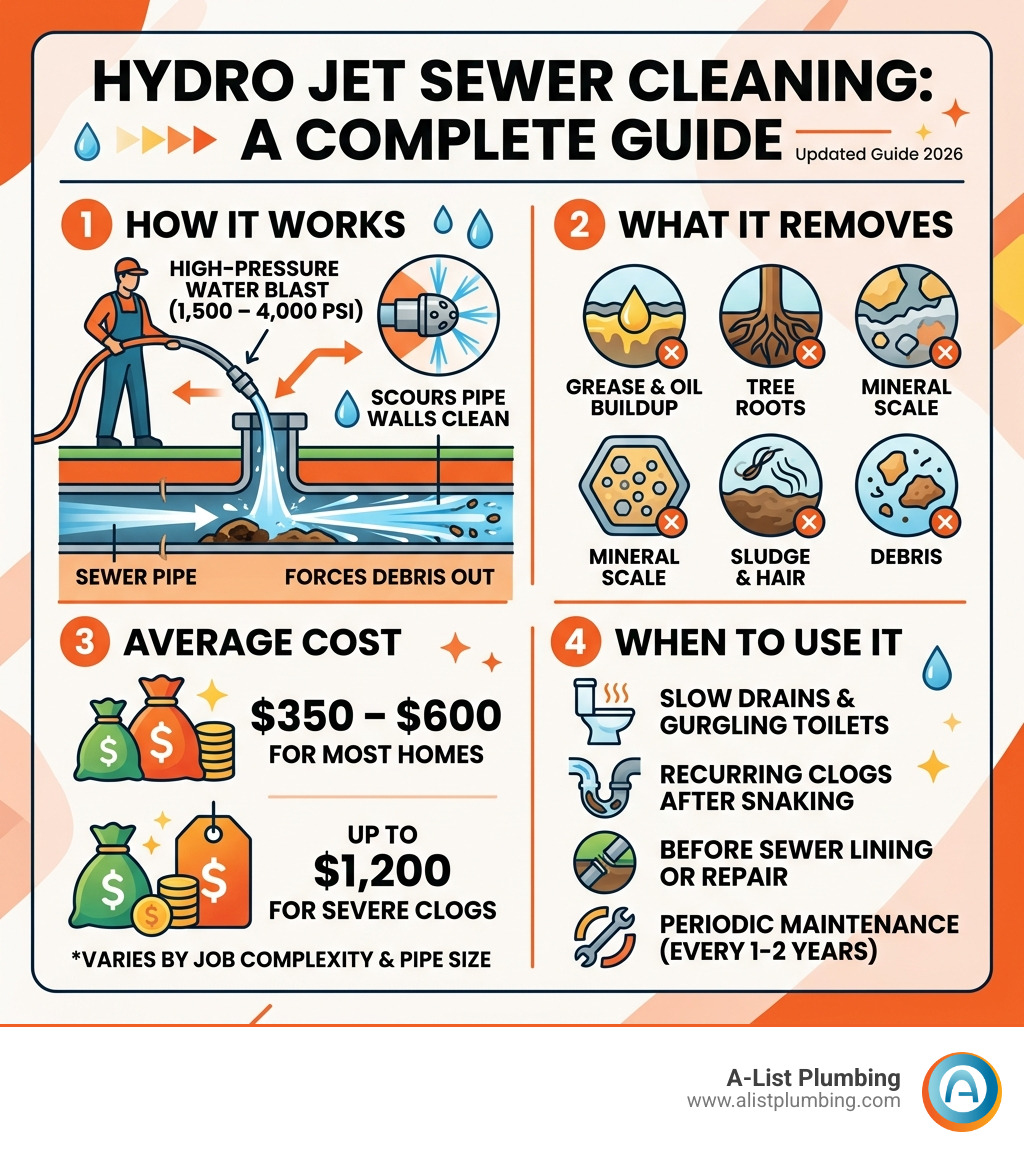
Think of water jet sewer cleaning as a high-intensity power wash for the inside of your plumbing system. While a standard garden hose might trickle water through a pipe, a hydro jetter uses a heavy-duty pump to pressurize water between 1,500 and 4,000 PSI (pounds per square inch) for residential jobs. In some industrial or municipal applications, these machines can reach a staggering 35,000 PSI.
This isn't just about moving a clog; it's about pipe restoration. Over years of use, sewer lines accumulate layers of "sludge" — a lovely cocktail of soap scum, hair, food particles, and mineral scale. Traditional methods like snaking might poke a hole through a clog to get water flowing again, but hydro jetting scours the walls of the pipe until they are nearly as clean as the day they were installed.
One of the biggest perks we see here in the Seattle area is that this process is entirely chemical-free. We aren't pouring harsh acids down your drains that can eat away at your pipes or harm the local environment. It’s just pure, highly pressurized water doing the heavy lifting. According to experts at the Hydrojetting Sewer Lines: Process, Benefits, and Costs guide, this method is often the first approach for clearing blocked lines because it is so effective at emulsifying grease and removing solid obstructions.
How the Hydro Jetting Process Works Step-by-Step
When we arrive at a home in Lynnwood or Edmonds for a water jet sewer cleaning job, we don't just start blasting water. There is a precise, scientific method to ensuring your pipes get clean without causing any damage.
Step 1: The Video Inspection (CCTV)
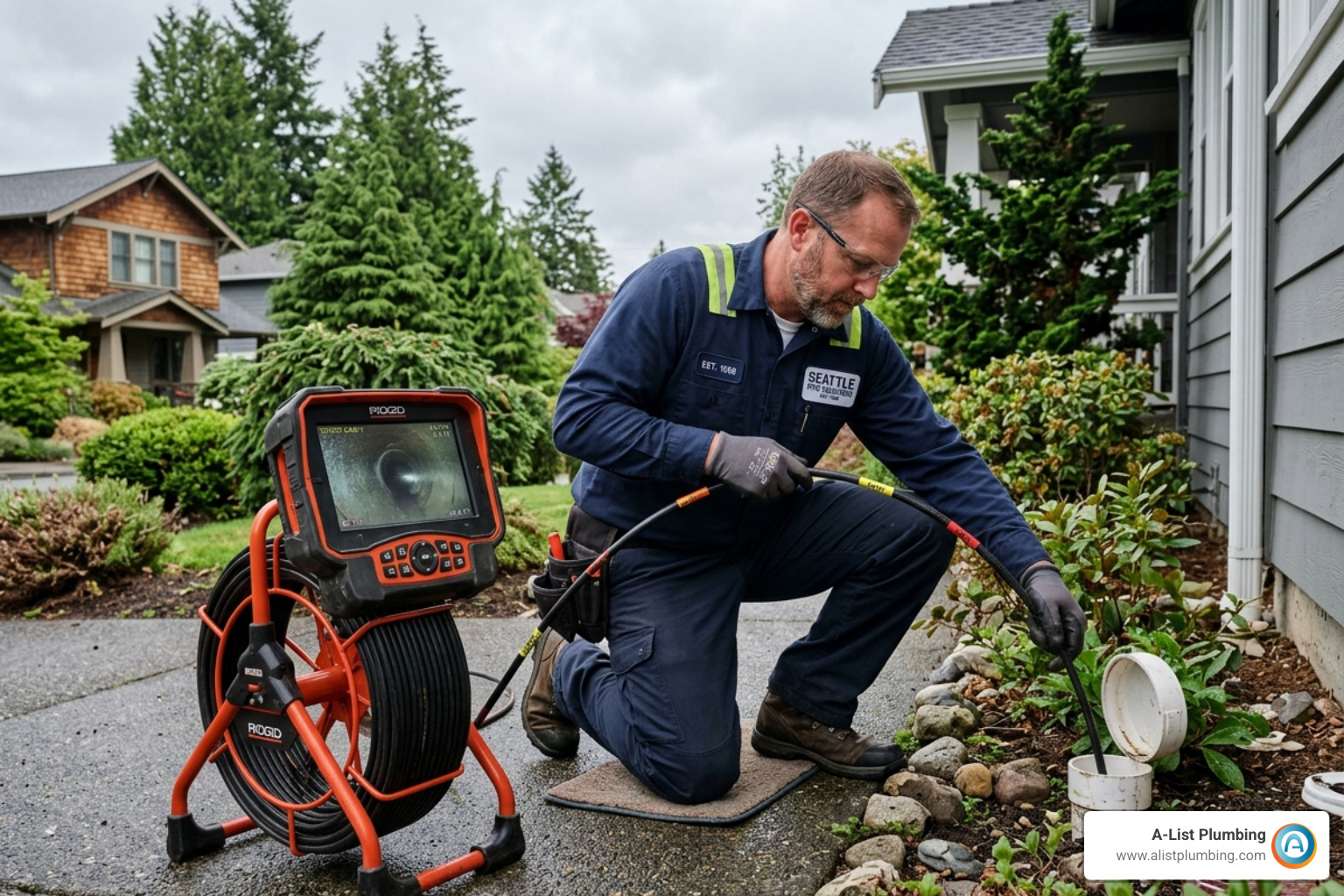
Before a drop of high-pressure water enters your system, we perform a video inspection. We guide a waterproof, high-definition camera (CCTV) through your sewer line to see exactly what we’re dealing with. Is it a massive ball of tree roots? A "fatberg" of hardened grease? Or is the pipe actually collapsed? This step is vital because jetting a collapsed or severely broken pipe can make a bad situation much worse.
Step 2: Accessing the Cleanout
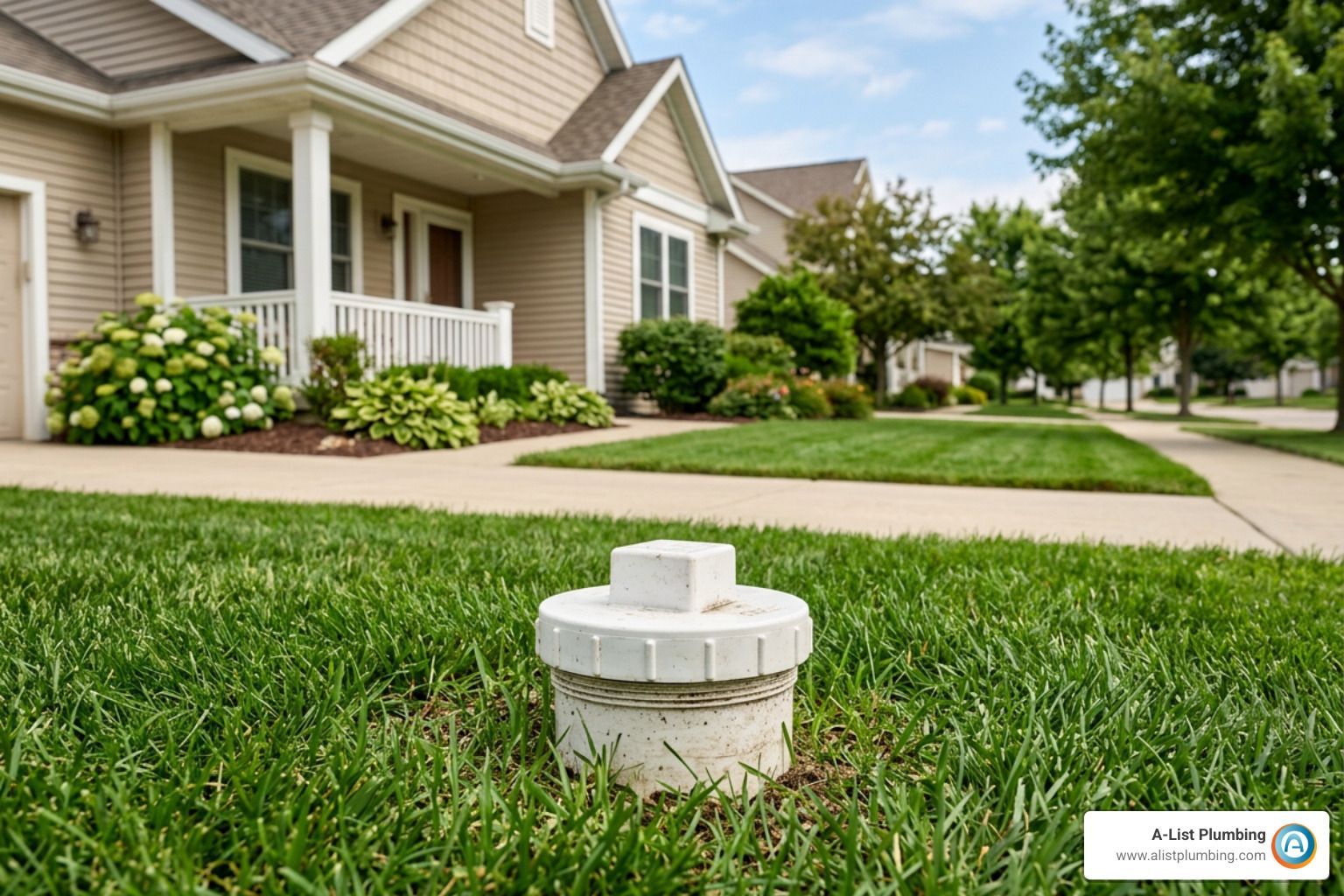
Every plumbing system has a "cleanout" — a dedicated access point for the sewer line. We connect our hydro jetting hose to this opening. The hose is long enough to clear several hundred feet of pipe, allowing us to reach clogs deep under your yard or foundation.
Step 3: Upstream Jetting
Here is a bit of "plumbing physics" for you: we typically jet upstream. By working from the cleanout toward the house, the high-pressure water dislodges the debris, and gravity pulls that debris downstream toward the larger municipal sewer main or your septic tank. This prevents the clog from simply moving further up into your home’s smaller pipes.
Step 4: Debris Flushing
As the nozzle moves through the pipe, it uses rear-facing jets to propel itself forward while scouring the walls. A forward-facing jet "penetrates" the clog, breaking it into small pieces that can be easily flushed away.
Step 5: Final Inspection
Once we believe the line is clear, we run the camera through one last time. This "post-jetting inspection" confirms that the pipe walls are clean and the obstruction is 100% gone.
Preparing for Water Jet Sewer Cleaning
Before we begin, we always evaluate the pipe material. PVC and modern ABS pipes can handle high pressure easily. However, if your home in Seattle was built in the mid-20th century, you might have clay, cast iron, or even Orangeburg pipes. We adjust our PSI and nozzle selection based on the structural integrity of your system. If you're currently dealing with a backup, you can find More info about clogged drains on our service page to help identify the symptoms before we arrive.
Advanced Equipment and Nozzle Technology
Not all water jets are created equal. We use specialized nozzles for different types of blockages:
- Penetrating Nozzles: These have a sharp forward-facing jet to cut through ice, grease, or thick hair clogs.
- Rotating Heads: These spin at high speeds to provide 360-degree cleaning of the pipe walls.
- Flushing Jets: These use wide-angle rear jets to push massive amounts of sludge out of the line.
Our equipment typically delivers flow rates of 18 to 80 gallons per minute (GPM). This high flow rate is just as important as the pressure; while PSI breaks the clog, the GPM is what actually carries the debris out of the pipe. For specialized industrial needs, Water Jet Cutting technology can even remove hardened concrete or failed liners from inside a pipe using robotic crawlers.
Key Benefits of Hydro Jetting vs. Traditional Methods
Homeowners often ask us, "Why can't I just use a snake?" It’s a fair question. While mechanical snaking (or "rootering") has its place for small, simple clogs, it often falls short for major sewer issues.
| Feature | Mechanical Snaking | Hydro Jetting |
|---|---|---|
| Effectiveness | Pokes a hole through the clog | Cleans the entire pipe wall |
| Grease Removal | Minimal; mostly just pushes it around | Emulsifies and flushes grease completely |
| Tree Roots | Cuts a path through roots | Can remove roots and scour the entry point |
| Longevity | Clogs often return quickly | Results last significantly longer |
| Chemicals | Often paired with harsh cleaners | 100% water-based and eco-friendly |
If you have a recurring clog in the Seattle area, it’s likely because a snake left behind a "shelf" of grease or scale that is catching new debris. Water jet sewer cleaning removes that shelf entirely. For residents dealing with persistent issues, you can see More info about sewer drain clog repairs to understand how we approach these deep-system failures.
Why Water Jet Sewer Cleaning is the Best Choice for Roots
In the lush neighborhoods of Bothell and Shoreline, tree roots are the #1 enemy of sewer lines. Roots seek out the moisture inside your pipes and enter through tiny hairline cracks or loose joints. Once inside, they grow into a thick "curtain" that catches toilet paper and waste.
Hydro jetting is uniquely effective here. The high-pressure water acts like a laser, slicing through the roots without the need for mechanical blades that can sometimes catch on pipe joints and cause damage. By restoring the full pipe diameter, we delay the need for expensive "dig-and-replace" repairs. If you suspect roots are the culprit, our Rooter Drainage Service in Lynnwood WA is specifically designed to tackle these organic obstructions.
We also provide these specialized services throughout the region, including:
- Rooter Drainage Service in Ballard WA
- Rooter Drainage Service in Queen Anne Seattle WA
- Rooter Drainage Service in Shoreline WA
- Rooter Drainage Service in Bothell WA
- Rooter Drainage Service in Edmonds WA
- Rooter Drainage Service in Magnolia WA
- Rooter Drainage Service in Seattle WA
When to Use (and Avoid) High-Pressure Jetting
As of April 2026, hydro jetting has become the industry standard for preventative sewer maintenance. However, it isn't a "magic wand" for every pipe.
When to Use It:
- Frequent Backups: If you’re calling a plumber every 6 months, you need a jetter, not a snake.
- Slow Drains Throughout the House: This usually indicates a main line issue rather than a single fixture clog.
- Smells and Noises: Sewer odors or "gurgling" sounds from your toilets are early warning signs.
- Commercial Kitchens: Restaurants dealing with Fats, Oils, and Grease (FOG) should have their lines jetted quarterly to stay compliant with local regulations.
When to Avoid It (or Proceed with Caution):
- Old, Brittle Pipes: If our camera shows your cast iron pipes are "paper-thin" due to corrosion, the high pressure could cause a blowout.
- Orangeburg Pipes: Common in some older Seattle suburbs, these are made of wood pulp and tar. They generally cannot withstand high-pressure jetting.
- Collapsed Lines: If the pipe has already structurally failed, water jetting will only wash away the surrounding soil, potentially creating a sinkhole.
Safety is our top priority. Our technicians follow OSHA 29 CFR 1910 standards for high-pressure equipment. Operating a machine that can reach 4,000 PSI requires professional training to avoid high-pressure injection injuries and to ensure the plumbing system isn't compromised.
Frequently Asked Questions about Hydro Jetting
How much does hydro jetting typically cost?
On average, residential water jet sewer cleaning costs between $350 and $600, with a national average of roughly $475. However, pricing depends on the complexity of the clog and the length of the pipe. If we encounter a severe blockage that requires multiple hours of work or specialized root-cutting nozzles, the cost can reach $1,200. While this is more expensive than a $150 snaking service, it is a long-term investment that prevents the need for repeated service calls.
Is hydro jetting safe for older plumbing systems?
It can be, but it requires a "look before you leap" approach. This is why we insist on a video inspection first. If your pipes are made of clay or cast iron and are still structurally sound, we can lower the PSI to a "gentle" 1,500–2,000 range to clean them safely. If the pipes are too weak, we may recommend Drain Rooter Services as a safer, though less thorough, alternative.
How often should I schedule sewer jetting maintenance?
For the average homeowner in Lynnwood or Seattle, we recommend hydro jetting your sewer line every 1 to 2 years. If you live in an older neighborhood with many large trees, an annual cleaning is the best practice to keep roots from gaining a foothold. Think of it like a dental cleaning for your house — it's much cheaper to prevent a "cavity" (a total pipe collapse) than it is to fix one.
Conclusion
At A-List Plumbing, we’ve seen it all — from "flushable" wipes that weren't actually flushable to tree roots that looked like they belonged in a jungle. With 22 years of experience serving the Greater Seattle area, we know that water jet sewer cleaning is the single most effective way to keep your plumbing system running smoothly.
Whether you're in Lynnwood, Edmonds, Shoreline, Bothell, or Seattle, we offer same-day availability and transparent pricing. We don't believe in "band-aid" fixes; we believe in doing the job right the first time so you can get back to your life without worrying about what's happening under your floorboards.
If your drains are acting up, don't wait for a total backup. For more information about our full range of plumbing services, explore our website and see why we're the top-rated choice for sewer care in the Pacific Northwest.