

What is a Water Heater Expansion Tank and How Does It Work?
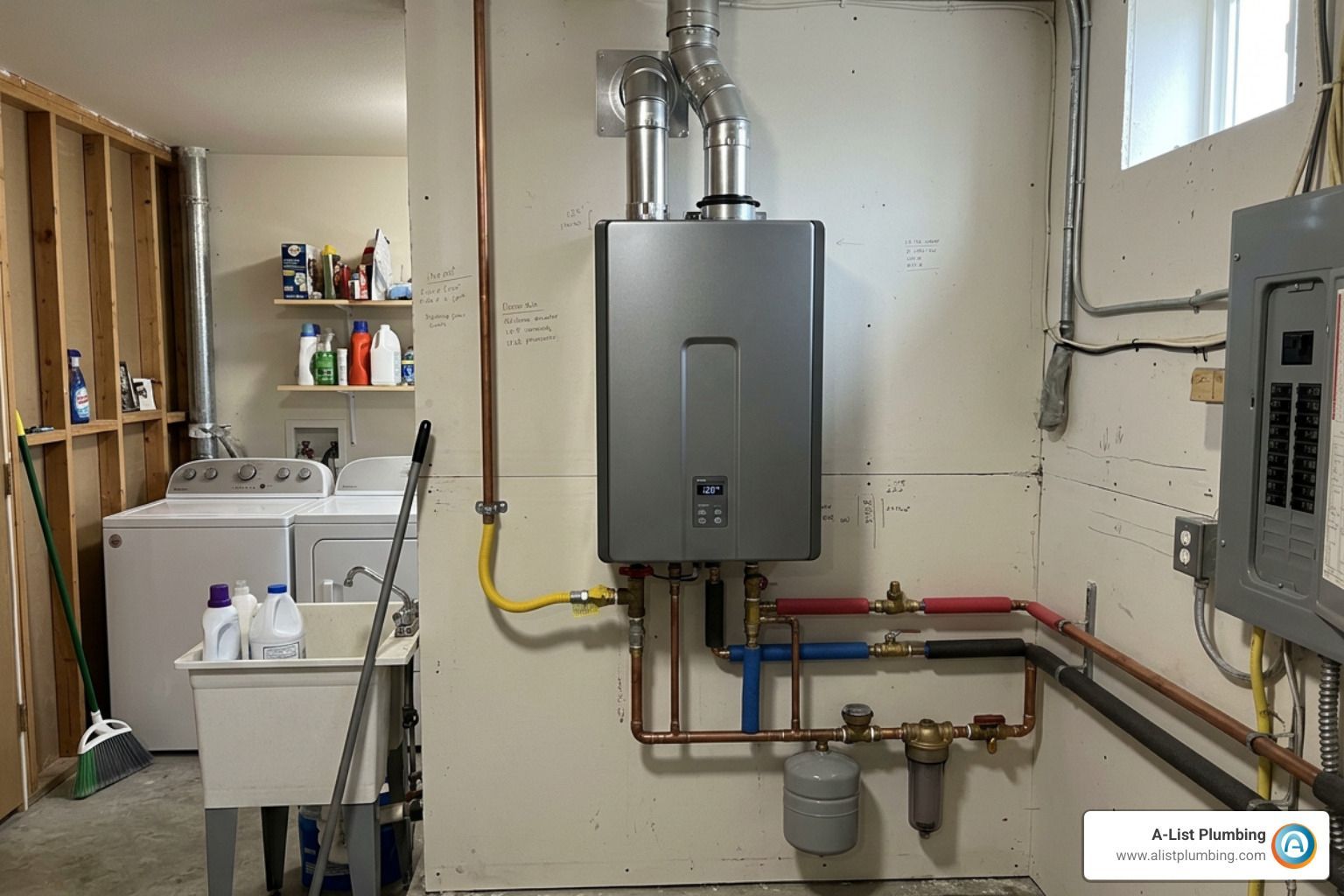
A water heater expansion tank is a small but critical safety device that protects your home's plumbing from dangerous pressure spikes caused by heating water.
Quick answer: Here's what you need to know at a glance:
| Question | Quick Answer |
|---|---|
| What does it do? | Absorbs extra water pressure created when your water heater heats water |
| Do I need one? | Yes, if your home has a closed plumbing system (most modern homes do) |
| What size do I need? | Usually 2 to 5 gallons for a standard residential water heater |
| How much does it cost? | $40–$200 for the tank; $50–$150 for professional installation |
| How long does it last? | Typically 5 to 10 years |
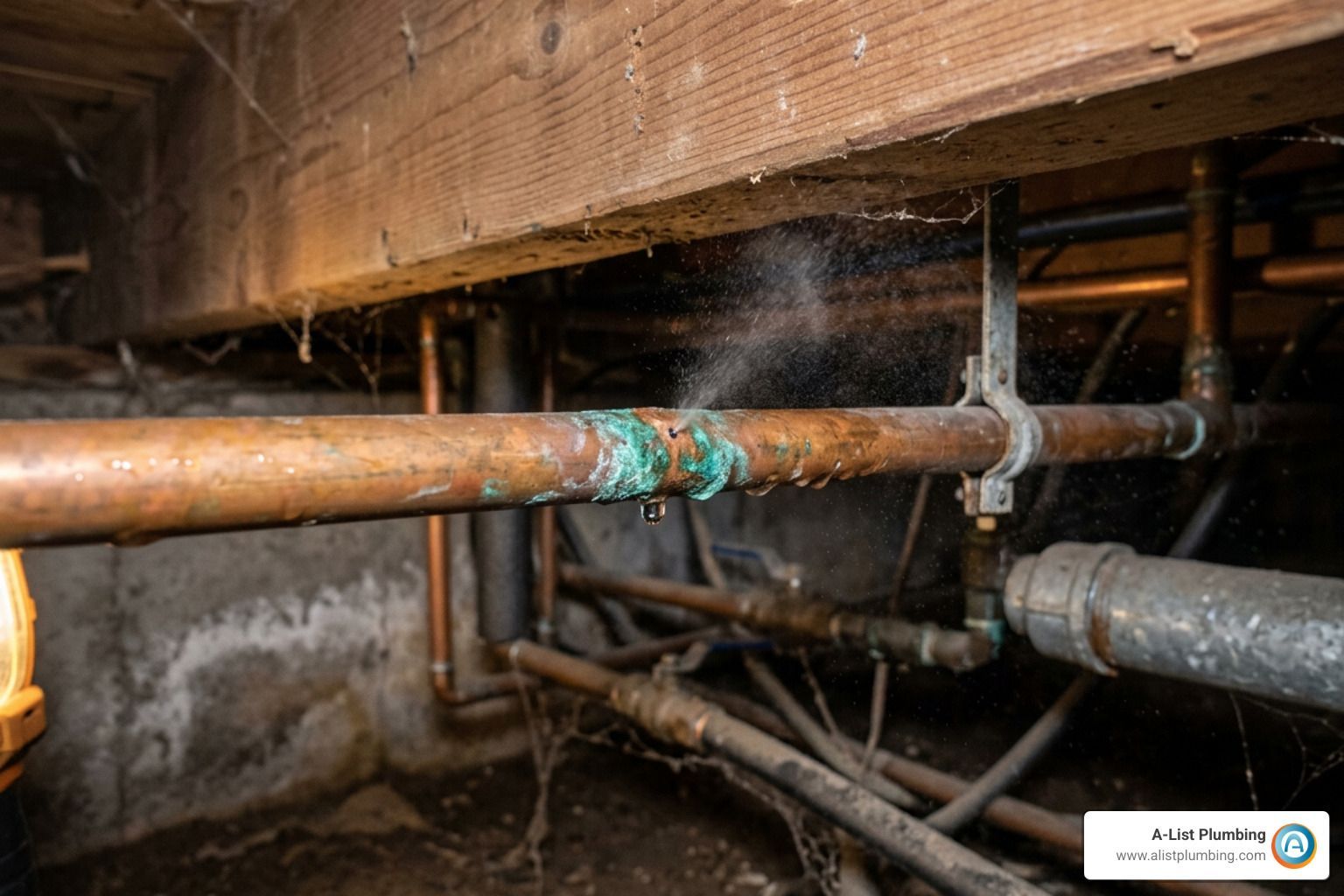
Here's the thing most homeowners don't know: when your water heater heats water, that water expands. In older homes, that extra volume could push back into the public water supply. But today's plumbing systems use backflow preventers to stop that — which means the expanded water has nowhere to go. Pressure builds. Your relief valve starts dripping. Your pipes take a beating.
That's where the expansion tank steps in.
It acts like a pressure buffer — a small tank with an air-filled chamber inside that quietly absorbs the extra volume every time your water heater fires up. Without it, your system is working harder than it should, every single day.
I'm Heath Shockman, owner of A-List Plumbing since 2011, and I've seen how many homeowners in the Greater Seattle area don't realize they're missing a water heater expansion tank until their relief valve starts leaking or their water heater fails prematurely. In the sections below, I'll walk you through everything you need to know to protect your system.
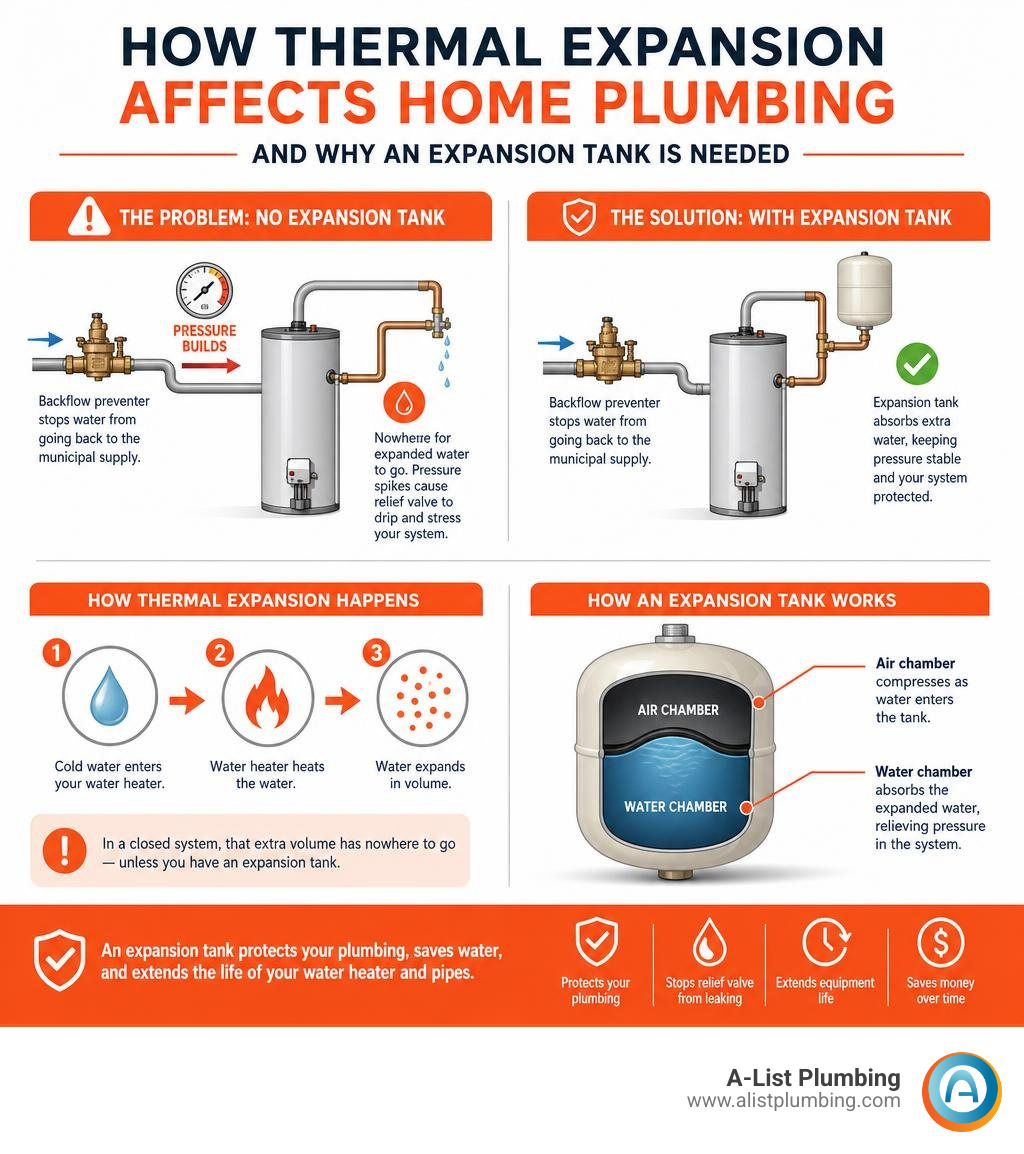
Let’s break this down into plain English. Inside that little metal tank sitting above your water heater is a clever piece of engineering. It’s not just an empty metal can; it is actually divided into two distinct chambers by a flexible, heavy-duty rubber bladder or diaphragm.
On one side of this rubber bladder is the potable water from your home’s plumbing system. On the other side is a pocket of compressed air, which is pre-charged with pressure (usually matching your home's incoming water pressure, typically around 40 to 60 psi).
When your water heater cycles on, the water inside heats up and undergoes thermal expansion. Because water is practically incompressible, that expanding volume has to go somewhere. Instead of hammering your pipes, joints, and appliances, the expanding water pushes against the rubber bladder inside the expansion tank. The pocket of air on the other side compresses, absorbing the extra volume and keeping your system’s overall pressure stable.
When you turn on a hot water faucet, the pressure drops, and the compressed air pushes the water back out of the expansion tank and into the system. It’s a simple, elegant, and entirely mechanical cycle that happens behind the scenes every single day.
Without this little buffer, the constant pressure spikes wear down the glass lining of your water heater, leading to premature tank failure. If you are already dealing with a tank that is dripping, you might need our expert team for Water Heater Leaks repair (link verified and active). And if the damage is already done, scheduling a professional Water Heater Repair(link verified and active) is the best way to get your hot water back up and running safely.
Do You Actually Need One of These Things?
If you're wondering whether this is just another plumbing add-on that you don't really need, we get it. Nobody wants to spend money on extra parts. But the short answer is: if you live in Lynnwood, Shoreline, or anywhere in the Greater Seattle area, there is a very high chance you legally and physically need one.
Modern municipal water systems are designed to protect public health. To prevent hot, potentially contaminated water from backing up into the city's clean drinking water supply, water districts install one-way valves called backflow preventers or check valves at your water meter. While this is fantastic for water safety, it turns your home's plumbing into a "closed system."
In a closed system, thermal expansion has zero escape routes. The pressure inside your pipes can spike to dangerous levels—sometimes reaching up to 150 psi, which is the maximum limit for standard residential plumbing.
Do you have a tankless setup? Generally speaking, standard plumbing codes do not require an expansion tank for Tankless Water Heaters(link verified and active) because they don't store a large volume of hot water. However, if your tankless system utilizes a small storage or recirculation tank, an expansion tank might still be required.
Closed vs. Open Plumbing Systems
Let’s look at how these two systems compare. In an open plumbing system, there are no one-way valves or backflow preventers blocking the path back to the city main. When water heats up and expands, it simply pushes back into the municipal water line. No harm, no foul.
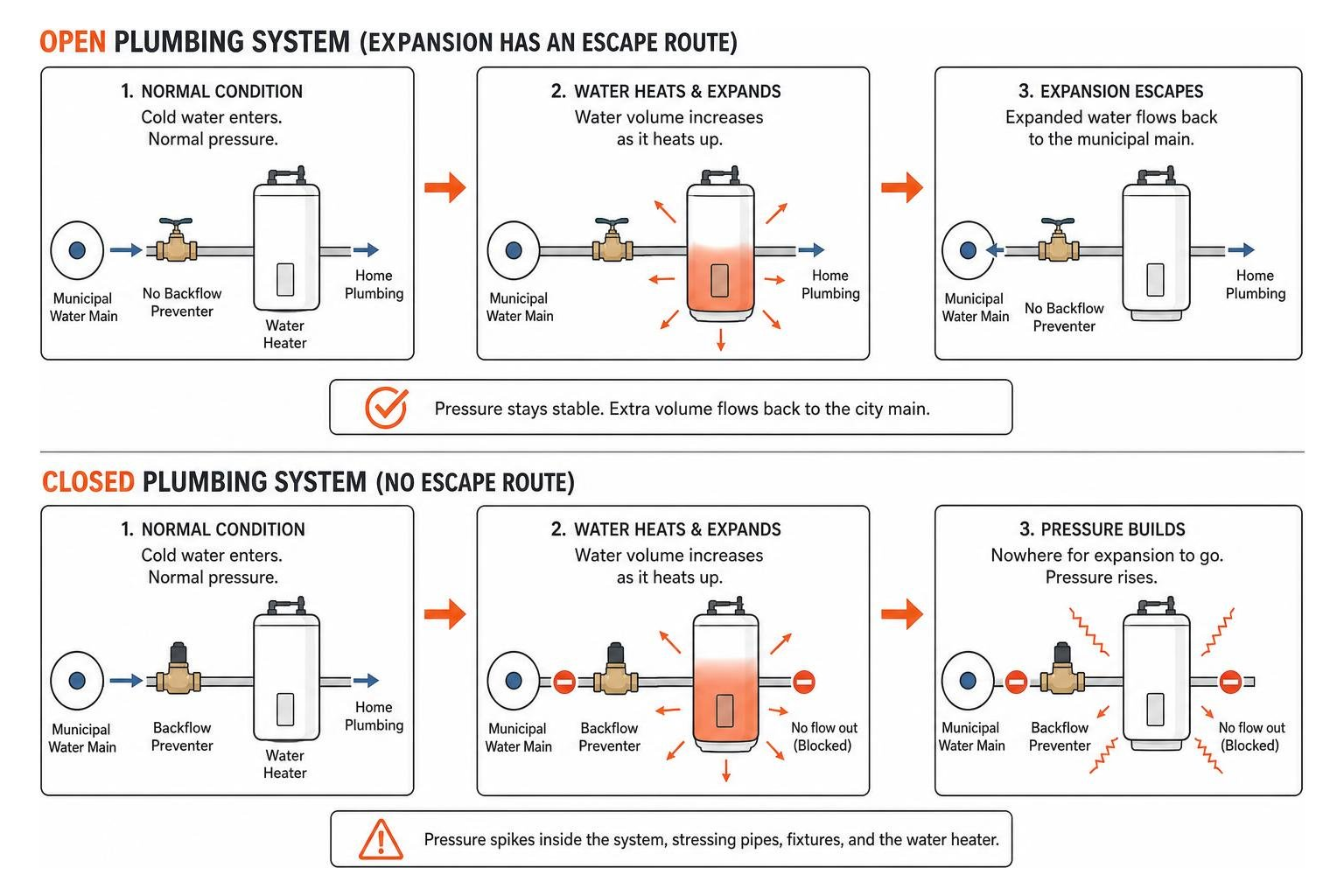
In a closed system, that backflow preventer acts like a brick wall. When the water expands, the pressure builds and builds inside your home's pipes. This constant fluctuation stresses your plumbing joints, shortens the lifespan of your washing machine and dishwasher valves, and forces your water heater to work under extreme stress.
Signs You Need a Water Heater Expansion Tank
How do you know if your home is suffering from thermal expansion stress? Keep an eye out for these common warning signs:
- A dripping Temperature and Pressure (T&P) relief valve: If the safety valve on the side of your water heater is constantly weeping or dripping water, it’s usually because the system pressure is spiking too high.
- Fluctuating water pressure: If you notice a sudden, brief blast of high-pressure water when you first open a faucet, that's a classic sign of built-up thermal expansion.
- Prematurely leaking faucets: High pressure ruins the internal seals and cartridges in your kitchen and bathroom faucets.
- Strange plumbing sounds: If you hear banging or knocking noises when your water heater is running, check out our Water Heater Noise Repair Guide 2026(link verified and active) to diagnose what's going on.
Sizing and Choosing Your Tank
Choosing the right water heater expansion tank isn't a guessing game. If you install a tank that is too small, it won't have enough capacity to absorb the expanded water, and you'll still experience pressure spikes.
Here is a quick look at how the two most common residential expansion tank sizes stack up:
| Specification | 2-Gallon Expansion Tank | 4.5-Gallon Expansion Tank |
|---|---|---|
| Best Suited For | 30 to 50-gallon water heaters | 50 to 80-gallon water heaters |
| Connection Size | 3/4-inch MNPT | 3/4-inch MNPT |
| Factory Pre-charge | 40 psi (adjustable) | 40 psi (adjustable) |
| Max Pressure Limit | 150 psi | 150 psi |
| Max Temperature | 200°F | 200°F |
Sizing Your Water Heater Expansion Tank
To get the sizing exactly right, you need to look at two main factors: the gallon capacity of your water heater and your home’s incoming water pressure. Most standard homes with a 40- or 50-gallon water heater and water pressure under 60 psi will do perfectly fine with a standard 2-gallon model, such as the 2.1 Gallon Water Heater Expansion Tank(link verified and active).
However, if you have a larger water heater (like a 75- or 80-gallon tank) or if your municipal water pressure is on the higher side (closer to 70 or 80 psi), you will need to step up to a 4.5-gallon tank. Manufacturers like Watts and Amtrol provide specific sizing calculators, and high-quality options like the Neo-Pure Thermal Expansion Tank 2.1 gal 3/4 MNPT – Fresh Water Systems(link verified and active) are excellent choices for standard residential setups.
Potable vs. Non-Potable Tanks
When shopping for an expansion tank, you will run into two categories: potable and non-potable.
- Potable expansion tanks are specifically designed and certified lead-free for drinking water systems. They feature food-grade liners (like polypropylene) and specialized rubber diaphragms to ensure your tap water remains completely safe to drink. A great example of a potable residential unit is the Water Heater Expansion Tank / Bladder Tank 2.1 Gal. Capacity(link verified and active).
- Non-potable expansion tanks are used for closed-loop hydronic heating systems (radiant heating or boilers). They are not safe for drinking water because they do not have the same lead-free certifications or food-grade internal liners.
Always make sure the tank you buy is rated for potable water before installing it on your domestic hot water system!
Costs, Installation, and Lifespan
Let’s talk numbers, installation logistics, and how long you can expect your new setup to last.
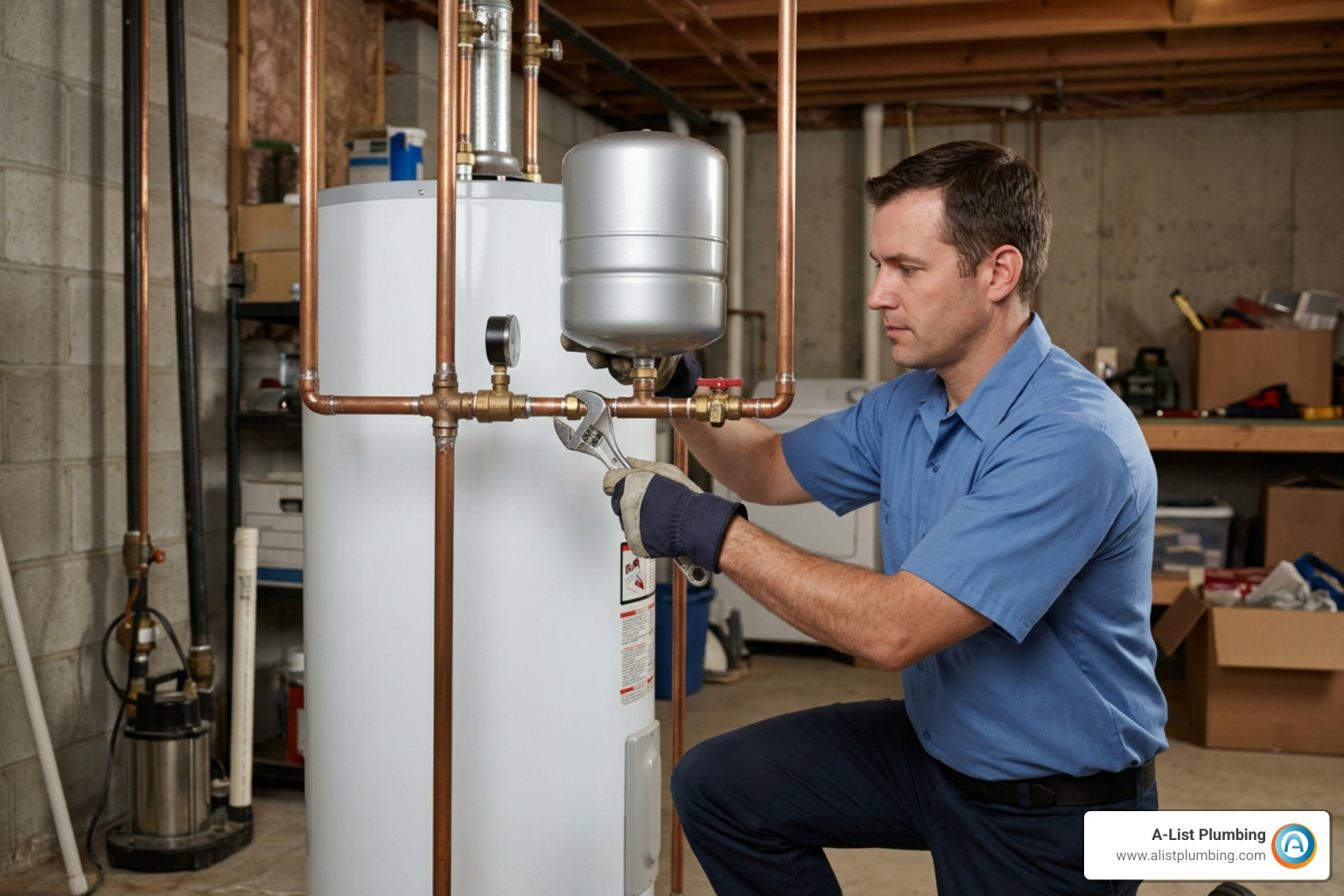
A standard residential expansion tank itself is relatively inexpensive, usually running between $40 and $70 for standard 2-gallon models, though premium or larger 4.5-gallon units can range up to $200. If you hire a professional plumber, the labor costs can fall between $50 and $150, bringing the total professional installation cost to somewhere between $200 and $400 depending on the complexity of your existing piping.
To get a better idea of how these costs fit into your overall plumbing budget, check out our comprehensive Hot Water Heater Repair Costs Guide 2026(link verified and active).
DIY vs. Professional Installation
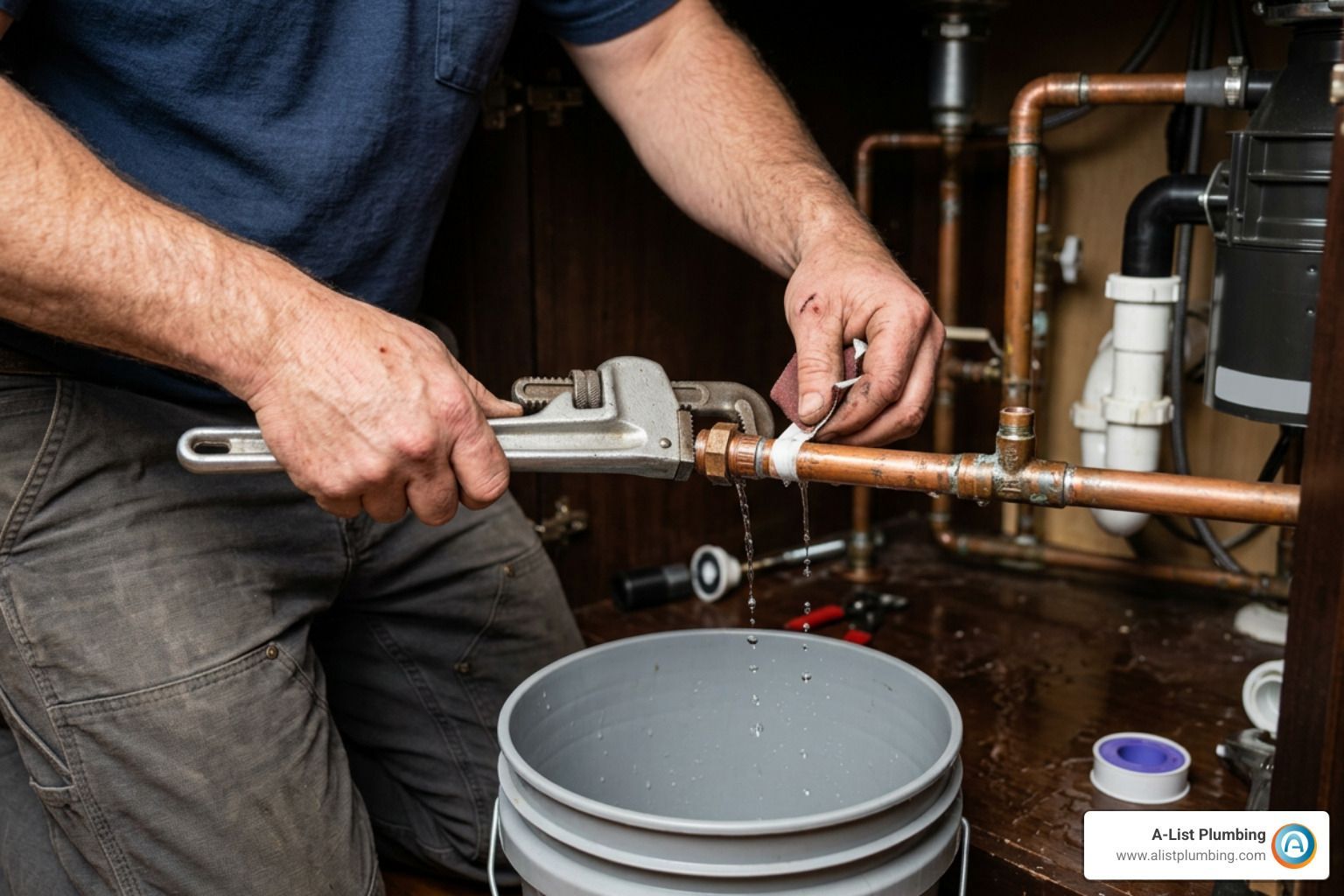
If you are a highly experienced DIYer with a solid grasp of pipe soldering or threading, you might be tempted to tackle this yourself. You can pick up a standard 2 Gal. Thermal Water Heater Expansion Tank(link verified and active) and install it on the cold water supply line.
However, we strongly recommend hiring a professional. Here is why:
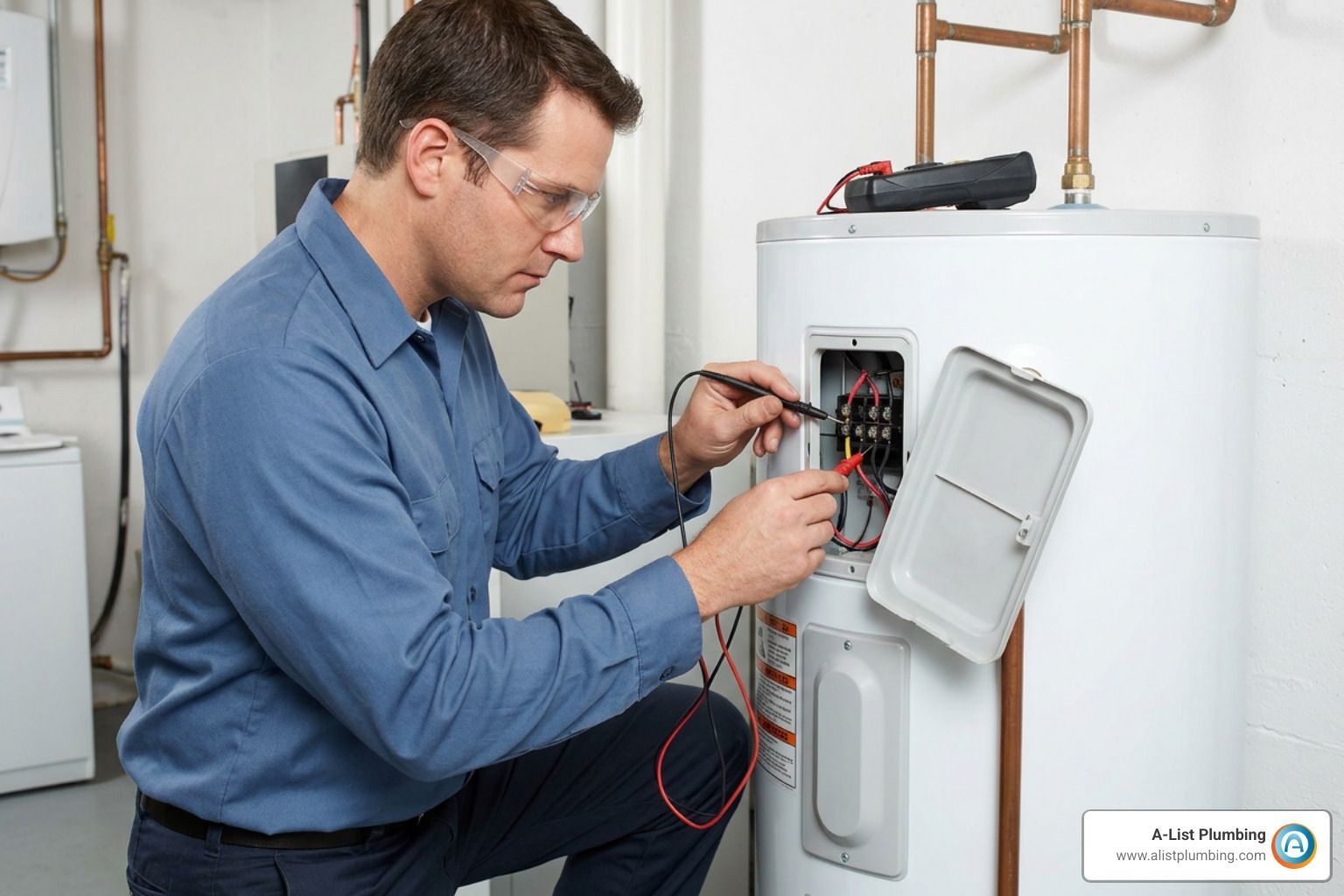
- Pressure Matching: Before installation, the air pre-charge in the tank must be adjusted using a manual pump to exactly match your home's incoming water pressure while the system is at zero pressure. If this isn't done correctly, the tank won't work.
- Support and Mounting: Water-filled tanks are heavy. If you mount a tank horizontally without independent structural support, you risk cracking your copper pipes and causing catastrophic water damage.
- Local Codes: Plumbing codes in Bothell, Edmonds, and Seattle are strict. A professional ensures your installation is fully compliant, protecting your home's resale value and your water heater's manufacturer warranty.
If your water heater is getting up there in years and you're thinking about a complete upgrade, search for Water Heater Replacement Near Me(link verified and active) to have our team handle the entire job from start to finish.
Maintenance and Lifespan
A typical water heater expansion tank lasts between 5 and 10 years. Because your water heater itself usually lasts 8 to 12 years, you should expect to replace the expansion tank at least once during the water heater's lifespan.
To get the most out of your tank, we recommend an annual inspection. You can easily check the health of the tank using the Schrader valve (the little air valve on the top or bottom, just like the one on a bicycle tire). If you depress the valve slightly and water squirts out instead of air, it means the internal rubber bladder has ruptured, and the tank is waterlogged. A waterlogged tank cannot absorb pressure and must be replaced immediately.
For more tips on keeping your traditional tank system in peak shape, take a look at our Tank Water Heater Repair Guide 2026(link verified and active).
Frequently Asked Questions about Expansion Tanks
Can a water heater run without an expansion tank?
Technically, yes, a water heater can physically heat water without one. However, if you have a closed plumbing system, running your water heater without an expansion tank is a ticking time bomb for your plumbing.
The constant pressure spikes will cause your T&P safety valve to leak, stress your pipe joints, and drastically shorten the lifespan of your water heater. In fact, most manufacturers will completely void your water heater's warranty if you have a closed system and do not install an expansion tank.
Why is my expansion tank leaking from the top?
If you notice water pooling around the threaded connection at the top of the tank, it is usually due to a failing joint, loose fittings, or degraded thread sealant. Over time, the constant heating and cooling cycles can cause metal pipes to expand and contract, loosening connections.
If the leak is coming directly from the metal body of the tank itself, it is likely due to internal corrosion, meaning it's time to replace the unit.
How do I check if my expansion tank is still working?
You can perform two simple tests:
- The Tap Test: Gently tap the top and bottom of the tank with a metal wrench or screwdriver. The side containing air should make a hollow, ringing sound, while the side containing water should make a dull, thudding sound. If the entire tank makes a dull thud, it is completely filled with water, meaning the bladder has failed.
- The Air Valve Test: Unscrew the plastic cap on the Schrader valve and press the tiny pin in the center. If air comes out, the bladder is likely still intact. If water comes out, the bladder is ruptured, and you need a replacement.
Conclusion
The water heater expansion tank might be small, but it is truly the unsung hero of your home's plumbing system. By absorbing thermal expansion, it keeps your water pressure stable, prevents annoying leaks, and extends the life of your water heater.
If you live in Lynnwood, WA, Shoreline, Edmonds, Bothell, or Seattle, and you need a hand sizing, installing, or replacing your expansion tank, A-List Plumbing is here to help. With over 22 years of collective plumbing expertise, same-day availability, and transparent, upfront pricing, we make plumbing stress a thing of the past.
Don't wait for a leaking valve to turn into a flooded basement. Contact us today or schedule your professional A-List Plumbing Water Heater Repair(link verified and active) to keep your home safe and dry!