

What to Do Right Now If You Have No Hot Water
A no hot water fix is often simpler than you think. Here are the most common causes and first steps to try before calling a plumber:
Quick fixes to try right now:
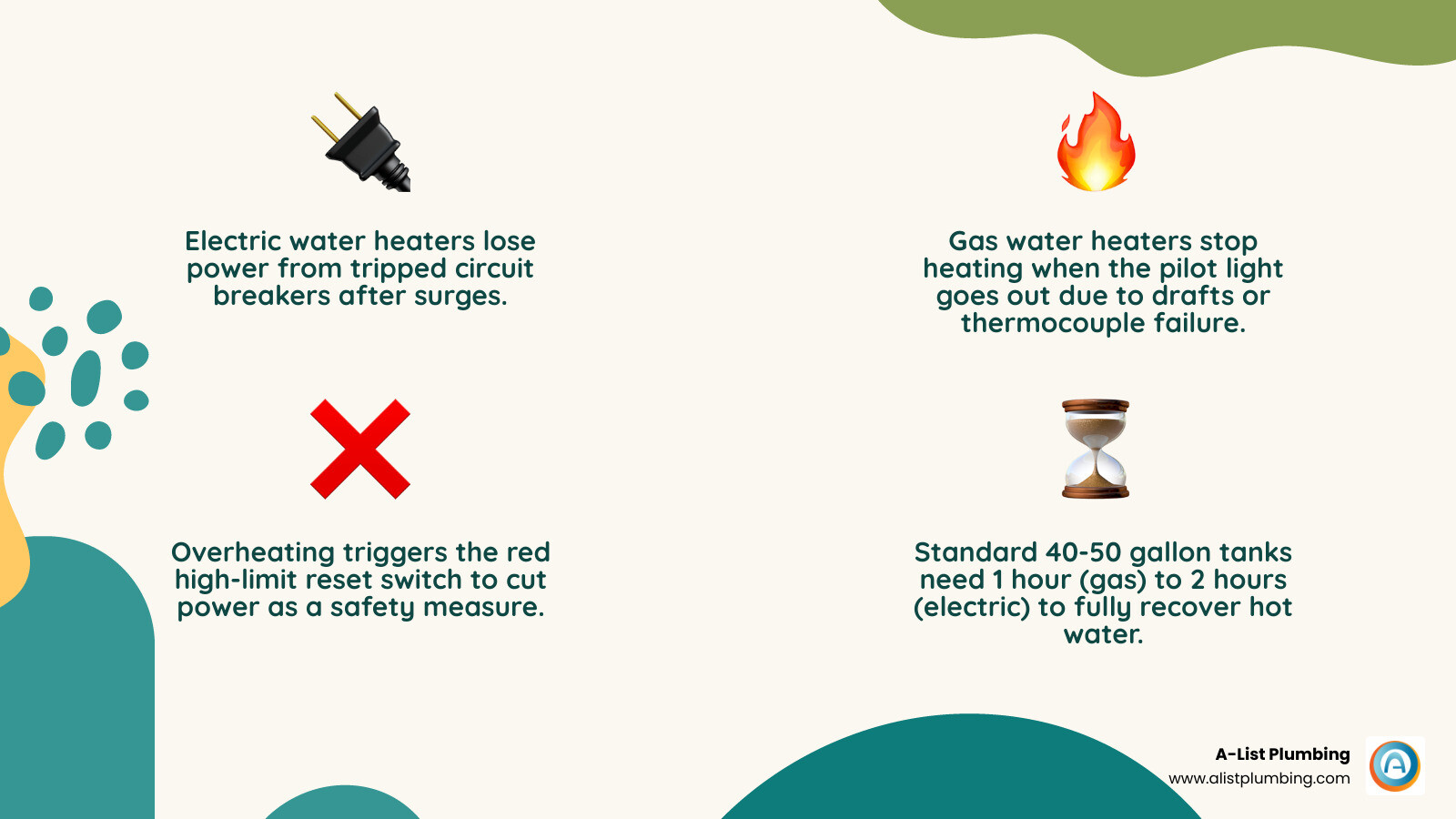
- Electric water heater? Check your circuit breaker panel. Flip the tripped breaker off, then back on.
- Gas water heater? Check if the pilot light is out. Relight it following the instructions on the unit's label.
- Both types: Press the red reset button on the water heater (behind the access panel).
- Just ran out of hot water? Wait about 1-2 hours for an electric unit, or about 1 hour for a gas unit, to recover.
- Smell rotten eggs? Do not try to fix anything. Leave the house immediately and call your gas utility.
If none of those quick steps restore your hot water, read on — this guide walks through every likely cause and how to solve it.
There are few things more jarring than expecting a warm shower and getting a blast of cold water instead. Whether you just moved into a home in the Seattle suburbs or you've lived there for years, a sudden loss of hot water is stressful — especially on a cold Pacific Northwest morning.
The good news? Most no hot water problems come down to a handful of causes. Many can be fixed in minutes. Some need a professional. This guide helps you figure out which situation you're in.
I'm Heath Shockman, owner of A-List Plumbing since 2011, and I've helped hundreds of Seattle-area homeowners troubleshoot and solve exactly this kind of no hot water fix — from simple pilot light relights to full water heater replacements. Let's walk through this together so you can get your hot water back as fast as possible.
Identifying Your System for a No Hot Water Fix
Before we can roll up our sleeves, we need to know what we’re working with. You can’t perform a no hot water fix on a gas valve if you actually have an electric heating element! While both tanks look like big metal cylinders, their "guts" are very different.
Determining Fuel Source
If you aren't sure what's powering your hot water, look for these tell-tale signs:
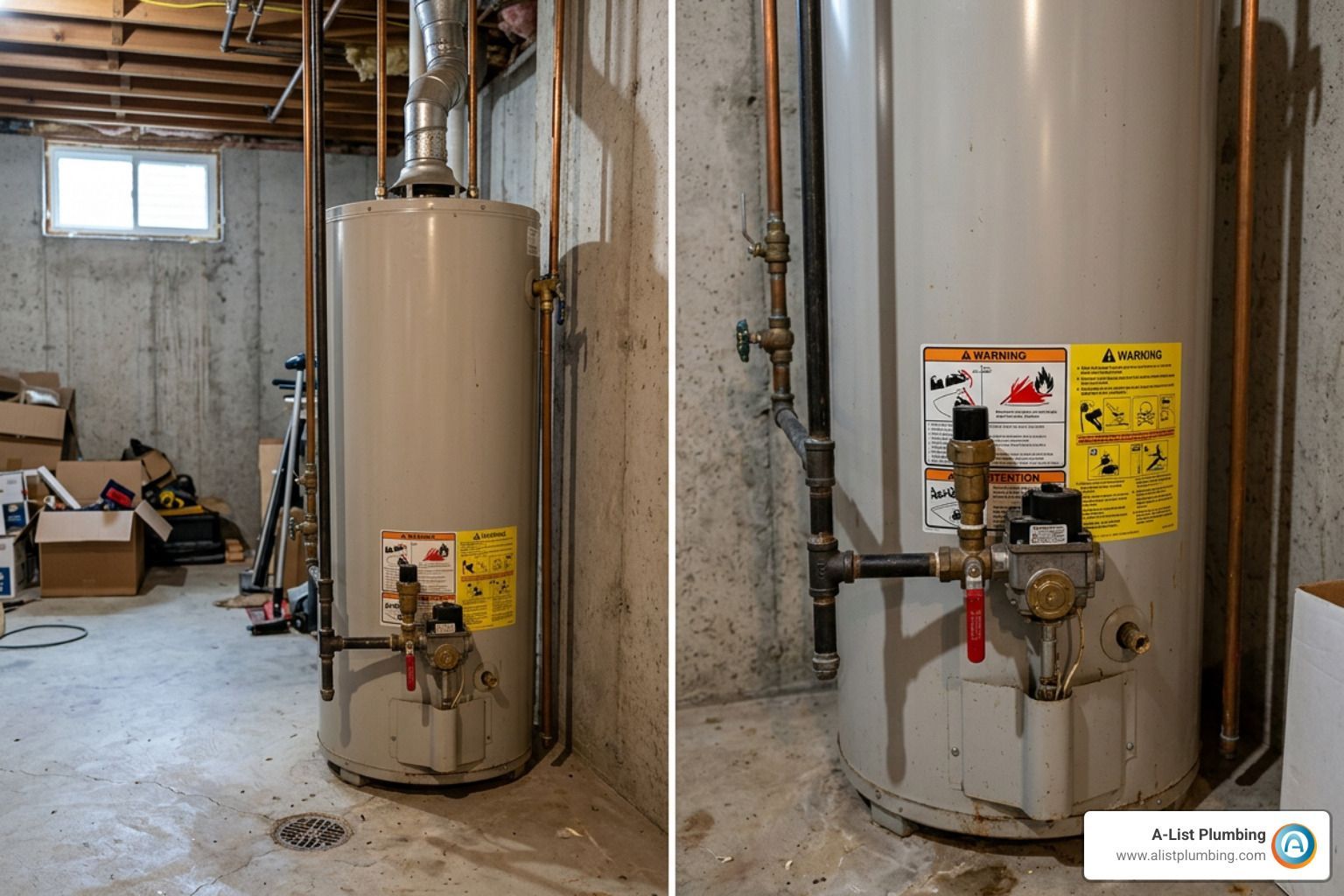
- Gas Water Heaters: Look for a metal "chimney" or flue pipe coming out of the top of the tank. This vents carbon monoxide outside. At the bottom, you’ll see a gas pipe (usually yellow or black metal) leading to a control box with a dial. If you peek through the small access window at the bottom, you might even see a small blue flame—the pilot light.
- Electric Water Heaters: These don't have vents on top. Instead, you'll see a thick, flexible power cable (conduit) wired into the top or side. They also feature two metal access panels screwed onto the side of the tank, which hide the upper and lower heating elements.
If you find yourself staring at a unit that looks unfamiliar or is leaking significantly, it might be time for a professional Water Heater Repair to ensure everything is up to code.
Checking the Thermostat Settings
Sometimes the "fix" is as simple as a nudge of a dial. Most experts, including those at Bob Vila, recommend setting your thermostat to 120 degrees Fahrenheit.
Why 120? It’s the "Goldilocks" zone. It is hot enough to kill most bacteria (like Legionella) but cool enough to prevent accidental scalding—especially important if you have kids or elderly family members in the house. If your water is lukewarm, check if the dial was accidentally bumped to a "vacation" or "low" setting. In the middle of a chilly April 2026, you might even find that increasing the temperature slightly helps compensate for the colder water entering your home from the city lines.
Troubleshooting Electric Water Heaters
Electric water heaters are essentially giant tea kettles. They use two electric resistance elements to heat the water. If you've lost hot water entirely, the issue is usually electrical—either the power isn't reaching the unit, or the safety "brain" has shut it down to prevent an explosion. For those in the city dealing with older grid infrastructure, Water Heater Repair in Seattle WA often involves diagnosing these electrical hiccups.
Resetting the High-Limit Switch for a No Hot Water Fix
Every electric water heater has a high-limit switch (also called the ECO or Energy Cut Off). If the water gets dangerously hot, this switch trips to cut power.
- Turn off the power at the circuit breaker first. Safety is our #1 priority!
- Remove the upper access panel on the side of the tank.
- Pull back the insulation (wear gloves!).
- You’ll see a red button. Press it firmly. If you hear a "click," the switch had tripped.
- Replace the insulation and panel, then turn the power back on.
If this button trips again soon, you likely have a faulty thermostat or a grounded heating element that needs professional attention.
Inspecting the Circuit Breaker
If the reset button didn't click, head to your home’s main electrical panel. Water heaters are high-draw appliances and require a dedicated double-pole breaker (usually 30 amps). According to Today's Homeowner, a power surge or a failing element can cause this breaker to trip.
Look for a switch that is in the middle position or flipped to "OFF." Flip it all the way to off, then back to "ON." If it trips again immediately, stop. This indicates a short circuit, and continuing to flip it could cause an electrical fire.
Troubleshooting Gas Water Heaters
Gas units are generally more robust but rely on a constant flame to stay operational. If you live in Snohomish County, Water Heater Repair in Lynnwood WA frequently involves cleaning out dust and debris that can choke these systems.
Relighting the Pilot Light for a No Hot Water Fix
The most common reason for a gas no hot water fix is a pilot light that has blown out due to a draft or a momentary dip in gas pressure.
- Turn the gas control knob to "OFF" and wait 5 minutes for any residual gas to clear.
- Turn the knob to "PILOT."
- Press and hold the knob down (this overrides the safety valve to let gas flow).
- While holding the knob, press the igniter button (it clicks) or use a long fireplace lighter at the pilot burner.
- Once the small blue flame appears, continue holding the knob for 60 seconds.
- Slowly release the knob. If the flame stays lit, turn the knob to "ON."
Replacing a Faulty Thermocouple
If the pilot light goes out the second you let go of the knob, your thermocouple is likely shot. This little copper rod is a safety sensor; it tells the gas valve, "Hey, there's a flame here, it's safe to stay open." If it's dirty or broken, it shuts off the gas for safety.
Replacing a thermocouple is a common DIY task mentioned by HomeTips, but it involves working with gas lines and the burner assembly. If you aren't comfortable disconnecting gas tubes, we recommend calling us to handle it. A new thermocouple only costs about $20, but installing it incorrectly can lead to gas leaks.
Universal Issues: Sediment, Leaks, and Recovery Time
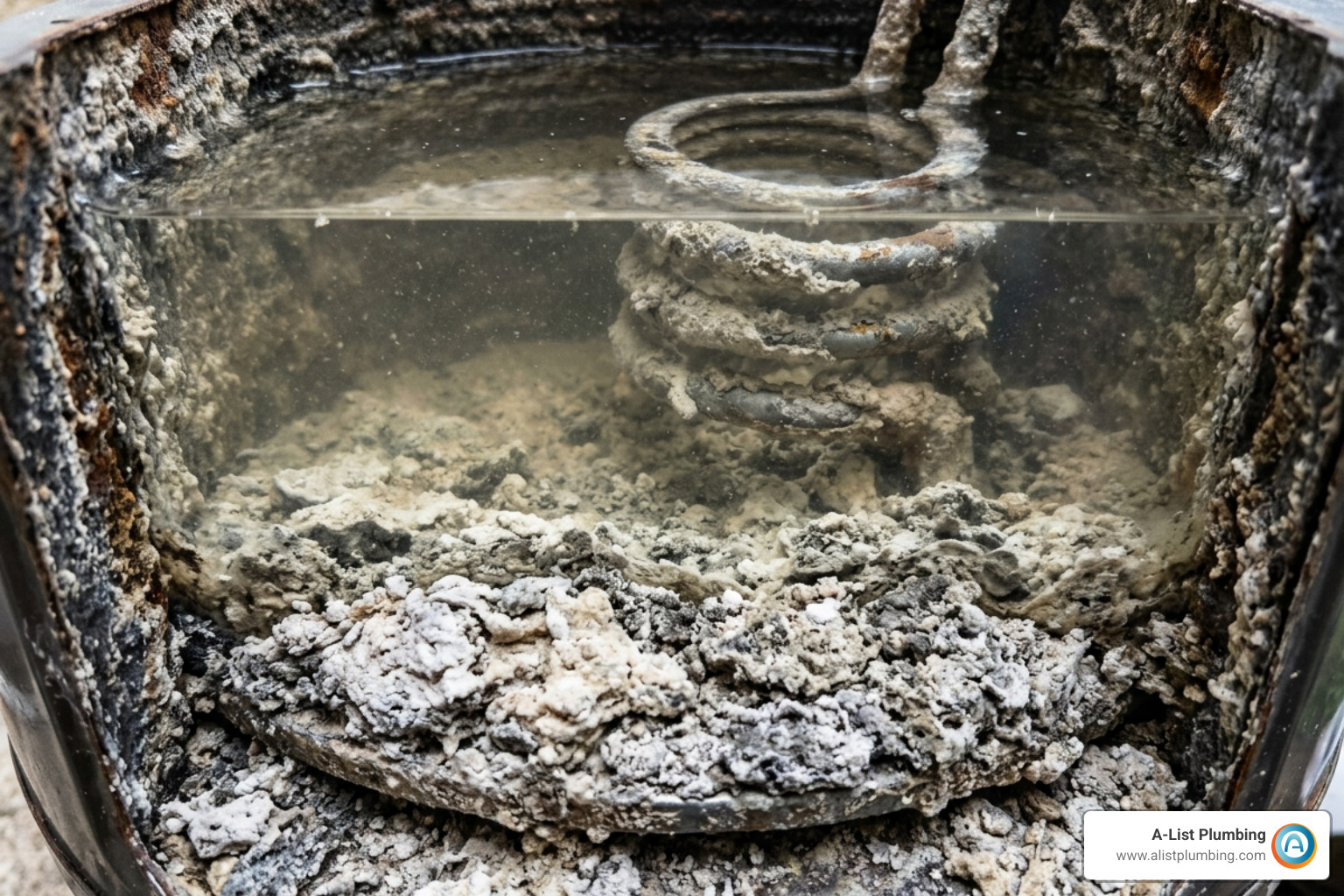
Whether gas or electric, all tanks eventually fall prey to the same enemy: the water itself. In Western Washington, our water is relatively soft, but mineral deposits still accumulate over time.
Flushing the Tank for Better Performance
Do you hear popping or rumbling noises coming from your tank? That's the sound of steam bubbles escaping through a thick layer of "sand" or sediment at the bottom. This sediment acts like an insulator, making it harder for the heat to reach the water.
To perform this no hot water fix, attach a garden hose to the drain valve at the bottom of the tank and run the other end to a floor drain or outside. Open the valve and let the water run until it looks clear. Doing this annually can extend your heater's life by years.
Identifying and Stopping Tank Leaks
A puddle under your heater is never a good sign. First, check the T&P (Temperature and Pressure) Valve —that’s the lever with the pipe running down the side. If it’s dripping, the tank might be overheating or under too much pressure.
However, if water is seeping from the bottom of the tank itself, it usually means internal corrosion has finally eaten through the steel. At this point, a Water Heater Leak isn't something you can patch; it's a sign the tank is failing. If you're in the Ballard area, we specialize in Water Heater Leaks in Ballard WA and can get a new unit installed the same day.
Recovery Time Comparison
If you just had three people take back-to-back showers, you haven't "broken" the heater; you've just emptied it. You need to wait for "recovery."
| Feature | Gas Water Heater | Electric Water Heater |
|---|---|---|
| Recovery Time (40gal) | ~1 Hour | ~2 Hours |
| Heating Method | Internal Burner (Faster) | Electric Elements (Slower) |
| Efficiency | High during use | High standing efficiency |
When to Repair vs. Replace Your Water Heater
Most storage tank water heaters are designed to last about 10 to 12 years. If your unit is approaching its 10th birthday and starts acting up, we usually recommend the "50% Rule": if the repair cost is more than half the price of a new unit, it's time to replace.
Benefits of Upgrading to Tankless
If you're tired of running out of hot water, consider Tankless Water Heaters. These units heat water on demand rather than storing it.
- Endless Hot Water: You can run the shower, the dishwasher, and the laundry all at once.
- Space Saving: They are about the size of a suitcase and mount on the wall.
- Longevity: While a tank lasts 10 years, a tankless unit can last 20 years or more.
- Efficiency: They are 24-34% more energy-efficient for homes using less than 41 gallons of hot water daily.
If you are looking for an Efficient Hot Water Tank Installation by A-List Plumbing in Lynnwood, we can help you weigh the pros and cons of tank vs. tankless for your specific home layout.
Frequently Asked Questions about Hot Water Loss
How long does it take for a water heater to recover?
As mentioned in our table, a standard 40-gallon gas unit takes about an hour to get back to full temperature. An electric unit takes roughly twice as long—about two hours. If it's taking significantly longer, you likely have a failed lower heating element (electric) or heavy sediment buildup (gas).
Why is my water only lukewarm instead of hot?
If the water starts hot but turns lukewarm quickly, the dip tube might have snapped. The dip tube is a plastic pipe that directs cold incoming water to the bottom of the tank to be heated. If it breaks, cold water stays at the top and mixes with the hot water going to your shower. Other causes include a faulty thermostat or a "cross connection" in a failed shower valve.
Is it safe to fix a gas water heater myself?
Basic tasks like relighting a pilot light or flushing the tank are safe for most homeowners. However, if you smell rotten eggs(the odorant added to natural gas), do not flip any light switches or use your phone inside. Get everyone out of the house and call your gas provider immediately. Any work involving the gas control valve or the internal burner should be handled by a licensed professional to prevent fire or carbon monoxide risks.
Conclusion
A no hot water fix can range from a five-second flip of a circuit breaker to a complex thermocouple replacement. We hope this guide has given you the confidence to tackle the basics and the wisdom to know when to put the wrench down.
At A-List Plumbing, we’ve spent the last 22 years serving our neighbors in Lynnwood, Edmonds, Shoreline, Bothell, and Seattle. We pride ourselves on same-day availability and transparent pricing because we know that a cold shower in April is an emergency that can't wait.
If your DIY efforts haven't restored the heat, or if you’ve discovered a leak that’s more than you can handle, we’ll get your Water Heater Repair handled quickly and professionally so you can get back to your warm routine.