

What is Trenchless Sewer Repair?
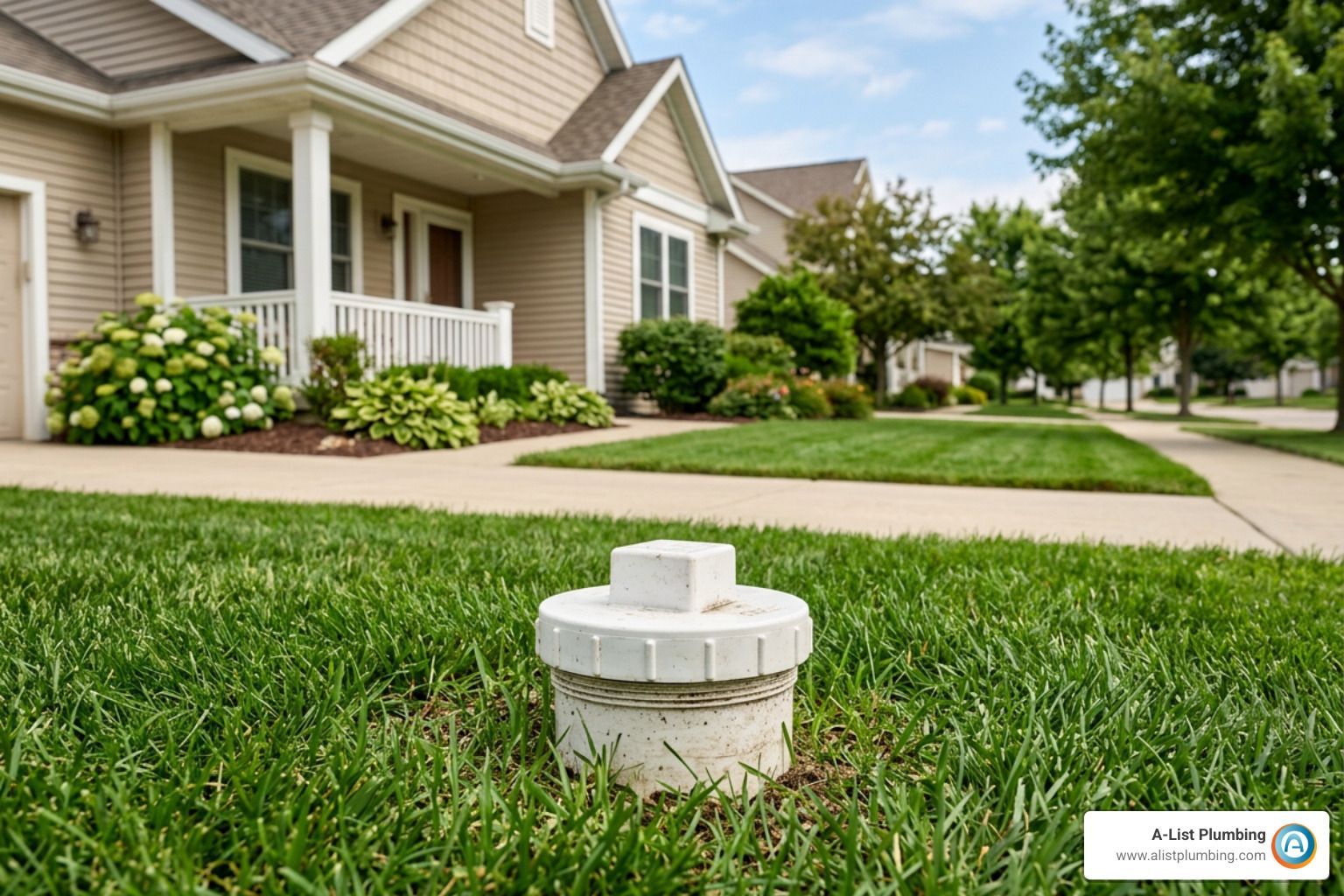
In the plumbing world of April 2026, we no longer have to treat every sewer leak like a massive archaeological dig. Trenchless sewer repair is a "no-dig" technology that allows us to fix or replace underground Sewer Lines with minimal disruption to your property. Instead of digging a trench the entire length of the pipe, we use small access points—often existing ones like cleanouts—to reach the subsurface infrastructure.
Whether we are dealing with the main sewer line or the lateral lines that connect your home to the city's system, this method focuses on property preservation. By using the existing damaged pipe as a "host pipe," we can either line it with a new protective skin or pull a brand-new pipe through it.
Before any work begins, we use a sewer camera inspection probe to see exactly what’s happening underground. This high-tech "colonoscopy for your pipes" ensures we aren't guessing. We can see root intrusions, cracks, and structural shifts in real-time on a monitor.
How Trenchless Sewer Repair Works: The Main Methods
There isn't just one way to perform a trenchless repair. Depending on the state of your pipes, we typically choose between two primary "no-dig" techniques: Pipe Lining (CIPP) and Pipe Bursting. According to Sewer renewal methods, these modern approaches have largely replaced traditional open-trenching for most residential and municipal applications.
Comparison: CIPP Lining vs. Pipe Bursting
| Feature | Pipe Lining (CIPP) | Pipe Bursting |
|---|---|---|
| Primary Material | Epoxy-saturated felt liner | High-density polyethylene (HDPE) |
| How it Works | Creates a "pipe within a pipe" | Destroys old pipe while pulling in new |
| Best For | Cracks, leaks, and root prevention | Full replacement or upsizing diameter |
| Access Points | Usually one (often an existing cleanout) | Two (launch and exit pits) |
| Structural Impact | Restores structural integrity | Provides a brand-new structural pipe |
Similar to how we handle Trenchless Waterlines, these methods prioritize speed and durability.
Pipe Lining (CIPP) and Epoxy Saturation in Trenchless Sewer Repair
Cured-in-place pipe (CIPP) is essentially "minimally invasive surgery" for your plumbing. We take a flexible felt liner and saturate it with a specialized two-part epoxy resin. Using a "pull-in-place" method or air inversion, we slide this liner inside your old, damaged pipe.
Once in position, we inflate a bladder that presses the resin-soaked liner against the walls of the host pipe. As the resin cures (hardens), it forms a smooth, jointless pipe that is incredibly resistant to chemical corrosion and root intrusion. We often use Perma-Liner™ technology, which is warrantied for up to five decades and designed to provide a century of service. Because the new pipe is jointless, there are no seams for thirsty tree roots to exploit.
Pipe Bursting and HDPE Replacement
If your old pipe is too damaged for a liner—perhaps it’s severely fractured or made of outdated materials like Orangeburg—we turn to pipe bursting. This method uses a heavy-duty hydraulic winch to pull a cone-shaped "bursting head" through the old line.
As the head moves through, it physically breaks apart (fragments) the old pipe and pushes the pieces into the surrounding soil. Simultaneously, it pulls a brand-new, high-density polyethylene (HDPE) pipe behind it. This is a common choice for Trenchless Waterline Replacement Service in Seattle WA because it allows us to maintain or even increase the pipe diameter without digging a single trench.
The Pros and Cons of No-Dig Solutions
Every technology has its trade-offs, but for most homeowners in Lynnwood and Seattle, the "pros" of trenchless sewer repair far outweigh the "cons."
The Advantages:
- Landscaping Salvation: You don't have to say goodbye to your prize-winning roses or that 50-year-old oak tree.
- Speed: Most experienced crews can finish the job in a single day, with the actual repair often taking only 3 to 7 hours.
- Longevity: These repairs are expected to last between 50 and 100 years.
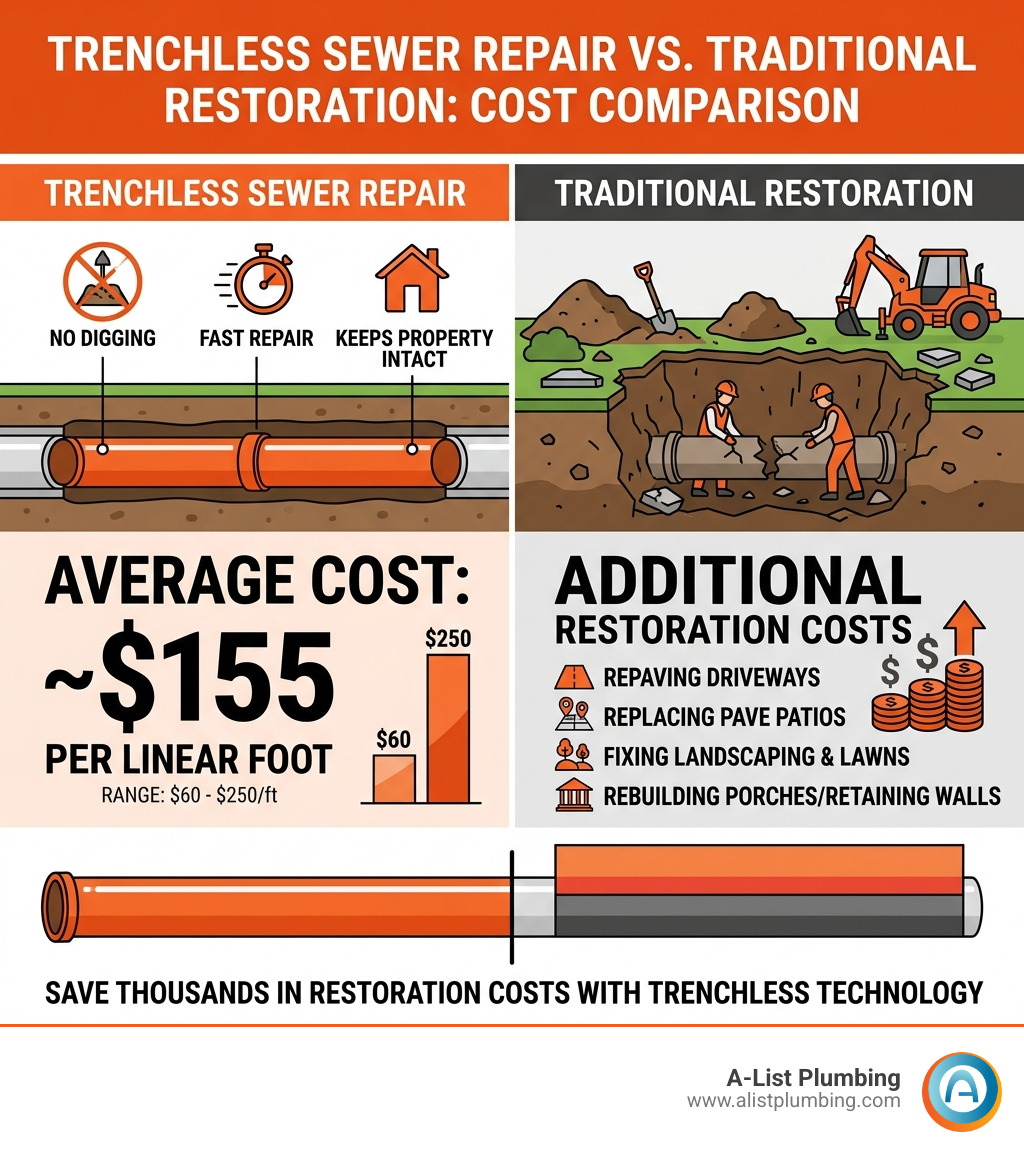
- Cost-Effectiveness: While the specialized equipment is expensive, you save a fortune on "restoration costs"—the money you'd otherwise spend replacing your driveway, sidewalk, or sod.
- Environmental Impact: As noted in the Collection Systems O&M Fact Sheet: Trenchless Sewer Rehabilitation, trenchless methods reduce the carbon footprint by requiring less heavy machinery and preventing the displacement of tons of soil.
The Disadvantages:
- Skilled Technician Requirements: This isn't a DIY project. It requires expensive, specialized machinery and extensive training.
- Not a Universal Fix: If a pipe has completely collapsed, there is no "path" for a liner or a bursting head to follow.
Our Trenchless Waterline Replacement Service in Lynnwood WA follows these same high standards to ensure your property remains intact while your utility lines get a modern upgrade.
When is Trenchless Sewer Repair Suitable?
Determining if your home is a candidate for a no-dig solution starts with that all-important camera inspection. We look for specific types of damage that respond best to trenchless technology.
Ideal Scenarios for Trenchless Sewer Repair
Trenchless is the "gold standard" when the pipe is located under high-value property features. If your sewer line runs directly under:
- Concrete driveways or patios
- Mature trees with complex root systems
- Historical buildings or expensive hardscaping
- Retaining walls
It is also perfect for fixing root intrusion, leaking joints, and minor offsets where the pipe sections have shifted slightly but are still mostly aligned. We frequently perform Trenchless Waterline Replacement Service in Edmonds WA and Trenchless Waterline Replacement Service in Shoreline WA for homeowners who want to avoid the mess of traditional digging.
When Traditional Excavation is Still Necessary
Sometimes, the "old school" way is the only way. Trenchless methods generally cannot fix:
- Collapsed Pipes: If the pipe has crushed in on itself, we can't get our equipment through.
- Severe Sags or "Bellies": Lining a pipe follows the existing path. If your pipe has a deep dip where waste pools, a liner will just follow that same dip. We have to dig to correct the grading.
- Utility Interference: If other utility lines were installed too close to or through the sewer line, manual excavation is required for safety.
The Step-by-Step Process and Costs
When we arrive at your home in Lynnwood or the Greater Seattle area, we follow a strict professional protocol to ensure the repair is permanent.
- Diagnosis: A high-definition camera inspection identifies the exact location and nature of the damage.
- Cleaning: We use hydro-jetting (high-pressure water) to descale the pipe and clear out grease, debris, and roots. The pipe must be clean for the epoxy to bond correctly.
- Preparation: We measure the pipe diameter and length to custom-cut the liner or HDPE pipe.
- Installation: We insert the liner or pull the new pipe through using specialized winches and inflation bladders.
- Curing: For CIPP, we allow the resin to harden (usually a few hours).
- Verification: We perform a final CCTV verification to ensure the new line is smooth, seamless, and fully functional.
The Bottom Line on Cost: Trenchless sewer repair typically costs around $155 per linear foot, but the range can be anywhere from $60 to $250 per foot depending on the depth of the pipe and the method used. While the per-foot price might seem higher than traditional digging at first glance, you must factor in the thousands of dollars saved by not having to rebuild your porch or repave your driveway.
For those in the north end, our Trenchless Waterline Replacement Service in Bothell WA offers similar transparent pricing models to help you budget effectively.
Frequently Asked Questions about Trenchless Technology
How long does a trenchless sewer repair last?
You can expect a trenchless repair to last between 50 and 100 years. The HDPE pipes used in bursting are incredibly durable and resist the "freeze-thaw" cycles common in the Pacific Northwest. The epoxy resins used in lining are designed to be chemically inert and structurally sound for decades.
How much does trenchless sewer repair cost compared to digging?
While the labor for trenchless is specialized, it is much faster. Traditional excavation often requires a crew of several people, heavy machinery rentals, and multiple days of work. When you add the cost of "putting the yard back together," trenchless is often 30% to 50% cheaper overall.
How long does the repair process take?
Most of our projects are completed in a single day. Smaller jobs, like a 20-foot section of pipe under a lawn, can take as little as 3 to 4 hours. This means you won't be without water or sewer service for days on end. We provide this same efficient turnaround for our Trenchless Waterline Replacement Service in Magnolia WA and other Seattle neighborhoods.
Conclusion
Sewer problems are stressful, but the solution doesn't have to be destructive. At A-List Plumbing, we bring 22 years of experience to every job, ensuring that homeowners in Lynnwood, Edmonds, and throughout Greater Seattle receive the most advanced, least invasive care possible.
If you are noticing slow drains, gurgling toilets, or a sudden lush green patch in your yard, don't wait for a total backup. We offer same-day availability and transparent pricing to get your Sewer Lines back in peak condition without the mud and mess of a trench.