

When Your Hot Water Stops Working: What to Know First
Electric water heater repair is something most Seattle-area homeowners will face at least once — and usually at the worst possible moment.
Here's a quick look at the most common issues and first steps:
| Problem | Most Likely Cause | First Step |
|---|---|---|
| No hot water | Tripped breaker or limit switch | Reset circuit breaker; press red reset button |
| Lukewarm water | Sediment buildup or failing element | Flush tank; test heating elements |
| Water too hot | Thermostat set too high | Adjust thermostat to 120°F or lower |
| Strange noises | Sediment on tank bottom | Drain and flush the tank |
| Water leaking | Loose fittings or tank corrosion | Tighten connections; check T&P valve |
| Rusty or smelly water | Worn anode rod | Replace anode rod |
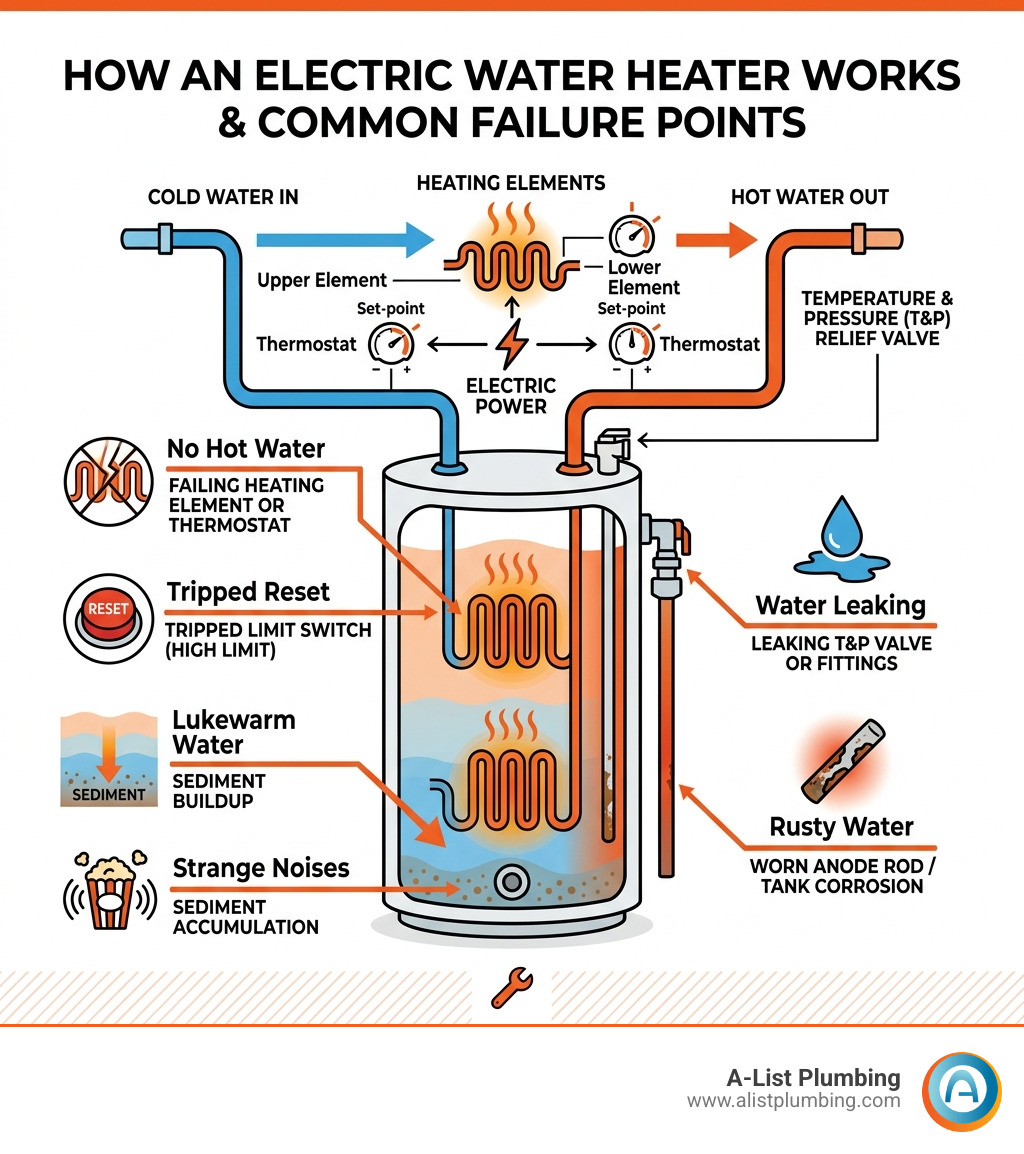
Electric water heaters fail for a surprisingly short list of reasons. Most problems trace back to just a few components — the heating elements, thermostats, or a tripped reset button. In fact, there's roughly a 90% chance that replacing a heating element will fix slow heating or no-hot-water problems entirely.
That said, some repairs involve live 240-volt wiring, and getting them wrong is dangerous. This guide walks you through what you can safely do yourself — and when it's time to call in a pro.
I'm Heath Shockman, owner of A-List Plumbing since 2011, with extensive hands-on experience in residential plumbing including electric water heater repair across the Greater Seattle area. I've put together this guide to help you troubleshoot confidently and know exactly when to pick up the phone.
Essential Safety and Tools for Electric Water Heater Repair
Before we dive into the "how-to," we need to talk about the "how-to-stay-safe." Dealing with an electric water heater means you are working with a combination of water and high-voltage electricity. In the Greater Seattle area, most residential water heaters run on a 240-volt circuit. This isn't your standard 120-volt wall outlet; 240 volts can be lethal if mishandled.
The Safety First Checklist
- Turn off the Power: Always flip the dedicated circuit breaker in your service panel to the "OFF" position before removing any access covers.
- Verify with a Tester: Never assume the power is off just because the breaker is flipped. Use a non-contact voltage tester to check the wires at the water heater.
- Stay Dry: Never work on your water heater if there is standing water on the floor. If the area is flooded, call a professional immediately.
- Wear Protection: Rubber gloves can provide an extra layer of insulation, and eye protection is a must when working around pressurized water.
Your Troubleshooting Toolkit
To perform a basic DIY electric water heater repair, you'll want a few specific tools on hand:
- Non-contact voltage tester: To ensure the power is truly dead.
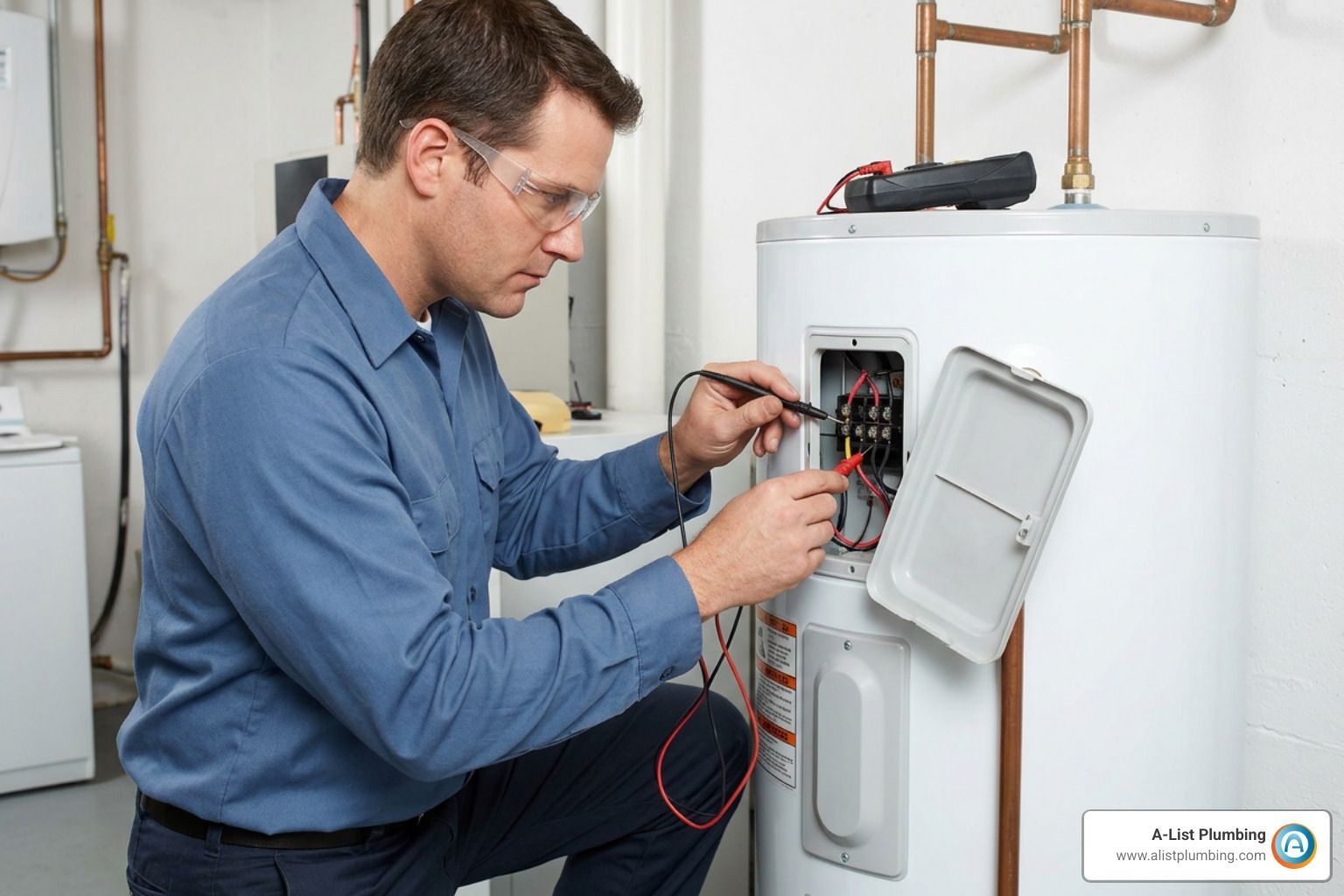
- Multimeter: Essential for testing the continuity of heating elements and thermostats.
- Screwdrivers: Both Phillips and flat-head for removing access panels.
- Socket Wrench (1-1/2 inch): Specifically for removing heating elements.
- Pipe Wrench: For tightening inlet/outlet connections or the T&P valve.
For more complex issues, you can check out this Electric Water Heater Repair & Troubleshooting guide. If you find yourself in over your head, our team provides expert Seattle repair services to get your hot water back on safely.

Troubleshooting Power for Electric Water Heater Repair
If you have absolutely no hot water, the very first thing to check isn't the heater itself—it’s your home's electrical panel. Water heaters are power-hungry appliances and usually require a dedicated 30-amp, double-pole breaker.
If the breaker has tripped, flip it all the way to "OFF" and then back to "ON." If it trips again immediately, you likely have a short circuit in the wiring or a grounded heating element. At this point, you should stop and call an electrician or a plumber with electrical expertise.
To check if power is reaching the unit, remove the upper access panel (after turning off the breaker!). Use your multimeter to test for 240 volts across the top two screws on the upper thermostat. If you see zero volts here while the breaker is on, the problem is in your home's wiring or the breaker itself, not the water heater.
Troubleshooting No Hot Water and Power Issues
When the power is on but the water is cold, the most common culprit is the high-temperature limit switch. This is a safety device designed to shut off power if the water inside the tank gets dangerously hot (usually above 180°F). Think of it like a "super-breaker" located right on the water heater.
Resetting the High-Temperature Limit Switch
This is one of the easiest electric water heater repair steps you can take. Here is how we recommend doing it:
- Shut off the breaker: Safety first, always.
- Remove the upper panel: Unscrew the metal plate on the side of the tank.
- Move the insulation: Gently pull back the fiberglass insulation to reveal the thermostat.
- Press the Red Button: You will see a small red button. Push it firmly. If you hear a "click," the switch had tripped and you’ve just reset it.
- Replace and Restore: Put the insulation and panel back, then turn the power back on.
If the button trips again soon after, it’s a sign that a thermostat has failed or a heating element is shorting out, causing the water to overheat. If you're in the North End, we offer specialized Lynnwood repair services to diagnose these recurring trips.
Fixing Temperature Fluctuations and Water Quality
Is your water "sort of" hot but runs out in five minutes? Or is it coming out of the tap at scalding temperatures? These are classic signs of thermostat or element issues.
Diagnostic Symptom Table
| Symptom | Likely Component Failure |
|---|---|
| No hot water at all | Upper element or high-limit switch |
| Runs out of hot water very quickly | Lower heating element |
| Water is lukewarm only | Sediment buildup or lower element |
| Water is dangerously hot | Stuck thermostat (constantly "ON") |
Replacing Elements During Electric Water Heater Repair
Most electric water heaters use two elements: one at the top and one at the bottom. They don't run at the same time. The upper element heats the top of the tank first, then the power switches to the lower element to heat the rest.
To test an element, turn off the power and disconnect the two wires leading to it. Use your multimeter set to "Ohms." A healthy 4500-watt element should show a resistance of about 12 to 13 ohms. If the reading is "Open" or "Infinity," the element is burned out and needs replacement.
Pro Tip: If you replace an element, you must ensure the tank is completely full of water before turning the power back on. If you apply power to a dry element, it will "dry fire" and burn out in less than a second. For help with these technical tests, see these 10 Common Water Heater Problems and Solutions or contact us for Shoreline repair services.
Addressing Rusty or Smelly Water
If your hot water smells like rotten eggs, you aren't imagining it. This is often caused by a chemical reaction between the sacrificial anode rod and certain water conditions (common in some parts of Western Washington).
The anode rod is a magnesium or aluminum rod that hangs inside your tank. Its only job is to corrode so your tank doesn't. If the rod is completely spent, the tank starts to rust, leading to brown water. If you have a "stinky water" problem, we often recommend replacing the standard magnesium rod with an aluminum-zinc alloy rod, which reduces the production of hydrogen sulfide gas (the source of the smell).
Repairing Leaks and Eliminating Strange Noises
A leak doesn't always mean you need a new water heater, but you do need to act fast to prevent water damage.
Common Leak Points
- T&P Valve: The Temperature and Pressure relief valve is the most important safety feature on your tank. If it’s dripping, it might just be loose, or it might be doing its job by relieving excess pressure. If it continues to leak after you've gently operated the test lever, it likely needs replacement.
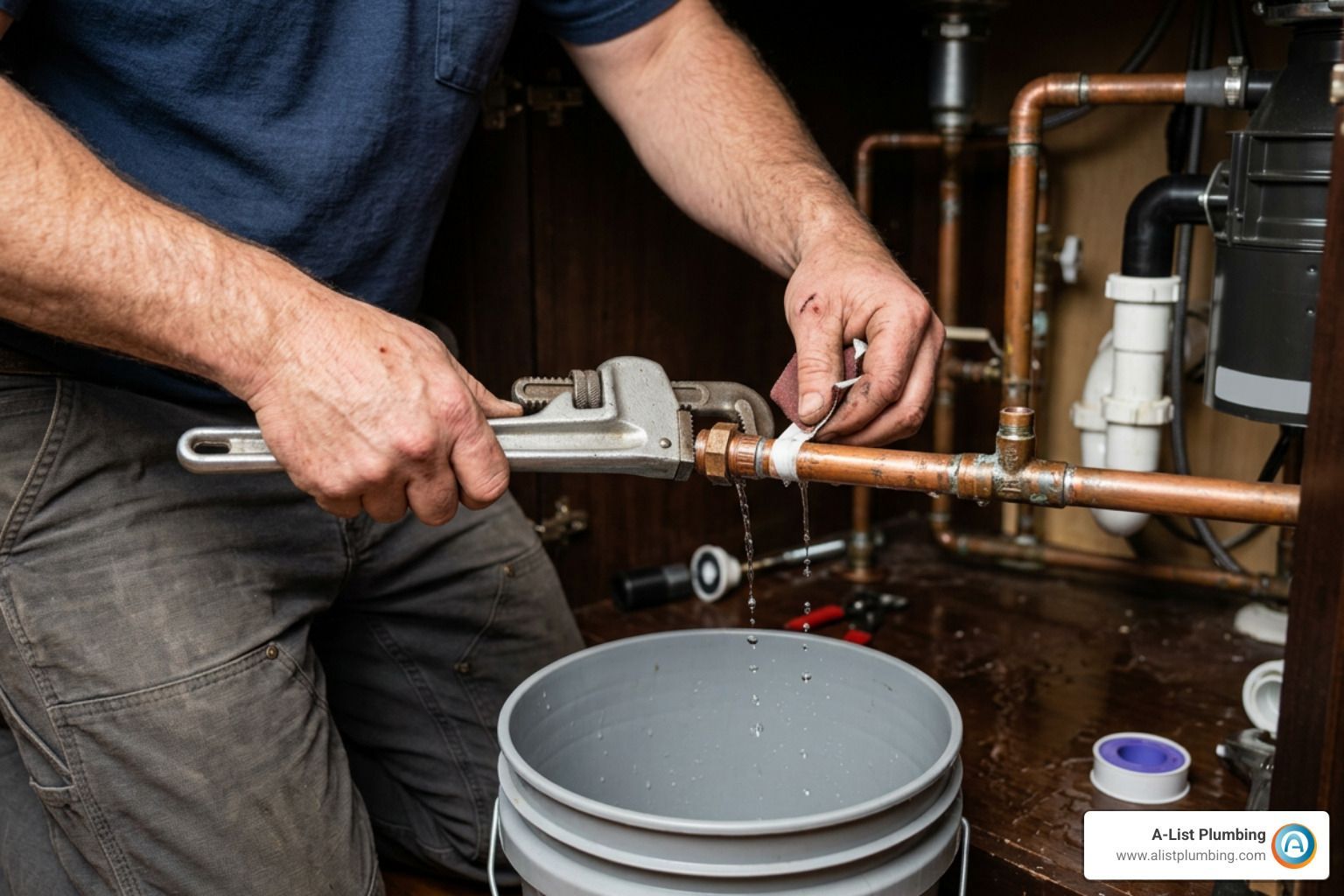
- Inlet/Outlet Connections: Check the pipes entering the top of the heater. Sometimes a simple turn of a wrench on a loose fitting is all the electric water heater repair you need.
- The Tank Itself: If water is pooling at the bottom and the fittings are dry, the inner tank has likely corroded through. This cannot be repaired; the unit must be replaced.
If you notice moisture around your unit, check out our guide on Shoreline leak services to identify the source before it becomes an emergency.
Diagnosing Tank Noises
Does your water heater sound like it's boiling rocks? Those rumbling, popping, or "kettling" sounds are usually caused by sediment buildup. Over time, minerals in our Seattle water settle at the bottom of the tank. The lower heating element gets buried in this "mud," and as it heats up, steam bubbles trap under the sediment and "pop" as they escape.
The fix? A thorough tank flush. We recommend doing this once a year to keep your unit quiet and efficient.
Maintenance and Knowing When to Replace Your Unit
As we move into April 2026, water heater technology continues to improve, but the basics of maintenance remain the same. A standard electric water heater typically lasts between 8 and 12 years.
Annual Maintenance Checklist
- Flush the tank: Drain the water until it runs clear to remove sediment.
- Check the anode rod: Every 3–5 years, pull it out to see if the core wire is exposed.
- Test the T&P valve: Lift the lever briefly to ensure water flows and stops.
- Insulate: In our cooler Washington climate, insulating your hot water pipes can save significantly on energy bills.
If your tank is nearing its 12th birthday or requires frequent electric water heater repair, it might be time to look at a new installation. Modern units are far more efficient, and we specialize in hot water tank installation in Lynnwood and the surrounding areas.
Repair vs. Replacement Decisions
How do you know when to stop repairing and start replacing?
- Age: If it’s over 10 years old, a major repair (like multiple elements and thermostats) often isn't worth the cost.
- The "Leaking Tank" Rule: If the tank itself is leaking, there is no repair. It’s time for a new one.
- Efficiency: Newer models, including hybrid heat pump water heaters, can cut your electricity usage by more than half.
Frequently Asked Questions about Electric Water Heater Repair
Why does my water heater reset button keep tripping?
The red reset button trips because the water is getting too hot. This is usually caused by a faulty thermostat that doesn't shut off when the target temperature is reached, or a heating element that has shorted out and is heating the water continuously.
How do I know if my heating element is burned out?
The best way to know is a continuity test with a multimeter. With the power off and wires disconnected, check for resistance. If the meter shows "O.L." or no movement, the element is dead. Another sign is if you have "some" hot water but it runs out very quickly—this usually means the lower element has failed.
Can I repair a leaking water heater tank?
Unfortunately, no. If the steel tank itself has rusted through and is leaking, it cannot be welded or patched safely. The pressure inside the tank is too great for a temporary fix. In this case, replacement is the only safe option.
Conclusion
Taking on an electric water heater repair yourself can be rewarding and save you a few bucks, but it’s important to know your limits. If you are uncomfortable with electrical testing or if your tank is showing signs of major structural failure, it’s always better to call in the experts.
At A-List Plumbing, we bring 22 years of experience to every job. Whether you're in Edmonds, Shoreline, Bothell, or right in the heart of Seattle, we offer same-day availability and transparent pricing to get your life back to normal. We’ve seen every water heater problem under the sun, and we’re here to help you navigate yours.
Don't spend another day taking cold showers. Book your electric water heater repair today. We’ll get the hot water flowing again before you know it!