

That Pool of Water at the Bottom of Your Dishwasher Isn't Normal
Dishwasher water not draining is one of the most common appliance complaints homeowners face — and the good news is that most causes are simple to fix yourself.
Here's a quick overview of why your dishwasher isn't draining and what to do:
- Clogged filter — Remove, rinse, and scrub the mesh filter under the lower spray arm
- Blocked drain hose — Check for kinks or clogs in the hose running to your sink or garbage disposal
- Garbage disposal issue — Run the disposal to clear food buildup, or check for an unremoved knockout plug
- Blocked air gap — Clean the chrome cylinder next to your faucet if water is backing up
- Drain pump failure — If the pump hums but no water moves, it may need professional attention
A small amount of water in the filter area is actually normal — it keeps the seals from drying out. But if you're seeing an inch or more of standing water after a full cycle, something is blocking your drain.
Most drainage problems start with a clogged filter or a kinked hose and can be resolved in under an hour without calling anyone. This guide walks you through each fix, from easiest to most involved.
I'm Heath Shockman, owner of A-List Plumbing since 2011, and I've seen how often dishwasher water not draining traces back to a simple blockage that homeowners can clear themselves — though sometimes it signals a deeper plumbing issue that needs a pro. Let's work through it together, starting with the most likely culprits.
Why is my dishwasher water not draining?
When we open our dishwashers in April 2026, we expect to see sparkling clean plates, not a mini-swamp of gray, murky water. If your "Great Escape" has turned into a "Great Backup," the first step is understanding the mechanics of the exit strategy.
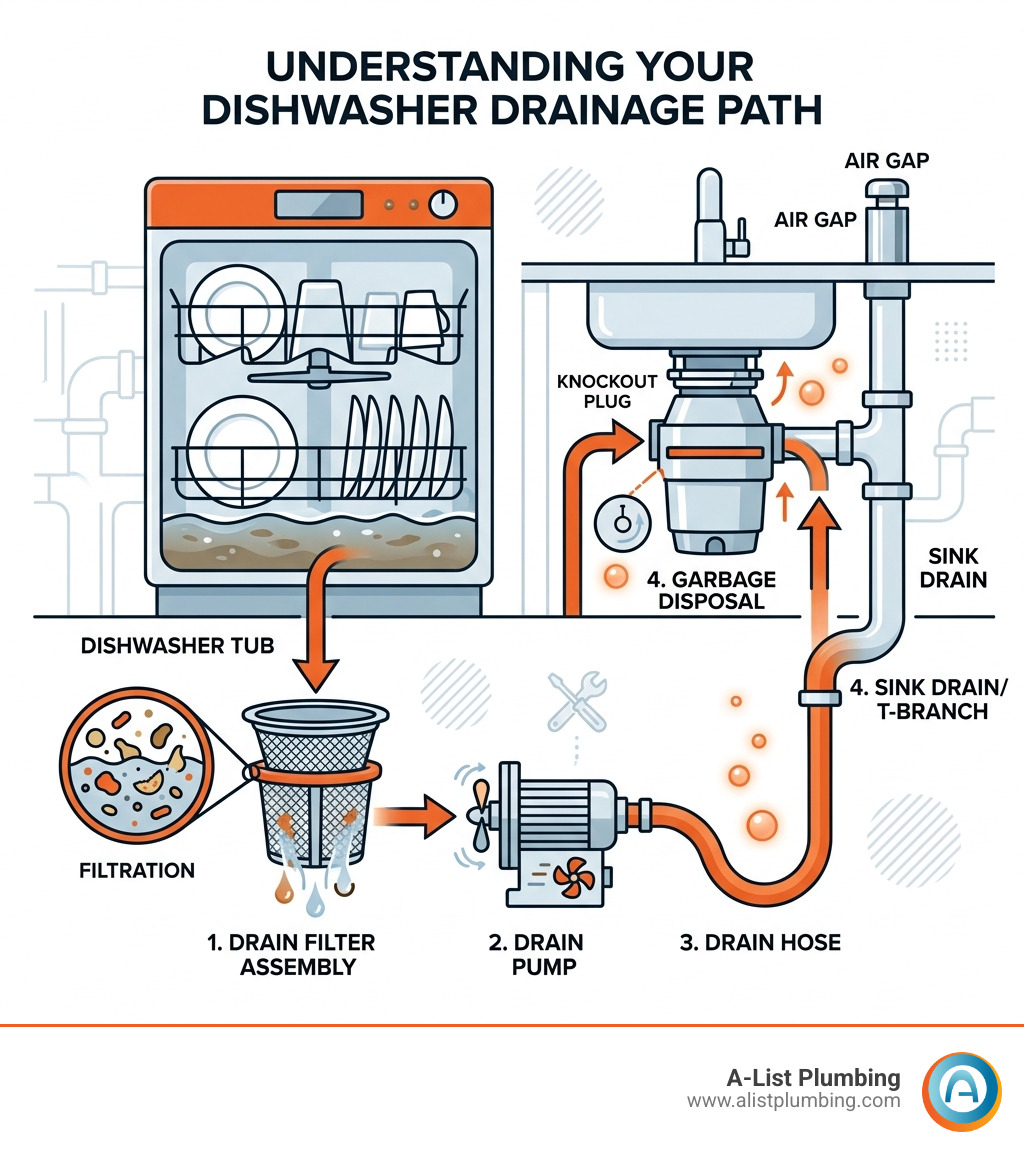
Your dishwasher doesn't just "let" the water out; it actively pumps it. The water passes through a filter, enters a sump, is pushed by a drain pump through a check valve, travels down a drain hose, and finally exits through your garbage disposal or sink drain. If any point in this relay race is blocked, the water stays put.
According to experts at 5 Reasons Your Dishwasher Isn't Draining (and How to Fix It) | The Kitchn, most issues are mechanical or debris-related rather than electrical. We often find that clogged drains in the kitchen are the primary reason the dishwasher can't do its job.
Common Causes for Dishwasher Water Not Draining
In our 22 years of experience serving the Greater Seattle area, we’ve found that the culprits usually fall into these categories:
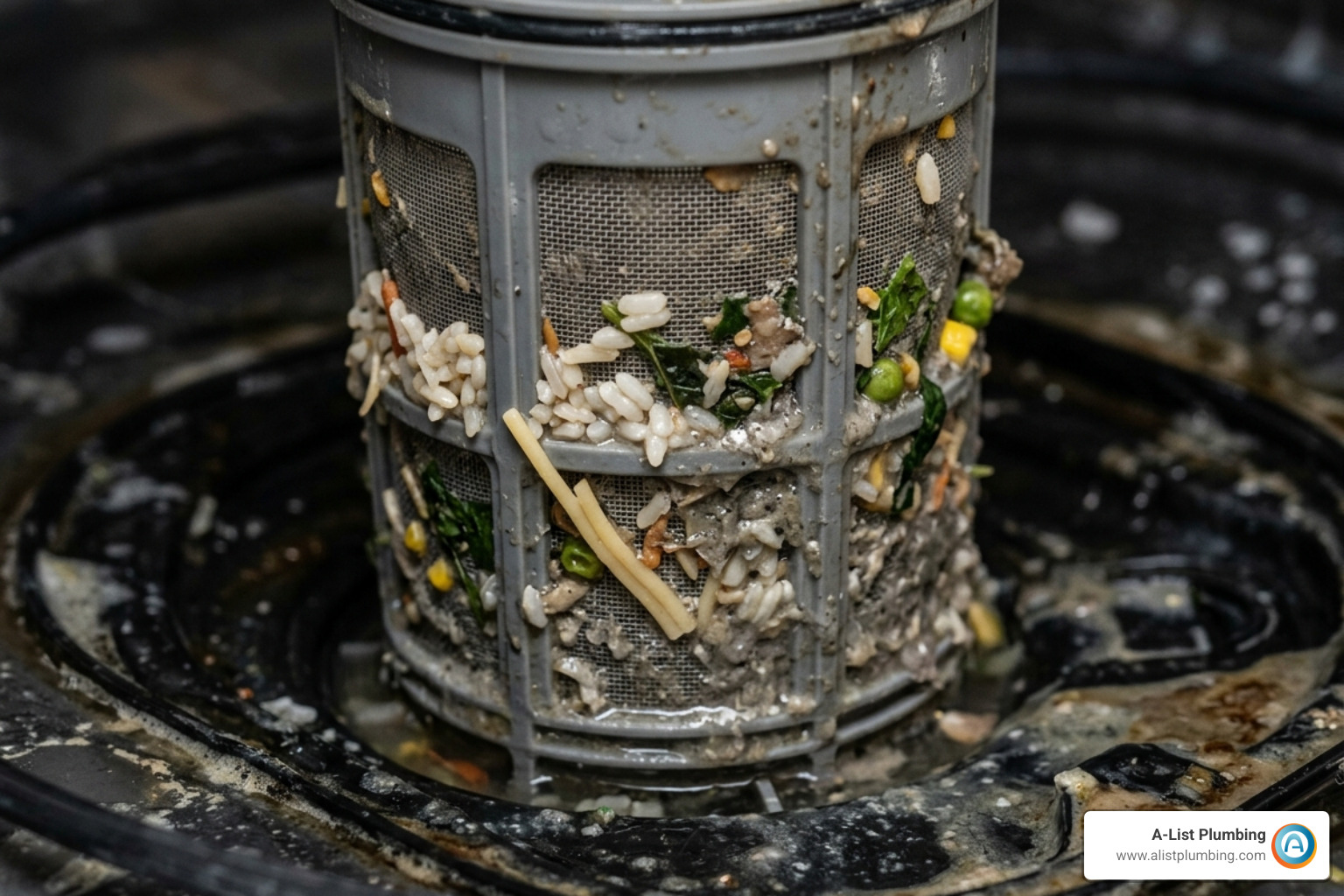
- The Filter Fiasco: This is the #1 cause. Food particles, wet paper labels from jars, and grease buildup create a waterproof "mat" over your filter.
- The Pump Problem: The drain pump has a small spinning part called an impeller. If a cherry pit, a piece of broken glass, or a toothpick gets past the filter, it can jam the impeller.
- The Hose Hang-up: The drain hose is a flexible tube. If you’ve recently shoved a large box of detergent under the sink, you might have kinked the hose, cutting off the water flow like a garden hose with a knot in it.
- The Check Valve Jam: This one-way flap is supposed to let water out but not back in. If it gets stuck closed, no water escapes.
Identifying a Sink or Main Plumbing Issue
Sometimes, the dishwasher is perfectly healthy, but the "road" ahead is closed. Because your dishwasher usually connects to your kitchen plumbing via the sink drain or garbage disposal, a clog in your sink’s P-trap will force water back into the dishwasher.
How can you tell? If your kitchen sink is draining slowly or gurgling when the dishwasher runs, the problem isn't the appliance—it's your pipes. In older homes in Edmonds or Shoreline, we often see corroded galvanized pipes that have narrowed over time, making it hard for the high-volume dishwasher pump to push water through. If you suspect a main line issue, it’s usually time to look at professional drain rooter services to clear the path.
Step-by-Step: How to Manually Remove Standing Water
Before you can play detective, you have to clear the crime scene. You cannot effectively clean a filter or inspect a pump while submerged in two inches of cold, greasy water.
Safety First: Before you stick your hands in there, turn off the power. Unplug the unit if you can reach the outlet, or flip the circuit breaker. Water and electricity are a "shocking" combination we want to avoid.
- Prepare your tools: Grab a small cup, a large bucket, and plenty of old towels. If you have a wet/dry shop vac, now is its time to shine.
- Scoop it out: Use the cup to ladle the water into the bucket. Get as much as you can.
- The Towel Soak: Once the water is too shallow to scoop, use towels or a large sponge to soak up the remaining liquid in the sump (the dip at the bottom).
- Shop Vac Method: If you're using a vacuum, simply suck the water out of the basin. This is much faster and cleaner.
As noted in this guide on Why Is My Dishwasher Not Draining? Causes and Fixes, removing the water also removes the "gross factor," making it much easier to see the screws or clips holding your filter in place.
Cleaning the Filter, Pump, and Drain Hose
Now that the floor of the dishwasher is dry, we can get to the heart of the matter. Most modern dishwashers (Bosch, Whirlpool, Maytag) use a manual-clean filter system.
Deep Cleaning the Filter and Pump Area
The filter is usually located at the bottom of the tub, often under the lower spray arm. You may need to remove the bottom rack to get full access.
- Remove the Filter: Most filters twist counter-clockwise to unlock. Some might have a secondary mesh screen held by a few screws.
- Scrub-a-dub-dub: Take the filter to the sink. Use hot, soapy water and a soft brush (an old toothbrush works wonders). If you see white, chalky buildup, that’s calcium from our Western Washington water—soak it in vinegar for 10 minutes.
- Inspect the Sump: Look into the hole where the filter sat. Use a flashlight. We’ve found everything from wedding rings to bones sitting in there.
- Check the Pump Cover: On many models, there is a small plastic cover (held by a single screw or a clip) that protects the drain pump impeller. Remove it carefully. Watch out for glass! Broken glass often migrates here and can be very sharp.
- Test the Impeller: Use a screwdriver or your finger (carefully!) to see if the little fan blades spin freely. If they are jammed, remove the obstruction.
If you find that the blockage is further down the line than you can reach, A-List Plumbing offers drain rooter services that can clear even the most stubborn grease clogs that have solidified in the waste pipe.
Home Remedies for Dishwasher Water Not Draining
If you’ve cleaned the filter but the water still seems sluggish, you can try a natural "flush" to clear out grease and soap scum. We prefer these over harsh chemicals because chemical cleaners can actually damage the rubber seals and the pump itself.
The Baking Soda & Vinegar Method:
- Clear the standing water.
- Mix 1 cup of baking soda and 1 cup of white vinegar.
- Pour the fizzy mixture into the drain at the bottom of the dishwasher.
- Let it sit for 15 to 20 minutes.
- Pour a gallon of very hot (but not boiling) water into the bottom to flush it out.
This is a great monthly maintenance habit for homeowners in Seattle and Lynnwood to keep the lines clear of grease.
Troubleshooting the Garbage Disposal and Air Gap
If the dishwasher itself is clean, we need to look at where the water goes next. In most local kitchens, the dishwasher "hitchhikes" on the garbage disposal's drain.
The Garbage Disposal Connection
If you just installed a new disposal and now your dishwasher water not draining, we can almost guarantee it’s the "knockout plug." Inside the nipple where the dishwasher hose connects to the disposal, there is a plastic plug that must be hammered out during installation. If it’s still there, the water has nowhere to go.
If your disposal is older, it might just be full of food. Run the disposal with plenty of cold water for 30 seconds before you start your dishwasher cycle. This ensures the path is clear. If your disposal is humming but not spinning, you might need a Garbage Disposal Installation Repair Service.
The Air Gap Cylinder
Do you have a small chrome or plastic cylinder sitting on the back of your sink? That’s an air gap. Its job is to prevent dirty sink water from siphoning back into your clean dishwasher.
- The Clog: Sometimes food gets pumped into the air gap and stuck.
- The Fix: Pull the chrome cover straight up. Unscrew the plastic cap underneath. Use a bottle brush or a toothpick to clear out any gunk.
Inspecting the Drain Hose for Clogs or Kinks
The drain hose is the long, corrugated tube connecting the dishwasher to the sink.
- Check for Kinks: Ensure the hose isn't pinched behind the dishwasher or under the sink.
- The High Loop: For a dishwasher to drain correctly without an air gap, the hose must "loop" up higher than the sink's water level and be secured to the underside of the counter. Without this "high loop," gravity will pull dirty sink water back into your dishwasher.
- Check for Clogs: Disconnect the hose from the sink/disposal end (have a bucket ready!). Try blowing through it. If it's hard to blow through, there’s a clog. You can often "massage" the hose to break up grease or use a plumbing snake for longer runs.
| Symptom | Likely Cause | Fix |
|---|---|---|
| Water drains slowly, hose feels stiff | Grease buildup/Clog | Flush with hot water/vinegar |
| No water moves, pump makes loud noise | Kinked Hose | Straighten hose/re-route |
| Water flows back in after cycle | Missing High Loop | Secure hose to top of cabinet |
| New disposal, no drainage | Knockout Plug | Tap out plug with screwdriver |
Frequently Asked Questions about Dishwasher Drainage
Can I run my dishwasher if it has standing water?
We don't recommend it. If you have more than an inch of water, running another cycle will likely just add more water to the tub, potentially causing an overflow and damaging your kitchen floors. Plus, the pump could overheat if it’s trying to push against a total blockage. Clear the water and find the clog first.
How do I know if my drain pump is faulty?
If you've cleared the filter, checked the hose, and cleaned the disposal, but the water still won't move, listen to the machine.
- A humming sound with no water movement usually means the pump is jammed or the motor is seized.
- A loud grinding noise suggests the impeller is broken.
- Total silence during the drain cycle could indicate a dead motor or a control board issue.
Why is water backing up from the sink into the dishwasher?
This is almost always a "high loop" or "air gap" issue. If your drain hose sags low under the sink, every time you pour water down the sink drain, a little bit of it flows "downhill" into your dishwasher. Ensuring the hose is fastened high under the countertop solves this 99% of the time.
Conclusion
A dishwasher that won't drain can feel like a disaster, but as we've seen, it's usually just a sign that your appliance needs a little "spring cleaning"—even if it's currently April 2026! By keeping your filters clean, running your garbage disposal regularly, and ensuring your drain hose has a proper high loop, you can prevent most backups before they start.
However, if you've tried the baking soda, scrubbed the filter, and checked the air gap, but you're still staring at a pool of murky water, the problem might be deeper in your home's plumbing. Whether it's a stubborn main line clog in Shoreline or a faulty pump in Lynnwood, we're here to help.
At A-List Plumbing, we bring 22 years of experience to every job, offering transparent pricing and same-day availability for those "I need this fixed before dinner" emergencies. Don't let your kitchen turn into a water park—visit our Plumbing Services page to get your drains flowing freely again. We serve Seattle, Edmonds, Bothell, and the entire Greater Seattle area with expert care and a friendly smile.